The $3,000 Scream: Spielberg's Obsessive Jaws Reshoot
In March 1975, three months before the release of Jaws, Steven Spielberg attended a test screening in Dallas. The audience reaction was overwhelmingly positive, with viewers humming the iconic theme and playfully imitating sharks as they exited. However, upon reviewing a cassette recording of their responses, Spielberg detected a critical silence. He pinpointed the moment: the scene where a human head emerges from a sunken boat lacked the intended visceral impact.
"We could get another scream here," Spielberg told his colleagues, diagnosing the absence of a close-up shot as the problem. The studio, however, refused to finance a reshoot. Undeterred, the young director invested $3,000 of his own money to construct a replica of the boat at the bottom of a swimming pool. He meticulously blacked out sunlight with a tarpaulin, poured milk into the water to simulate the murky ocean, and filmed the dummy head's emergence.
Witnessing the Terror Firsthand
That summer, as Jaws surged toward becoming the highest-grossing film of its time, Spielberg repeatedly visited a Hollywood cinema. The manager would discreetly admit him just before the pivotal scene, allowing Spielberg to stand at the back and observe audiences literally leaping from their seats. This fanatical attention to detail was a hallmark of the filmmaking philosophy that enabled Spielberg, alongside contemporaries Francis Ford Coppola and George Lucas, to dominate 1970s cinema.

Origins of the Hollywood Kings
The trio's paths converged in the late 1960s Hollywood landscape. Coppola and Lucas, in particular, were driven by a desire for independence from the traditional studio system. They founded their own company in San Francisco, with Coppola famously declaring that in that city people made films, whereas in Los Angeles they merely made deals.
Their early careers were marked by distinct personalities and formative experiences. As a child, Coppola exhibited entrepreneurial flair, charging friends to view his 8mm films and even writing love letters for the less articulate. The young Spielberg, conversely, was plagued by fears—of confined spaces, the dark, even the tree outside his window. A traumatic train crash scene from a film he saw at age five was later compulsively recreated with his toy train set, an early act of mastering fear through creative control.
The Godfather's Unlikely Genesis
Coppola initially dismissed Mario Puzo's novel The Godfather as pulp fiction and was reluctant to direct the adaptation. Lucas persuaded him, arguing it was necessary to fund their fledgling company. The production was fraught with difficulties: Paramount resisted casting Al Pacino, and Marlon Brando required his lines written on cue cards taped to a fellow actor's body. Coppola's confidence hit a low point when he overheard crew members in a restroom deriding him as an "asshole director who doesn't know what he's doing," prompting him to lift his feet to hide his identifiable shoes.
The film's 1972 release and record-shattering success vindicated the struggle. Coppola celebrated by purchasing the same model of Mercedes owned by the Pope and sending the bill to Paramount.
Production Nightmares and Historic Triumphs
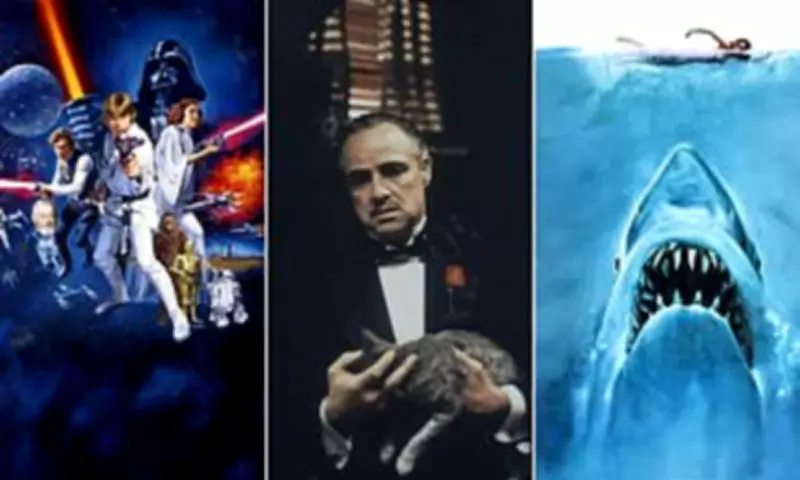
The pattern of chaotic production followed by monumental success repeated with Jaws. Spielberg wasn't the only director considered; one contender ruined his chances by repeatedly referring to the shark as a whale. The shoot, originally scheduled for 55 days, ballooned to 150. The now-legendary line "You're gonna need a bigger boat" originated from the crew's genuine complaint about an undersized support vessel. The mechanical sharks, nicknamed "Bruce" after Spielberg's lawyer, persistently malfunctioned. In one infamous workshop incident, Spielberg trapped Lucas's head inside a shark's jaws as a prank, then struggled to release him.

Lucas's Galactic Gamble
In 1977, it was Lucas's turn. His film, initially titled The Star Wars and featuring a protagonist named Luke Starkiller, faced its own production hell. An elephant hired to play a woolly mammoth-like creature repeatedly shed its costume. Yet the film shattered box office records. Crucially, Lucas had retained the merchandising rights, which studio lawyers of the era dismissively termed "garbage clauses." Revenue from toy lightsabers and Han Solo bedding eventually granted him financial independence, culminating in the $4 billion sale of Lucasfilm in 2012.
Coppola's Costly Crusade for Art
While Lucas achieved commercial empire, Coppola's uncompromising artistic vision led him toward financial ruin. The madness of Apocalypse Now became legendary. He fired his lead actor, Harvey Keitel, after a month, replacing him with Martin Sheen, who suffered a heart attack under the strain of heavy drinking and stress. In the Philippines, rain destroyed sets, and a heavily overweight Marlon Brando refused to work for days despite a $1 million weekly salary. Back in the editing suite, a desperate Coppola once invited a homeless war veteran into the office, transcribing his drunken monologues in search of narrative inspiration.
For much of the 1980s, Coppola made films primarily to service his debts, privately resenting Lucas for not providing a financial bailout. The two eventually reconciled, their legacies permanently intertwined. A subtle testament to their friendship exists in Spielberg's Raiders of the Lost Ark, where keen-eyed viewers can spot the droids R2-D2 and C-3PO etched among the hieroglyphs in the vault scene.
Their collective story, as meticulously chronicled in Paul Fischer's superb book The Last Kings of Hollywood, remains as gripping and monumental as the films that defined a generation of cinema.