Jonathan Powell's Covert China Mission Reveals Starmer's Inner Circle Power
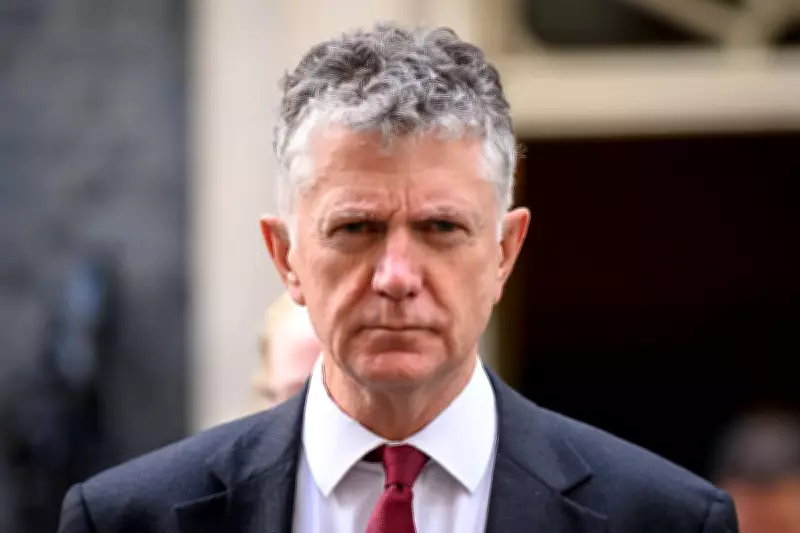
The man who served as Tony Blair's chief of staff for twelve years has emerged as a formidable force within Keir Starmer's administration. Jonathan Powell, now the prime minister's national security adviser, recently undertook what critics describe as his murkiest mission yet: a secretive trip to Beijing that has exposed significant tensions within the government.
The 'Special Agent Without Portfolio'
Security Minister Yvette Cooper confirmed this week that three men have been arrested on suspicion of spying for China. Against this backdrop, Foreign Secretary Cooper – described by some as 'foreign secretary in name only' – must contend with the official Beijing account of Powell's visit. The Chinese government issued a detailed 300-word statement complete with photographs showing Powell and five officials meeting their counterparts in the Hebei Hall of the Great Hall of the People.
This revelation came not from Whitehall but from Beijing's controlled media apparatus, highlighting what critics call the Starmer government's excessive secrecy. Number Ten has faced accusations of being 'more secretive than China' regarding this trip, with some civil servants allegedly dubbing Powell 'the real foreign secretary'.

A Government Within a Government
Powell's mission demonstrates something that becomes increasingly apparent with each passing day: despite Starmer's declarations regarding openness, transparency, and profound belief in the rule of law, his administration operates as a government within a government. There exists the public-facing version – complete with endless photocalls, hi-vis jackets, and earnest expressions for cameras and MPs – and then there is the private, secretive realm where light is not permitted to shine.
According to the Chinese statement, Powell discussed Ukraine and Iran, specifically plans to 'deepen cooperation across the board' and ways 'to bring the issue back to the track of political settlement'. This engagement occurs with a regime that has consistently backed Tehran, purchased Iranian oil in defiance of international sanctions, and supplied components for drones causing havoc across the Gulf region.
Pattern of Secrecy and Parallel Diplomacy
This is not Powell's first secretive mission to Beijing. He visited China in November under similar circumstances, with the British public learning of the trip only through Chinese press releases while Whitehall maintained complete silence. The pattern raises uncomfortable parallels with the 2017 controversy involving Priti Patel, who as International Development Secretary held unauthorized meetings with the Israeli government and ultimately resigned after breaching the ministerial code.
While Labour made significant political capital from Patel's conduct at the time, Powell's activities present a different challenge. His mission involves someone pursuing either his own agenda or his master's bidding (the distinction remains unclear) while officially, at state level, Britain maintains a policy of suspicion and distance toward China.
Intelligence Community Concerns
The official intelligence services' perspective on Powell's activities remains unclear. MI6's new head, Blaise Metreweli, broke cover in December to warn that 'we are in a space between peace and war', specifically citing two China-based companies barred for their 'indiscriminate cyber activities against the UK and its allies'. Like Cooper, Metreweli occupies a formal role within a clear reporting structure.
Powell's position appears more ambiguous, represented on Whitehall organisational charts by what must be a dotted line heading directly to the prime minister. What the two men discuss and plan remains known only to them, raising questions about whether other government members receive the complete picture or merely selected portions.
Transparency Questions and Double Standards
The situation presents numerous unanswered questions concerning 'Special Agent Powell'. Even if the government provides a full explanation, how can anyone be assured that what they're being told is accurate and honest? This behavior resembles patterns observed in Donald Trump's White House and, ironically, in Beijing itself.

Starmer frequently emphasizes his commitment to process and the rule of law. Yet increasingly and worryingly, it appears there exists one process and law for him and his inner circle, and another for everyone else. As Britain navigates complex international relationships and domestic security concerns, the Powell episode reveals fundamental tensions between stated principles of transparency and the realities of power within Starmer's administration.