Russia has launched its most brutal aerial attack on Ukraine since the war began, with nearly 1,000 drones, 23 cruise missiles and seven ballistic missiles fired over a 24-hour period. The onslaught, described by the Institute for the Study of War as the largest single-day aerial assault of the conflict, killed at least six people and hit 10 locations, including a Unesco World Heritage site. The attacks spanned 11 regions and seven cities, marking a significant escalation.
Experts warn that the diversion of attention and military resources to the Middle East has created a window of opportunity for Vladimir Putin. Jaroslava Barbieri, a research fellow at Chatham House's Ukraine Forum, said: “Ultimately the escalation in the Middle East has created a window of opportunity for Putin because the escalation has diverted attention away from Ukraine.” Air defence systems and munitions originally intended for Ukraine have been redirected to support US operations in the Middle East.
Preliminary military analysis suggests that within the first few weeks of the war in the Middle East, the US has expended munitions at a rate higher than what Ukraine received over four years of full-scale war. Barbieri warned that if this pace continues, Ukraine will face critical vulnerabilities in its air defence. She added that Ukraine must brace for years of conflict, particularly if the US becomes bogged down in the Middle East.

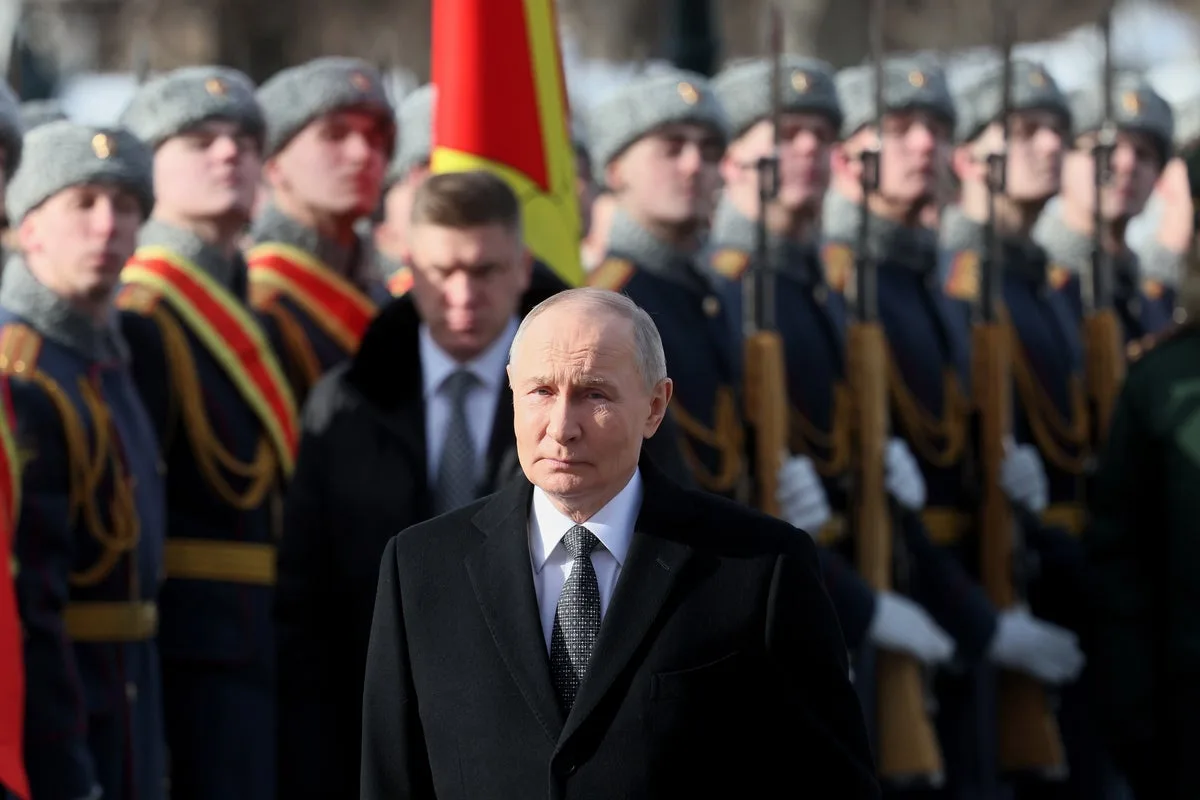
Meanwhile, peace talks have ground to a halt, with the Kremlin making zero concessions on territorial demands or security guarantees. Christina Harward of the Institute for the Study of War noted that Putin is using continued attacks as a negotiating tactic, attempting to convince the US that Ukrainian lines are about to collapse. “These are false claims, but Putin is nonetheless going to try to use his spring-summer offensive to convince the US otherwise,” she said.
Russia has also benefited from a temporary spike in oil prices following the partial closure of the Strait of Hormuz, providing extra revenue to fund its war effort. Additionally, reports suggest Russia has been assisting Iran with satellite imagery and weapons parts, though the Kremlin has denied these accusations.