The Enduring Appeal of Practical Magic as a Comfort Film
In the late 1990s, a VHS copy of Practical Magic often resided at the back of family cabinets, tucked away among films deemed not entirely suitable for younger viewers. The captivating cover, featuring the ethereal faces of Sandra Bullock and Nicole Kidman encircled by flickering candles, held a mysterious allure. For many, including an eight-year-old future writer, it promised a world not yet fully understood but eagerly anticipated.
Initial Reception and Critical Dismissal
Despite debuting at number one in the United States box office, Practical Magic failed to recoup its production budget and faced harsh criticism from reviewers. Variety notably described it as a confused hodgepodge, blending comedy, family drama, romance, and special-effects mystery-adventure into what they perceived as a tonally inconsistent mess. This dismissal reflected a broader 1990s skepticism toward genre hybridity in cinema.
Plot and Thematic Depth
Set in a fictional, cozy New England town, the narrative follows sisters Sally and Gillian Owens, portrayed by Bullock and Kidman respectively. Raised by their unconventional spinster aunts, Frances and Jet, played by Stockard Channing and Dianne Wiest, after their mother's tragic death from a broken heart, the sisters grapple with a family curse. Any man they truly love is destined to die, a premise that oscillates between camp delight and profound devastation.

At its core, Practical Magic transcends the label of a mere chick flick with magical elements. It emerges as a genre chimera, weaving together:
- Romantic elements
- Gothic melodrama
- Small-town satire
- Ghost story undertones
- Feminist parable
The film explores how the Owens women are treated as contagious outcasts by their community. Sally, a widowed mother striving for invisibility, and Gillian, embracing reckless exile, both find their strategies insufficient against the curse, which metaphorically represents the consequences faced by women defying societal expectations.
Cultural Context and Personal Connection
Released in 1998, shortly after Hong Kong's handover from Britain to China in 1997, Practical Magic resonated during a period of intense cultural collision. In a city where British television reruns coexisted with imperial Chinese soap operas, and cinema saw the rise of directors like John Woo and Wong Kar-wai, the film's themes of hybridity and reconciliation found a receptive audience. For viewers navigating complex identities, its message of overcoming adversity through unity felt particularly poignant.
Key Scenes and Narrative Twists
The plot intensifies when Gillian attempts to escape a violent relationship with her demonic lover, Jimmy, portrayed by Goran Višnjić. Sally's rescue mission leads to their kidnapping, forcing the sisters to poison Jimmy with belladonna. After killing him, fear drives them to resurrect him using dark magic, only to kill him again in self-defense.
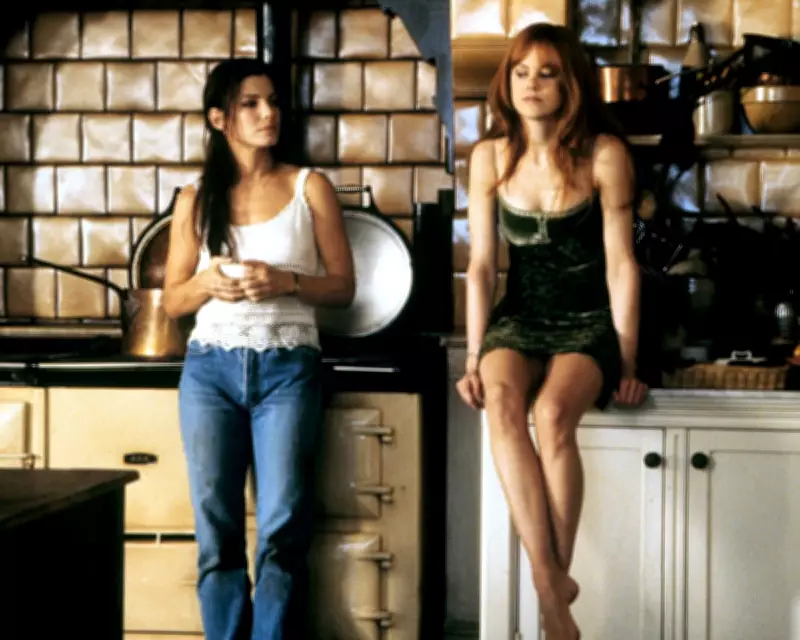
One of the film's most iconic scenes unfolds in the Owens' kitchen, where the four women dance to Harry Nilsson's Coconut during midnight margaritas. This moment of release spirals into something feral as Jimmy's spirit possesses them, unleashing misogynistic turmoil. The aunts' subsequent instruction to clean up their own mess underscores the film's emphasis on accountability.
Romance and Resolution
The romantic subplot with detective Gary Hallet, played by Aidan Quinn, reaches a crescendo in a devastating exchange where Sally confesses she summoned him, only for him to reply, I wished for you too. Their connection is framed not as destiny but as mutual recognition, offering an authentic fantasy within the narrative.
In the climax, the Owens women host a Halloween party, openly celebrating their witchcraft alongside the townsfolk who once ostracized them. This cheesy yet powerful resolution crystallizes the film's central theme: reconciliation across difference is vital for survival.

Legacy and Contemporary Relevance
Today, Practical Magic endures as an ultimate comfort film for many. It insists that adversity can be overcome, family can be forged, and loneliness is not a permanent state. Its imagery of barefoot cocktail drinking in exquisitely decorated kitchens, with candles lit and doors open to the night, continues to captivate audiences.
For contemporary creators, including a writer currently developing a project with the British Film Institute, the film serves as proof that hybrid genre storytelling not only works but endures. It stands as a testament to the power of narratives that blend elements to serve deeper thematic purposes, offering solace and inspiration across generations.