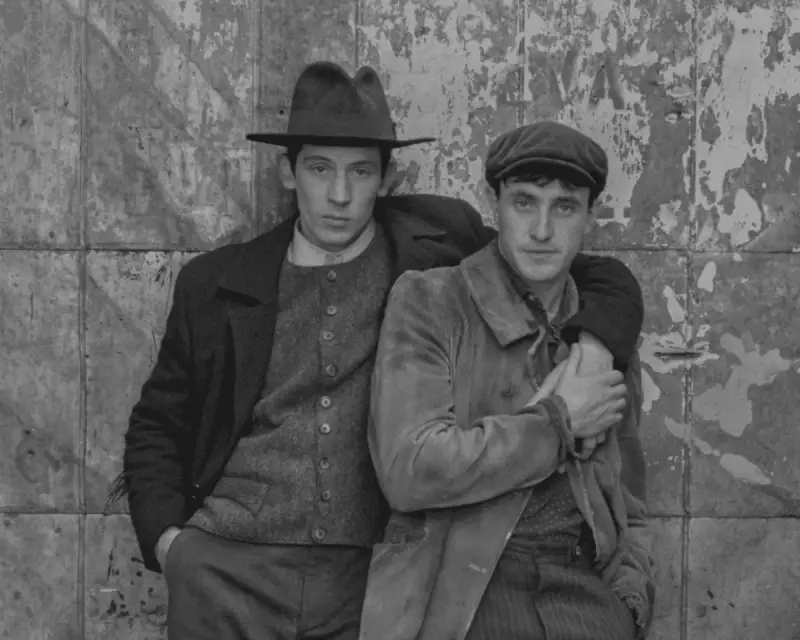
In a London hotel room on an autumnal afternoon, actors Paul Mescal and Josh O'Connor share an easy, tactile camaraderie that speaks of a deep friendship. They are here to discuss their latest film, The History of Sound, a poignant wartime love story four years in the making. Despite both having higher-profile releases this season, their pride in this intimate project is palpable.
From Oscar Bets to Intimate Performances
The conversation begins with a revelation: the interviewer once placed a £25 bet on Mescal winning an Oscar for his role in Aftersun. Mescal, now 29, lost to Brendan Fraser but remains grateful for the confidence. He reflects on the surprise of that nomination, calling Charlotte Wells's film "quietly perfect" and an unlikely awards contender. O'Connor, who became friends with Mescal after congratulating him on Normal People in 2020, listens intently, often angled towards his co-star.
Their physical closeness underscores a key point. As straight actors who have played several gay roles, they are relaxed and unafraid of intimacy, a dynamic that feeds into their performances as lovers Lionel and David in The History of Sound. The film, set during the First World War, follows a singer and a musicologist who reunite to record folk songs on wax cylinders in rural Maine.

The Cost of Inhabiting a Character
Both actors speak candidly about the emotional toll of their craft. For Mescal, transitioning from the epic scale of Gladiator II, where he bulked up to 90kg, to the slender frame required for Lionel was a "real headfuck." Yet, it was the smaller, more intimate film that felt like home. "I want to make more films like that versus ones on the scale of Gladiator II," he admits.
The film's use of song added a layer of vulnerability. "Singing is such a vulnerable act," says O'Connor, while Mescal compares the tension to the silence in an Irish pub before a singer begins. This vulnerability translates into their process. O'Connor observes a near-spiritual transformation in Mescal when the camera rolls: "Physically, the form is Paul. But emotionally, spiritually, he's vacated."
Mescal, in turn, praises O'Connor's generous empathy, which sometimes comes at a cost to his own well-being. They agree with friend Jessie Buckley's description of actors as "soul collectors," acknowledging that characters like Mescal's Calum in Aftersun or O'Connor's Arthur in La Chimera leave a permanent imprint.
A Future of Rationed Roles and Personal Priorities
Perhaps the most striking revelation comes from Mescal about his future. "I'm five or six years into this now... I'm learning that I don't think I can go on doing it as much," he states, introducing the concept of rationing his roles. He clarifies this doesn't necessarily mean working less, but being more selective with projects that demand deep emotional investment, like The History of Sound.
He cites a desire to return to theatre and attend to personal priorities. O'Connor immediately agrees, saying he too will take time off. They confront the industry fear of disappearing. "I'd rather not be on the train if that is the choice," says Mescal, with O'Connor adding, "The nightmare is resenting the work."
After promoting his upcoming Shakespeare film Hamnet, Mescal hopes for a break until he resurfaces as Paul McCartney in Sam Mendes's Beatles films in 2028. He is also years into Richard Linklater's two-decade-long project Merrily We Roll Along, due around 2040. O'Connor jokingly pictures the future reaction: "Why did they cast that absolute nobody in this movie?"
For now, their focus is on The History of Sound, which arrives in UK cinemas on 23 January. It stands as a testament to the kind of thoughtful, emotionally generous filmmaking both actors cherish and hope to protect as they navigate their careers with new, deliberate caution.