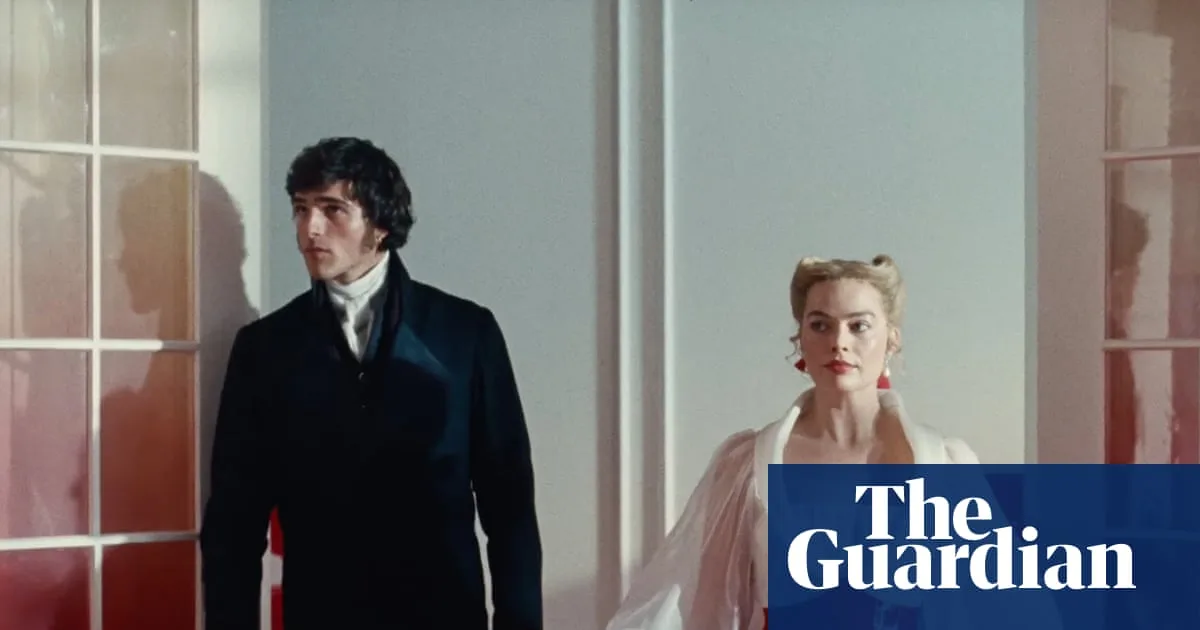
Emerald Fennell’s upcoming adaptation of Wuthering Heights has generated buzz with a trailer that calls it “the greatest love story of all time”. But critics of the novel argue that this label fundamentally misrepresents Emily Brontë’s dark, brutal work.
The trailer shows Margot Robbie as a blonde, 35-year-old Cathy and Jacob Elordi as a white Heathcliff, despite Brontë describing Cathy as a dark-haired teen and Heathcliff as a “dark-skinned gypsy”. The lavish interiors and provocative costumes—including a red latex dress and an off-the-shoulder wedding gown—have also drawn attention.
However, the novel’s plot is far from a conventional romance. Cathy rejects Heathcliff out of snobbery, and he becomes a psychopath. The story includes abuse, manipulation, forced marriage, and violence. Heathcliff abuses Cathy’s brother Hindley, tricks her sister-in-law into marriage, beats her, and hangs her dog. Later, he abuses his own son and forces Cathy’s daughter to marry him.

Historical reviews of the 1847 novel were scathing. Graham’s Magazine called it “vulgar depravity and unnatural horrors”, while The Spectator found it “coarse and disagreeable”. The North American Review condemned its “stupid blasphemy” and “morbid imagination”.
Most film adaptations have softened the story, often ending at Cathy’s death. Andrea Arnold’s 2011 version came closest to the book’s dark energy but still only covered the first half. Fennell’s film, rumoured to include a scene of a man being beaten with a chair, may be more faithful—but whether audiences will embrace its brutality remains to be seen.