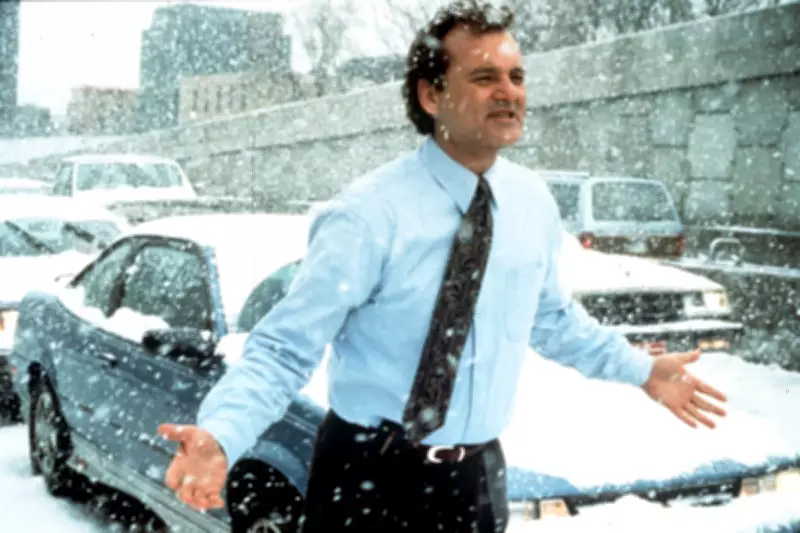
As the United States marks another Groundhog Day, the annual tradition where Punxsutawney Phil predicts the remaining winter weather, attention also turns to the iconic 1993 film that shares its name. Groundhog Day, starring Bill Murray, has become a cultural touchstone, celebrated for its humorous yet profound exploration of a man caught in an endless temporal cycle.
The Endless Cycle of Phil Connors
In the film, Bill Murray portrays Phil Connors, a cynical weatherman who finds himself inexplicably trapped in a time loop, forced to relive February 2nd in Punxsutawney, Pennsylvania, repeatedly. The narrative follows his journey from frustration to personal growth as he experiences the same day over and over again.
Calculating the Duration of the Loop
A detailed calculation by Whatculture.com has provided a fascinating insight into just how long Phil Connors endured this peculiar predicament. According to their analysis, the character was stuck in the loop for an astonishing 33 years and 350 days.

This estimate translates to Phil repeating the same day a total of 12,395 times. The breakdown of this figure is based on three key components:
- 38 days shown directly on screen during the film's runtime.
- 414 days that are mentioned or implied through dialogue and narrative context.
- An additional 11,931 days dedicated to Phil learning various new skills, such as mastering the piano and becoming proficient in ice sculpting.
Directorial Insight and Alignment
This calculation aligns remarkably well with previous statements from the film's director, the late Harold Ramis. Ramis once suggested that Phil Connors would have been trapped for approximately "30 or 40 years", a rough estimate that the detailed analysis now corroborates with precise figures.
The film uses this extended period not merely as a plot device but as a metaphor for personal redemption and the human capacity for change. Phil's journey from a self-centred weatherman to a compassionate community figure unfolds across these thousands of repeated days, highlighting themes of self-improvement and existential reflection.
As Groundhog Day continues to be celebrated both as a folk tradition and through the enduring popularity of the film, this new analysis adds a layer of quantifiable intrigue to Bill Murray's iconic performance. It underscores the meticulous thought behind the screenplay and the lasting appeal of a story about breaking free from life's monotonous cycles.