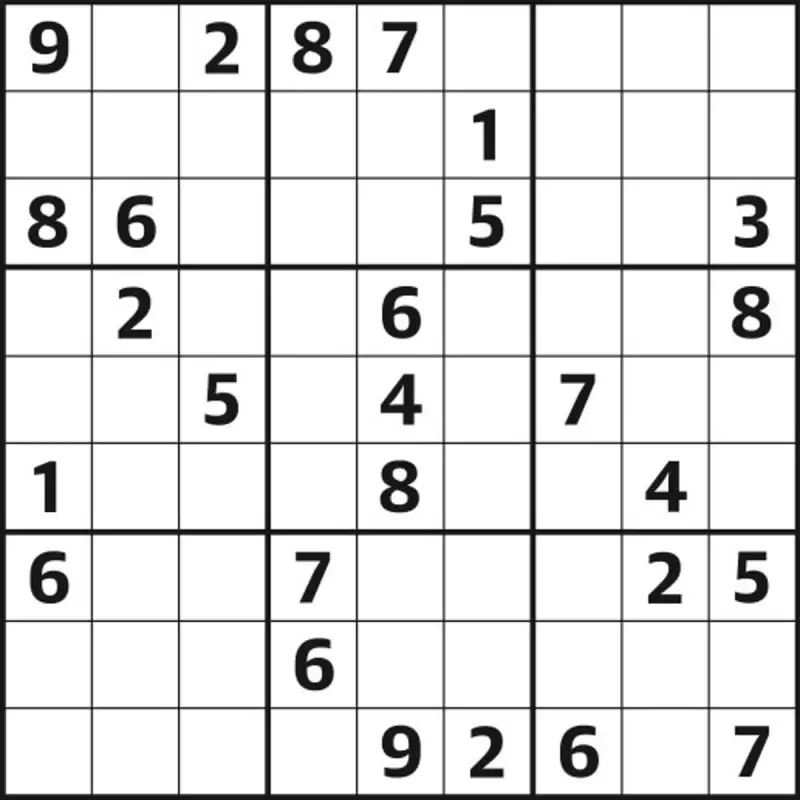
For dedicated solvers across the UK, the arrival of a new hard Sudoku in The Guardian is a weekly ritual that tests mental mettle. The puzzle labelled Sudoku 7175, published on the hypothetical date of 15 January 2026, stands as a formidable example of the genre, designed to push logical deduction to its limits.
Dissecting the Challenge of Puzzle 7175
This particular grid, while adhering to the classic 9x9 rules, is constructed with a specific cunning. Its initial clue placement is sparse and strategically positioned to maximise complexity. Solvers cannot rely on simple elimination; they must deploy advanced techniques. The puzzle demands a deep understanding of patterns like X-Wings, Swordfish, and XY-Chains to untangle the interlocking possibilities. Each number placed is a hard-won victory, opening a narrow path forward rather than flooding the grid with obvious answers.
The experience of tackling Sudoku 7175 is one of meticulous patience. It is a battle against ambiguity, where the solver must often hold multiple potential scenarios in mind before a single contradiction or confirmation collapses the possibilities into a single, inevitable solution. The satisfaction derived from completing such a puzzle is proportional to the struggle, offering a genuine sense of intellectual accomplishment.

Why Hard Sudoku Puzzles Captivate Millions
Puzzles like number 7175 are more than just a pastime; they are a cognitive workout. Engaging regularly with high-difficulty Sudoku has been linked to benefits such as improved concentration, enhanced problem-solving skills, and a delay in cognitive decline. The Guardian's commitment to providing a consistently challenging hard puzzle every week caters to a community of enthusiasts who seek this specific type of mental stimulation.
The appeal lies in the pure logic. Unlike crosswords which rely on vocabulary and general knowledge, Sudoku is a universal language of numbers and patterns. It offers a clear, structured problem with a single correct solution—a welcome slice of order and solvability in a complex world. The 'hard' classification is a badge of honour for solvers, separating casual dabblers from the dedicated aficionados.
Strategies for Conquering the Toughest Grids
Facing a grid as daunting as Sudoku 7175 requires a systematic approach. Here are key strategies employed by top solvers:
- Pencil Marking Thoroughly: Every possible candidate for every empty cell must be noted lightly. This is the essential foundation for spotting hidden patterns.
- Looking for Locked Candidates: Often, a number within a row or column is confined to one 3x3 block, or vice-versa, allowing for eliminations elsewhere.
- Mastering Subset Patterns: Identifying Naked Pairs, Triples, or Quads within a row, column, or block can immediately remove those numbers from other cells in that unit.
- Progressing to Advanced Techniques: When basic methods stall, solvers must search for more complex patterns like X-Wings or Skyscrapers, which involve interactions across multiple rows and columns.
Ultimately, persistence is the most crucial tool. A puzzle like 7175 may require stepping away and returning with fresh eyes. Each solved cell is a stepping stone, and the final resolution, when all 81 squares align, provides a unique and profound satisfaction that keeps solvers returning to The Guardian's puzzle page week after week.