The Extraordinary Legacy of William Ap Howel
In the quiet parish of Tregaian on the island of Anglesey, a remarkable story of human fertility has been preserved through centuries. William Ap Howel, a man who lived to the extraordinary age of 105, managed to father 43 children during his lifetime, creating a population boom in a village that numbered just 80 inhabitants.
A Life of Modest Habits and Prolific Procreation
Church records from the 16th century reveal that William Ap Howel was not a man of imposing stature or extravagant lifestyle. Described as "small of stature, of a cheerful, convivial temper," he lived a simple existence centered around rural employment, fishing, and fowling. His diet consisted mostly of milk and dairy products, and he maintained robust health throughout his long life, never suffering from gout, stones, or serious illness.
What set William apart was his astonishing reproductive capacity. Beginning at age 21, he maintained a pattern of fathering a child approximately every two years for 81 consecutive years. When he finally passed away in March 1581, his youngest child was a son named Griffith, aged just two and a half years.
The Women and Children Behind the Numbers
William achieved his remarkable tally through relationships with five different women. His first wife, Elen Williams, bore him 22 children. After her passing, his second wife Katherine Richards contributed another 10 offspring. His third wife, Ellen Williams, apparently more cautious about his prolific ways, produced just four children.
Beyond his three marriages, William maintained relationships with two women described in records as "concubines." Jonet ferch William delivered two more children, while Lecky Lloyd provided another five, bringing the total to 43 documented offspring.
The Demographic Impact on a Tiny Community
The sheer scale of William's family had profound implications for the small parish of Tregaian. To put this in perspective, during William's lifetime, the larger neighboring parish of Llanfairpwll had a population of approximately 80 people. At the time of William's death, 80 of his direct descendants were still living in Tregaian parish alone.
His funeral became a testament to his reproductive legacy, with an estimated 300 descendants in attendance. Parish records noted with some awe that he had "children's children to the fourth generation in abundance." Even his eldest daughter Alice, then aged 72, had been married twice and produced "numerous offspring" of her own, continuing the family tradition of large families.
Historical Context and Modern Comparisons
While large families were more common in the 16th century than today, William's achievement was extraordinary even by contemporary standards. The average household size in Wales and England during that period was a modest 4.75 people, a figure that remained relatively consistent until the First World War.
William's story gained enough notoriety to be recorded by travel author Thomas Pennant in his 1778 publication A Tour in Wales. Pennant felt compelled to document this "great patriarch of Tregaian" during his travels through Anglesey, noting the contrast between William's modest lifestyle and his extraordinary reproductive output.
Despite his impressive numbers, William Ap Howel represents just a minor entry in the history of human reproduction. Historical figures like Moulay Ismail Ibn Sharif, an 18th century Moroccan ruler, allegedly sired over 1,000 children. Even within Wales, some claim the artist Augustus John may have fathered up to 100 children, though this figure is disputed by historians.
Preserving the Memory of a Prolific Patriarch
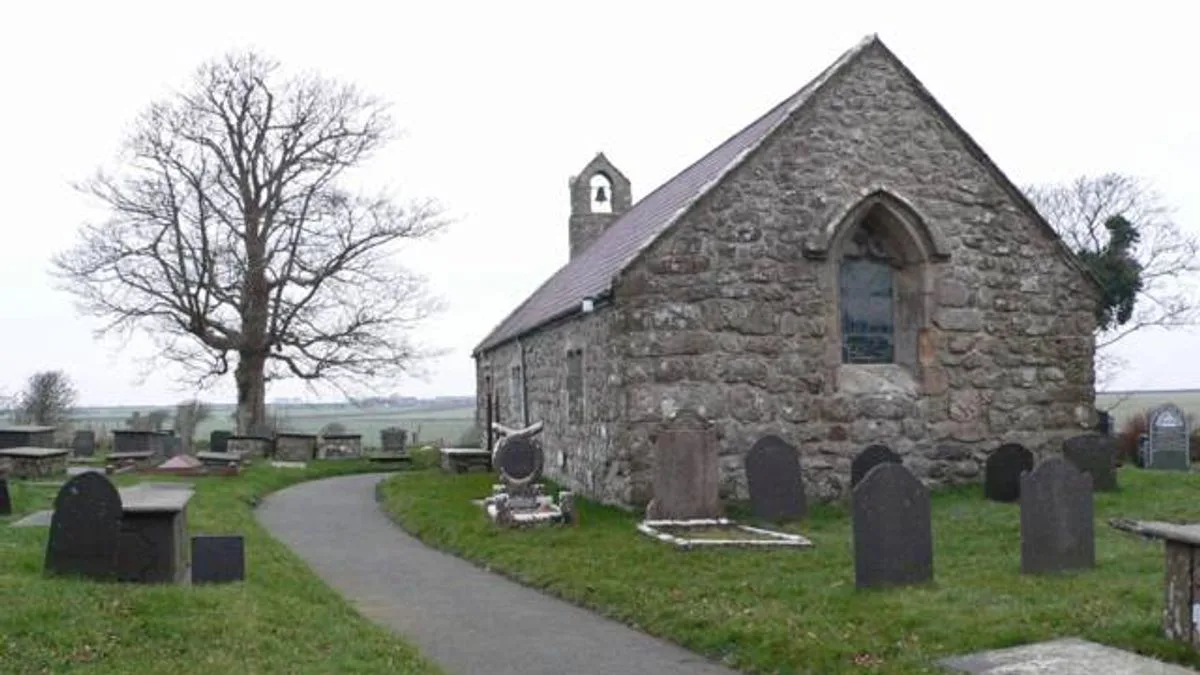
Today, William's accomplishments are commemorated with a simple plaque and inscribed slate at the Grade II*-listed St Caian's Church in Tregaian. The inscription verifies his death on March 11, 1581, and notes that he "begat 43 children." The humble medieval church where his children were baptized features a font that was noted in 1847 as being "hardly large enough for immersion," perhaps a testament to the frequency of baptisms during William's prolific years.
Local tradition suggests William may have supplemented his family's food supply through poaching, utilizing the hunting skills he developed through his leisure activities. This practical approach to supporting such a large brood speaks to the challenges and adaptations required when raising 43 children in a small rural community.
The story of William Ap Howel continues to fascinate genealogists and historians, offering a window into family life, reproduction, and community dynamics in 16th century Wales. His legacy lives on not just in historical records, but in the genetic heritage he left scattered across Anglesey and beyond.