In a compelling special episode of the Daily Mail's Queens, Kings and Dastardly Things podcast, esteemed royal biographers Robert Hardman and Kate Williams delve into the blood-soaked life of one of history's most notorious figures: Vlad the Impaler. This medieval prince, whose reign was marked by brutality and strategic cunning, ruled intermittently over Wallachia, a region in modern-day Romania, from 1448 to 1476.
The Historical Context of Vlad's Reign
During the medieval period, Wallachia occupied a precarious position as a buffer state at the crossroads between Christian Europe and the expanding Islamic Ottoman Empire. This geopolitical tension created an environment of constant warfare and shifting alliances, which defined Vlad's turbulent rule. Historians continue to debate whether the region's instability forged Vlad into a monster or if he exhibited traits we would now classify as psychopathic.
Acts of Extreme Cruelty
Vlad is best remembered for his acts of extreme cruelty, particularly the method of execution that earned him his infamous moniker. He ordered thousands of prisoners to be impaled on stakes outside his stronghold, a gruesome tactic intended as a stark warning to advancing armies. These brutal deeds have cemented his legacy as a symbol of terror throughout history.
The Surprising Royal Connection
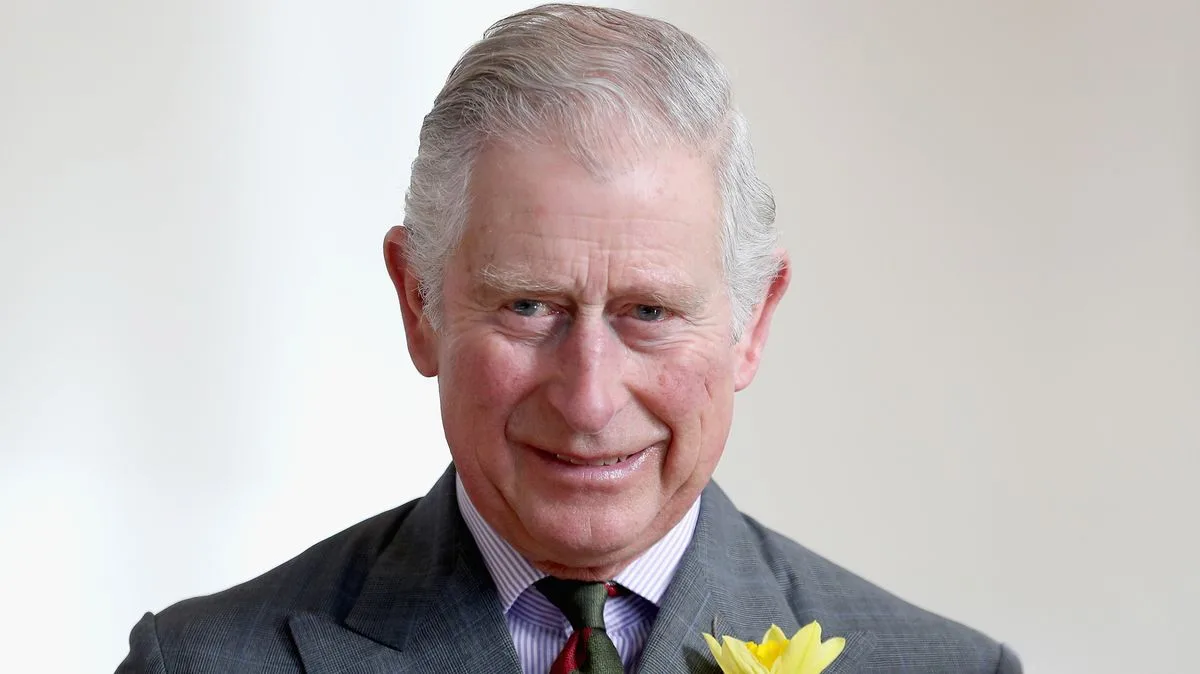
One of the most fascinating revelations from the podcast is the blood connection between Vlad the Impaler and Britain's own King Charles III. As Robert Hardman explains, King Charles is Vlad's great-grandson 16 times removed, a lineage traced through the King's great-great-grandmother, Queen Mary, the wife of George V.
Hardman elaborates on this ancestral link: 'Queen Mary's original title was Mary of Teck. The Tecks were a minor princely house from Germany. Mary was meant to come over to Britain to marry the son and heir of Edward VII, the Duke of Clarence. The Duke died and she ended up marrying George V. They had George VI, who then had Elizabeth II. That's the connection to Charles.'
Further details reveal that Queen Mary's grandmother, Countess Claudine Rhédey de Kis-Rhéde, was descended from Transylvanian nobility. Her bloodline emerged from two of Vlad's sons, Vlad IV and Prince Mihnea, solidifying the genealogical tie to the infamous ruler.
King Charles's Affection for Transylvania
According to Hardman, King Charles has always drawn significant enjoyment from his Romanian roots. In 1998, nearly a decade after the fall of the Berlin Wall, then Prince Charles embarked on a tour of Transylvania to strengthen ties with Romania, which had recently emerged from the repressive rule of the Ceaușescus.
It was during this tour that Charles developed a deep affection for the region's beautiful Saxon churches. He became patron of a charity dedicated to preserving these historical structures, demonstrating his commitment to cultural heritage. Hardman, who accompanied Charles as a royal correspondent, recalls: 'I remember going into one of the churches with Charles and him being completely gobsmacked. He had heard that there wasn't anyone worshipping in them anymore and therefore there was nobody to look after them. There was a charity at the time that was trying to preserve them, and they asked him to be their patron. He immediately accepted.'
In 2011, Charles appeared in a BBC documentary on Romania, expressing his love for the Carpathian Mountains. When questioned about his affinity for the region, the King humorously remarked: 'It's because I have a stake in the country!'—a witty reference to his ancestral link to the real Dracula.
Vlad's Influence on Popular Culture
The podcast also explores how Vlad's dastardly deeds influenced Bram Stoker's creation of the fiendish Count Dracula. This connection between historical fact and literary fiction adds another layer to the enduring fascination with Vlad's legacy. The bloodline from Vlad to King Charles serves as a tangible bridge between medieval history and contemporary royalty.
To hear the full exploration of Vlad the Impaler's life and his surprising connection to British royalty, listeners can search for Queens, Kings and Dastardly Things wherever they get their podcasts.