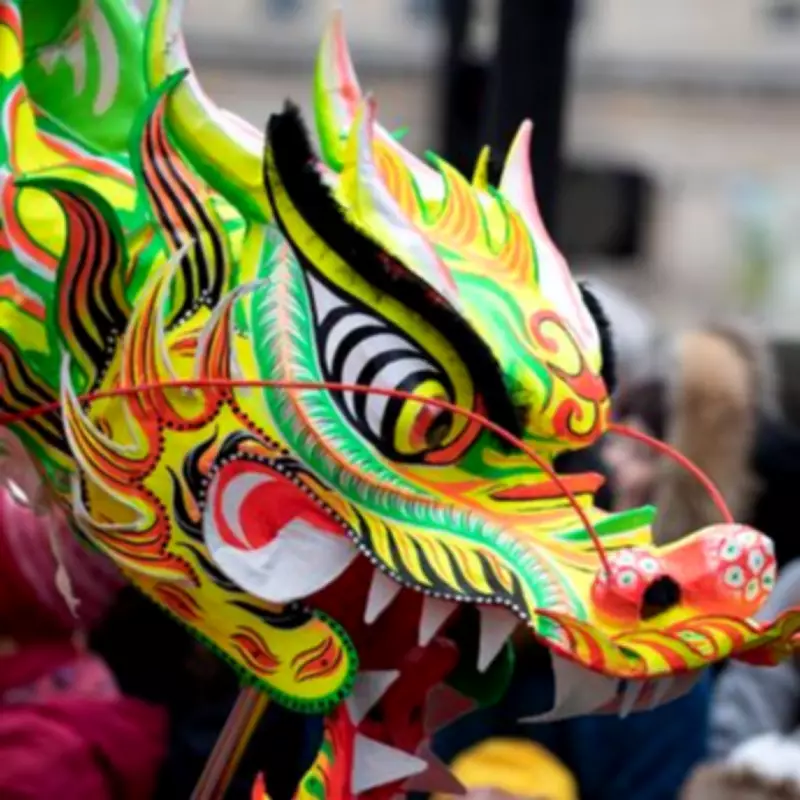
As the world prepares to welcome the vibrant festivities of Chinese New Year, attention turns to the celestial forecasts that accompany the dawn of each Lunar New Year. This significant cultural event, set to be celebrated on Tuesday, February 17, 2026, heralds the arrival of the Year of the Fire Horse—a period steeped in symbolism and traditionally linked to themes of rebirth, new beginnings, and revitalised prosperity.
A Fresh Cycle of Zodiac Insights
With each new Lunar New Year, the twelve animals of the Chinese zodiac receive updated horoscopes, offering guidance and predictions across key life domains including romance, personal wellbeing, relationships, and crucially, financial fortunes. Unlike the linear Gregorian calendar, the Chinese system operates on a complex, recurring 60-year cycle. This pattern is formed by combining five elemental cycles with the twelve-year rotation of the zodiac animals, creating a rich tapestry of astrological influence.
Financial Fortunes in the Year of the Fire Horse
The Year of the Fire Horse promises a dynamic energy, but its blessings are not distributed equally. While some zodiac signs may find themselves riding a wave of robust luck and favourable progress, others might need to navigate greater challenges and obstacles with care. For those seeking financial advancement, specific months have been highlighted as particularly auspicious for each sign.

Here is a detailed breakdown of the predicted wealthiest months for each Chinese zodiac sign in 2026:
- Rat: February
- Ox: March and August
- Tiger: November
- Rabbit: September
- Dragon: July
- Snake: August
- Horse: September
- Sheep: Relatively high financial prospects are anticipated throughout the year
- Monkey: July
- Rooster: July
- Dog: From March onwards
- Pig: May and December
Understanding Chinese New Year Celebrations
Chinese New Year stands as the most important festival in the traditional Chinese calendar, marking the beginning of a new year and introducing the latest symbol in the twelve-year zodiac rotation. The celebrations are renowned for their colourful and joyous customs, which are deeply rooted in history and symbolism.
Common traditions observed during this festive period include the hanging of decorative red lanterns and Spring Festival couplets, the gathering of families for lavish reunion dinners featuring dishes considered to bring luck, the loud cracking of firecrackers and dazzling displays of fireworks to ward off evil spirits, and the giving of red envelopes containing money as tokens of good fortune and blessings.
Chinese New Year vs. Lunar New Year: A Note on Terminology
The influence of Chinese New Year has extended far beyond China's borders, with celebrations taking root in communities worldwide. In recent years, the term Lunar New Year has gained broader usage to describe the various festivals that occur simultaneously in other nations, many of which share similar customs with those practised in China.
When discussing festivities within China and among global Chinese communities, the terms Chinese New Year and Lunar New Year are often used interchangeably. Chinese New Year remains the appropriate term when specifically referring to the celebration that honours Chinese customs, heritage, and the Chinese lunisolar calendar.
However, Lunar New Year serves as a more inclusive, umbrella term. It encompasses all celebrations that welcome a new year based on lunar calendar systems, including those observed in Korea, Vietnam, and other cultures. Using the terms interchangeably outside of a Chinese context can be seen as disrespectful, as it may overlook the distinct customs, values, and unique celebratory practices of these other rich cultural traditions.