David Haig's New Play 'Magic' Stages Houdini and Conan Doyle's Spiritualist Conflict
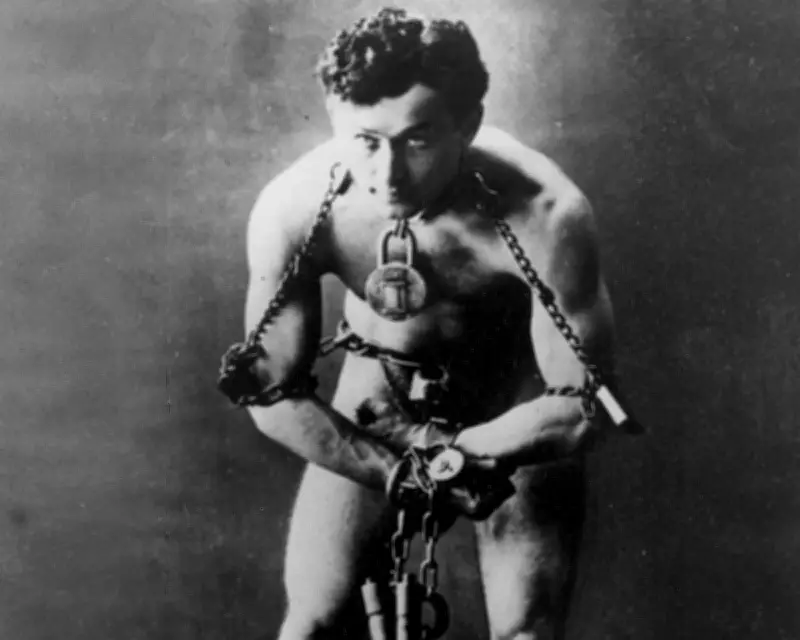
The legendary escapologist Harry Houdini, bound in chains circa 1899, and the creator of Sherlock Holmes, Sir Arthur Conan Doyle, formed an unlikely friendship that later erupted into a bitter dispute over spiritualism. This fascinating historical clash is now the subject of David Haig's latest play, Magic, which premieres this month at Chichester Festival Theatre.
From Google Search to Stage Drama
David Haig, acclaimed for roles in Killing Eve and The Thin Blue Line as well as plays like My Boy Jack, reveals the unromantic origin of his inspiration. "I mundanely Googled 'interesting unusual relationships in British history'," Haig admits, "and that's what came up." This digital discovery led him to the complex bond between Conan Doyle, a fervent spiritualist convinced he could communicate with the dead, and Houdini, a rationalist debunker who dismissed such practices as fraud.
Haig describes their initial connection as "like a chemical bonding", followed by a critical element that tested their relationship. The play, directed by Lucy Bailey, promises gasp-inducing illusions alongside its dramatic narrative, staging their camaraderie and subsequent rift.

The Heart of the Conflict: Grief and Deception
Magic centres on Conan Doyle and his wife Jean's attempts to contact their son Kingsley, killed in the First World War, through spirit medium Mina Crandon. Houdini, who had attended numerous séances seeking his own deceased mother, assembled "an army of debunkers" to expose Crandon's fakery. Haig explains, "[Houdini] became viscerally angry and perceived them as abuse of the grieving."
Despite modern audiences potentially siding with Houdini's scepticism, Haig—who plays Conan Doyle—emphasises the importance of sympathy. "He was seeking a religion that was scientifically based," Haig notes, referencing period beliefs like electromagnetism as a means to contact spirits. "The energy of Conan Doyle's optimism was always engaging." He aims to avoid ridicule, ensuring the faith element is not played as comedy.
Ambivalences of Fame and Magic
The play delves into the ambivalences both men felt toward their own fame. "Houdini wanted not to be an entertainer but a great writer—like Conan Doyle," Haig observes. Conversely, Conan Doyle resented being overshadowed by Sherlock Holmes, feeling "like a great Shakespearean actor trapped in a sitcom all his life."
This theme extends to the very definition of magic, probing whether spiritual faith constitutes magic or if it requires deception. Haig, a lifelong rationalist and self-described "profound atheist", approaches the material from a sceptical yet open-minded perspective. He shares that his grandmother attended many séances, though he has never been to one himself.
Personal Connections and Future Contemplations
Haig's work often touches on bereavement, as seen in My Boy Jack, which also deals with a son lost in the First World War. He attributes this partly to the death of his own sister at age 22, 44 years ago. Now 70, Haig contemplates his future in theatre, noting, "I think this may be [my last play]. How long do you go on for?" He references icons like Ian McKellen and Judi Dench but acknowledges uncertainty.
Reflecting on his dual career as actor and playwright, Haig states with characteristic understatement, "I would be very, very reassured that things have, on the whole, been fulfilling." Magic runs at Chichester Festival Theatre from 24 April to 16 May, offering a blend of historical drama and theatrical illusion that explores faith, fakery, and the enduring human search for connection beyond the grave.