Syrian Television Dramas Make Ramadan Comeback in Post-Assad Era
Across the Arab world, the holy month of Ramadan brings not only spiritual reflection through fasting and prayer but also a deeply ingrained cultural tradition: the annual broadcast of highly anticipated television drama series. After breaking their daily fast, families traditionally gather to watch these programs, which span intricate soap operas, compelling political narratives, and historical epics. This communal viewing experience, often accompanied by sweets, nuts, tea, and coffee, extends late into the evening, forming a cornerstone of Ramadan nights.
For decades, the most eagerly awaited productions have frequently originated from Syria. While Egypt is celebrated for its cinematic heritage and Lebanon for its pop singers and composers, Syrian television series have long been regarded as the regional gold standard for quality and storytelling.
A Fractured Industry Seeks Footing
As Syria emerges from fourteen years of devastating civil war, more than a year after Islamist-led insurgents ended the authoritarian Assad dynasty, the nation's television industry is cautiously seeking its footing within the new political order. Under the Assad regime, where political expression was severely restricted, television became a primary platform for artistic freedom and employment for creatives, allowing subtle boundary-pushing, according to Christa Salamandra, an anthropology professor at Lehman College and the City University of New York who has researched Syrian drama extensively.
The 2011 anti-government protests, met with a brutal crackdown that spiraled into civil war, caused the industry to fracture dramatically. "Creatives went into exile — or they stayed, but it split," Salamandra noted. Following Assad's fall, actors and directors formerly divided along political lines are now collaborating once more. Series addressing once-taboo subjects, such as torture within Assad's notorious prisons, are being filmed inside Syria again. However, the postwar trajectory of TV drama remains complex, mirroring the challenges of the new Syria.
Filming Forbidden Stories in Aleppo
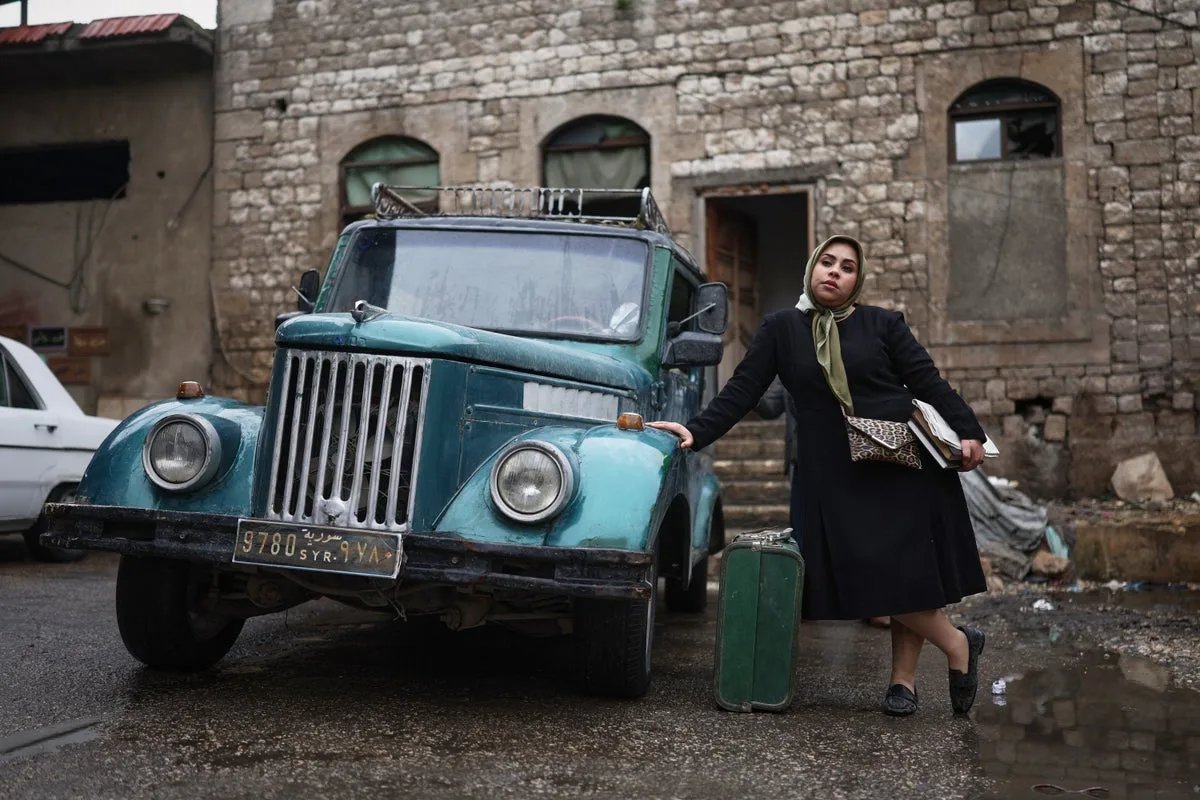
On a chilly day just before Ramadan, a television crew transformed a street in central Aleppo, a city that was a central battleground during the war. Amidst the backdrop of collapsed buildings, the set was magically recreated to evoke a more innocent era, featuring classic 1970s cars, a horse-drawn cart, and a vendor in a tarboush hat selling sahlep, a sweet hot milk drink.
The series, "Al-Souriyoun al-Aada" ("The Syrian Enemies"), is based on a novel banned during Assad's rule for its focus on dark historical moments, including the 1982 "Hama massacre." In that event, ordered by then-President Hafez Assad to quell a Muslim Brotherhood rebellion, an estimated 10,000 to 40,000 people were killed or disappeared during a month-long assault that left the city in ruins.
In the television adaptation, prominent actor Yara Sabri, who left Syria for years due to her opposition to Assad, returns to play the mother of a troubled young man from an Alawite village who becomes a key figure in the country's oppressive security apparatus. Co-star Wissam Rida, who plays her son, expressed his awe at working with exiled stars like Sabri, a dream he thought impossible during his early career in Damascus. "They came back with such beautiful energy you can’t imagine, and you can’t imagine how much we were in need of them," Rida said.
Navigating New Authorities and Censorship
Despite the renewed collaboration, production has faced significant hurdles. Director Allaith Hajjo, known for acclaimed series like "Dayaa Dayaa" ("A Lost Village") and "Intizar" ("Waiting"), never left Syria. He recalled that under the Assad regime, creatives constantly devised ways to bypass censors. Now, he faces new challenges, including social media attacks over casting actors perceived as close to the former regime and navigating inexperienced new authorities.
"The new authorities have little experience in dealing with artistic productions," Hajjo explained, noting that the work encountered "some problems" with censors. He hopes the learning period for officials will not compromise output quality. The series, initially slated for a Ramadan broadcast, has been delayed and will likely air after the holy month. The National Drama Committee, the government body reviewing scripts, did not respond to inquiries.
Conversely, director Rasha Sharbatji, who filmed the Ramadan series "Matbatkh al Medina" ("The City's Kitchen"), found the new authorities more accommodating, mentioning that interim President Ahmad al-Sharaa has shown personal interest in drama. However, it remains uncertain whether the government will permit open discussion of post-Assad issues, such as sectarian violence involving government forces. Salamandra predicts creators will likely "make serials about the old atrocities with subtle references to the recent ones. Because that’s what they’ve always done."
Exiled Stars Return to Rebuild
Jihad Abdo, a top actor from the 1990s and early 2000s, is among the exiled stars who have returned. He fled Syria in 2011 after criticizing Assad, restarting his career in the United States under the name Jay to avoid associations with extremism. After landing roles in major productions like the 2015 film "Queen of the Desert" with Nicole Kidman, he longed for home.
Now back in Damascus, Abdo stars in the Ramadan web series "Al-Meqaad al-Akheer" ("The Last Seat") as a man battling Alzheimer's and leads Syria's General Organization for Cinema, tasked with rebuilding the film industry despite having no budget. He asserts that "the margin of freedom is bigger" than during Assad's era, with no subjects explicitly off-limits, though the exact boundaries remain undefined. "We are trying to make it as big as possible, because we need to address the problems in order to solve them," Abdo stated.
Abdo believes the television industry can play a crucial role in postwar reconciliation by telling human stories and demonstrating collaboration across political divides. "The wound is big, it’s bleeding, it is still open," he acknowledged. "But it’s our responsibility, the people in entertainment, the intellectuals, prominent names, to bring everybody together again and to keep talking, no matter how different we are." As Syrian TV dramas cautiously return to Ramadan screens, they symbolize both the challenges and hopes of a nation rebuilding after conflict.