Simple Minds' Hidden Gift Sparked Barrowland Ballroom's Music Revival
Simple Minds' Hidden Gift Sparked Barrowland's Music Revival

The Hidden Message That Revived a Glasgow Icon

Perched high above the stage of Glasgow's Barrowland Ballroom, author Alison Irvine discovered a hastily scrawled message that would unlock the venue's dramatic rebirth. Scribbled in white marker pen, the cryptic words read: 'These points are a gift from Simple Minds to Big Country. Happy New Year.' This obscure festive exchange between two of Scotland's most successful early-Eighties bands marked a seminal moment in the storied life of this once-moribund institution.

From Dance Hall Decline to Music Venue Renaissance

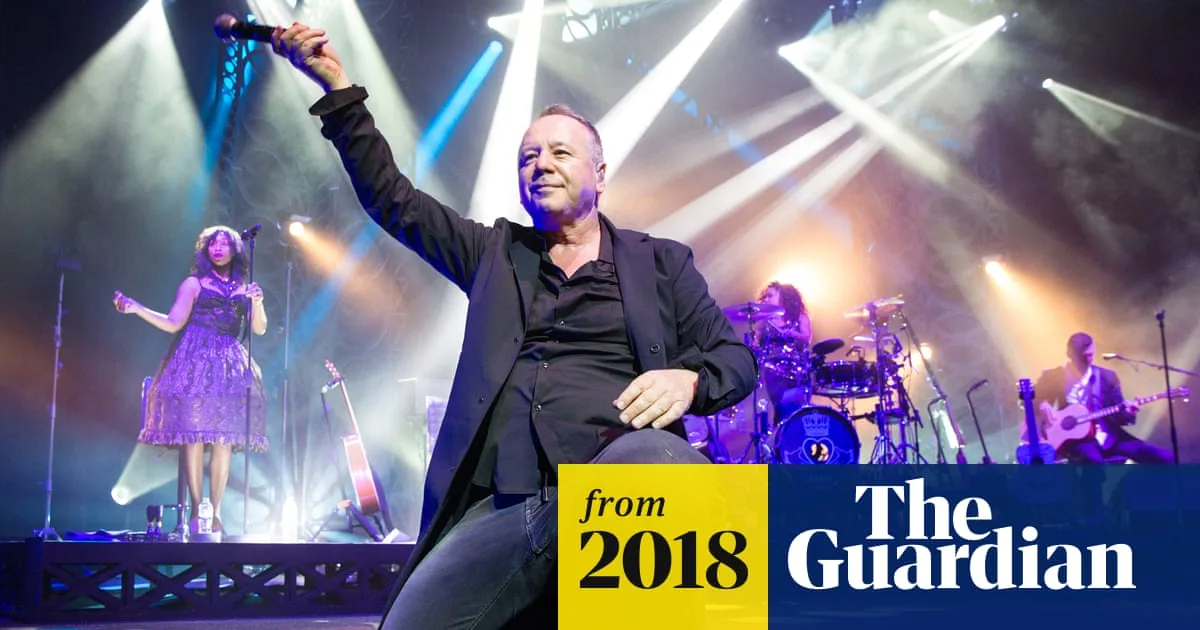
The Barrowland Ballroom, which served as Glasgow's premier East End dance hall in its post-war heyday, survived devastating fire and Bible John notoriety only to be mothballed by the late Seventies after falling out of fashion. Its fortunes changed dramatically in November 1983 when local rock band Simple Minds requested to use the vacant ballroom to film the video for their hit song Waterfront.

Under the famous stars, acoustic ceiling tiles, and sparkling mirror balls, a thousand-strong audience of excitable young music fans – selected by postal ballot – heaved and swayed enthusiastically as the band performed the song repeatedly. The track, intended as Glasgow's anthem about Clydeside's shipbuilding heritage and feelings of hope, unwittingly became the siren call for the Barrowland's own renaissance as a live music host.

Wide Pickt banner — collaborative shopping lists app for Telegram, phone mockup with grocery list

The Gift That Kept on Giving

Within a month, Simple Minds returned to play three pre-Christmas nights before Big Country followed in the New Year. As a gift to their compatriots – and every band since – Simple Minds left their 'points' – the steel nodes installed for the Waterfront shoot and subsequent gigs on which rigging for lights and PA systems could be safely installed. Hence the hidden message discovered by Irvine decades later.

In 1984 alone, these points were used by The Clash, Simple Minds again, Spear of Destiny, The Smiths, Siouxsie and the Banshees, The Cure, Aztec Camera, Depeche Mode, Echo and the Bunnymen, Level 42, Motorhead, UB40 and Marillion. The Barrowland was up and running again as the celebrated Canadian maple wood dance floor bounced to a new beat.

Uncovering the Mechanics of Magic

In her comprehensive new book Barrowland, richly detailed and wonderfully illustrated with photographs by collaborators Chris Leslie and Gareth Fraser, Irvine sought to 'unpick the mechanics of the Barrowland Ballroom – what makes it, and who makes it, a really well-known and well-loved place.' Beyond musicians and gig-goers, she interviewed bar staff, maintenance men and cleaners, whose personalities feed into 'this heady mix that is a night out at the Barrowland Ballroom.'

The book reveals magical titbits of trivia, including how artists earn their place on the Barrowland's Hall of Fame – a green-painted wall filled with wooden plaques bearing names like Paul Weller, Texas, Garbage, Biffy Clyro, David Bowie, James, Iggy Pop and The Waterboys. According to crew boss Billy Coyle, who oversees lifting equipment up the venue's 72 steps for each gig, qualification requires bringing prestige to the venue.

Legendary Gestures and Stolen Stars

Examples include adding the Barrowland to tours despite playing bigger venues, like Manic Street Preachers, Leftfield and The Waterboys have done, or working behind the scenes as crew before fame, like Noel Gallagher and Shirley Manson. Gallagher paid his dues lugging gear for Inspiral Carpets and famously continued playing when his brother Liam walked off during a 1994 Barrowland gig.

David Bowie received special honour during a 1991 sound check with Tin Machine when he remarked, 'If these stars could speak, there'd be millions of stories about the Barrowland.' Crew boss Billy Coyle offered him a star from the ceiling, which Bowie reportedly displayed in his Paris bathroom. Bowie later honoured his promise to return for a solo show in 1997.

The venue's plaster of Paris stars regularly go missing from dressing rooms despite signs warning against theft, with a tacit understanding that each act will walk off with one. Irvine uncovered quirky links to the ballroom's dance hall past, including balloon hatches in the attic last used for a wedding and mistletoe once hung from the ceiling for Christmassy romance.

Pickt after-article banner — collaborative shopping lists app with family illustration

A Venue Steeped in Glasgow History

The Barrowland remains one of Britain's great independent venues, still owned by the family of founder Maggie MacIver, the 'Barras Queen' who established the neighbouring Barras market in the 1920s. After failing to secure a venue for her annual Christmas Ball, she built the original Barrowland Ballroom, which opened on Christmas Eve 1934 with a giant sculpture of a hawker pushing his cart dominating the roofline.

Destroyed by fire in 1958 shortly after Maggie's death, her son Sam rebuilt the ballroom in her memory, reopening on Christmas Eve 1960. The only surviving fixture from the original building is the cartwheel made into a neon sign above the entrance stairs. The iconic exploding stars neon frontage dates only to 1985, inspired by managing director Victor Cairns' frequent Las Vegas visits.

Dark Shadows and Renewed Glory

The venue became a popular dance hall where 'courting couples – and those escaping unhappy marriages – would go to dance away their cares.' As Irvine notes, 'Ask a Glaswegian where their grandparents met and the odds of them saying the Barrowland Ballroom are high.' Singer Rianne Downey recalled her grandparents meeting there when 'my granda had a half bottle of vodka in his pocket and offered it to my gran and that was it.'

The story darkens with the late-1960s murders of three women who had gone there to dance, with popularity waning under the shadow of Bible John. After closing in the 1970s, the Barrowland reopened as a sweaty, atmospheric concert hall with loud bands attracted by exuberant crowds whose stomping got the sprung dance floor jumping again.

Surviving Crisis and Celebrating Community

During COVID-19 when live music was suspended, it wasn't clear whether the Barrowland would survive the financial hit. House photographer Gareth Fraser recalls being invited to wander the empty ballroom: 'I sat on the stage with my legs dangling off the side looking across the ballroom... There was a definite feeling of belonging and a sense of home.'

Irvine's book captures snippets from ordinary punters about 'having to leave gigs early and running down Argyle Street to Central Station to try and catch the last train home, or queuing up overnight to buy tickets.' She emphasizes, 'This is a book that could not have been written without ordinary people's input, whether it's staff or bands or gig-goers.'

Now a regular gig-goer during her 20 years in Glasgow, Irvine writes about her daughters' first Barrowland experience seeing Lucy Dacus while she worked a shift behind the bar. 'I've worked a few paid shifts there myself now, because I didn't want to not be involved with the Barrowland anymore,' she admitted. 'The headliners and the big gigs are part of the history of the Barrowland, but we, the audience, make it what it is too with our stories.'