Searows' Maritime Muse: How Moby-Dick Shaped a Gen Z Music Phenomenon
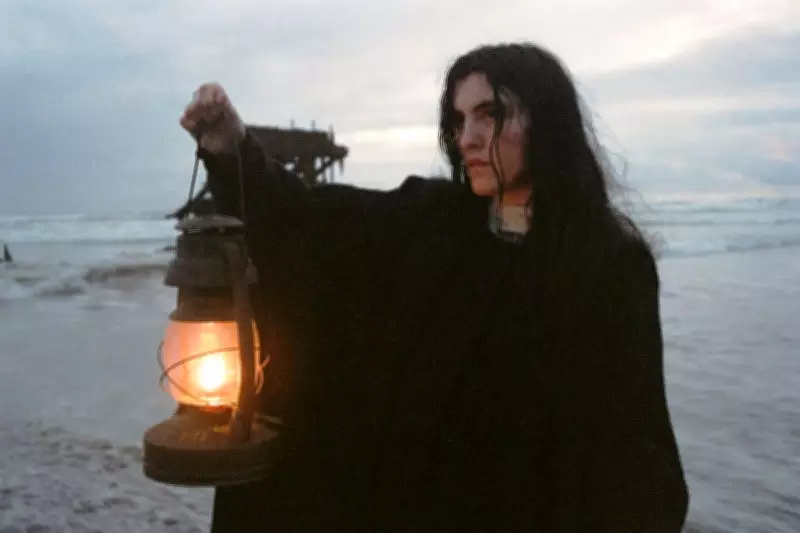
In a striking departure from the confessional style dominating contemporary music, indie singer-songwriter Alec Duckart – performing under the moniker Searows – has crafted a haunting sophomore album inspired by maritime themes, fish guts, shipwrecks, and mortality. The 26-year-old Oregon native's latest work, Death in the Business of Whaling, represents a significant artistic evolution, weaving dark oceanic imagery through poetic lyrics that have captivated a rapidly growing fanbase.
From TikTok Beginnings to Touring with Pop Stars
Duckart first gained attention during the pandemic, uploading vulnerable songs about isolation and heartbreak from his childhood bedroom on TikTok. His gossamer voice and candid yet poetic lyrics drew comparisons to artists like Sufjan Stevens and Arlo Parks, quickly amassing a devoted online following. This digital foundation propelled him to real-world success, with recent tours opening for prominent pop artists including Gracie Abrams, Ethel Cain, and Matt Maltese.
The emotional resonance of his performances is undeniable – at his January release show, fans openly wept during his set, mirroring the intense reactions typically seen at concerts by artists like Bon Iver. While earlier work sparked comparisons to Phoebe Bridgers' distinctive vocal style, Death in the Business of Whaling marks Duckart's emergence as an artist with a fully realized, confident sound.

Literary Inspiration Without Direct Reading
Despite borrowing its title from Herman Melville's classic novel, Duckart admits he hasn't actually read Moby-Dick. Instead, his connection to the material stems from participating in a school production of the story, which served as an early performance opportunity and helped him overcome his naturally shy disposition. "The violent, monster type of ocean has always been really fascinating and terrifying to me," Duckart explains, revealing how maritime themes naturally permeate his creative vision.
Artistic Evolution and Professional Collaboration
Death in the Business of Whaling represents several firsts for Duckart – not only his most polished work to date, but also his first experience recording an entire album in a professional studio. He traveled to Washington state to collaborate with producer Trevor Spencer, known for his work with Father John Misty and Fleet Foxes, just outside Seattle. Relinquishing creative control proved both "incredible and scary" for the previously self-contained artist, but ultimately provided the fresh perspective his two-years-in-the-making project required.
The album ventures into new thematic territory, exploring memory, regret, and mortality through character-driven narratives rather than purely personal confessionals. "I think I felt stuck in confessional storytelling," Duckart reflects. "I didn't know how I could keep writing about the same things over and over. It has to turn into something else – that's how the memory of those things works."
Personal Influences and Philosophical Reflections
Before committing to music full-time, Duckart worked at a retirement home, where he developed close relationships with people in their final years. This experience profoundly shaped his perspective on death, aging, and purpose, sometimes causing him to question whether his songwriting career carries the same meaningful weight as his previous work. "It just felt very rewarding in a way that... It's hard, because sometimes music feels like it's so isolated," he admits.
Musical influences from his Oregon upbringing – including artists like Gillian Welch and Neko Case – contribute to the atmospheric, sometimes gloomy quality of his sound. The album's tracks range from "Junie," inspired by Duckart's high-school guidance counselor, to the closing song "Geese," which directly references Mary Oliver's poem "Wild Geese." Duckart wrote the latter in response to the poem's opening line: "You do not have to be good."

"I didn't understand the first line of that poem for so long," he confesses. "I knew what she was saying, but I just thought, 'That doesn't apply. I do have to be good, actually. I don't know what else to be.'" This tension between moral purity and creative expression has been a recurring theme in his artistic journey. "Ultimately, you have to do something. You can't do nothing," he concludes, capturing the philosophical underpinnings of his latest work.
Death in the Business of Whaling is now available on all major streaming platforms. Searows is currently touring throughout Europe and the United Kingdom, with the North American leg of his tour scheduled to commence on April 23rd.