How the Ramones' Chart-Failing Debut Became Punk's Blueprint
Half a century ago, four leather-clad misfits from New York unleashed a fast, loud, and provocative debut album that would irrevocably alter the musical landscape. Despite bombing commercially and facing harsh criticism, Ramones has since been enshrined as one of the most influential debut records ever made.
The Visionary Manager and the Perfect Sound
Danny Fields, an influential music journalist turned manager, recalls his first encounter with the Ramones at CBGBs in early 1975. "It took my breath away," he whispers reverently, now 86. "They were perfect." The band—Joey, Johnny, Dee Dee, and Tommy Ramone—forged a snarling, high-speed sound that predated the punk label, drawing inspiration from the Stooges while crafting songs about glue-sniffing, male prostitution, and Nazis.
Fields saw their potential, but the mainstream did not. After numerous rejections, he secured a deal with indie label Sire Records. Released on April 23, 1976, the album sold a mere 6,000 copies in its first year. One critic notoriously dismissed it as "the sound of 10,000 toilets flushing," while radio stations favoured schmaltzier hits like Paul McCartney's "Silly Love Songs."

Recording on a Shoestring Budget
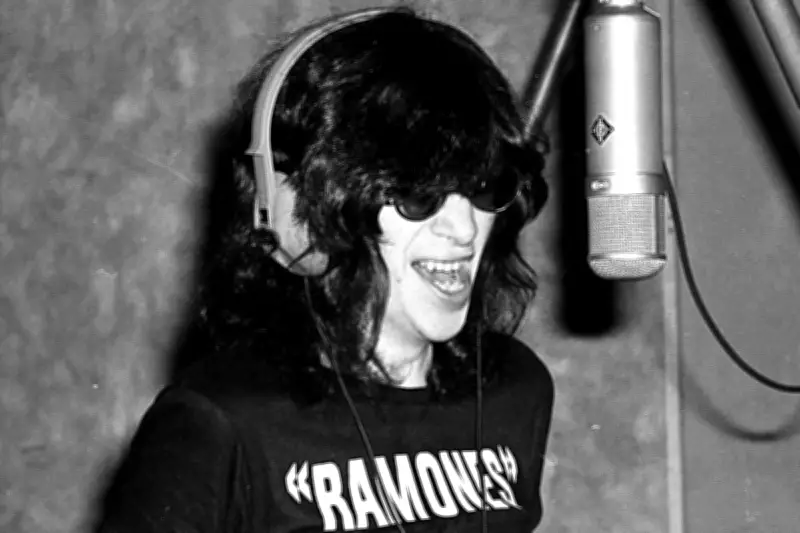
Producer Craig Leon, who worked with the band at Plaza Sound studio, envisioned them as the "Bizarro World Beatles." With a tight budget of $6,400, Leon employed techniques learned from George Martin and engineer Geoff Emerick to create the album's raw aesthetic. "We had fantasies about going to Abbey Road to make a record in two days," Leon says.
Financial constraints meant Leon had to handle backing vocals himself. "Michael Bolotin—who became Michael Bolton—almost ended up on the Ramones record," he reveals. "They wouldn't pay for his train fare from Connecticut."
Provocative Lyrics and Iconic Imagery
The album's lyrical content was deliberately confrontational. Dee Dee Ramone's "53rd & 3rd" explored dark themes of murder and prostitution, while "Today Your Love, Tomorrow The World" included controversial Nazi references. Fields, who is Jewish, notes that Joey and Tommy were also Jewish, interpreting the lyrics as a form of trolling against hippie sensibilities.
For the cover, the band initially wanted to mimic Meet The Beatles! but ultimately purchased a photograph from Roberta Bayley for $125. The now-iconic image of the band against a Bowery brick wall conveyed a threatening, gang-like aura. "People thought Johnny had a knife in his pocket," Bayley laughs. "It's not 'We're so punky, you're gonna love us,' it's: 'We're going to come to your home and rape your daughters.'"
Igniting a Global Movement
Though the album faltered commercially, it resonated deeply with a young, alienated audience. In England, Joe Strummer of The Clash credited it with sparking the punk revolution. "If that Ramones record hadn't existed I don't know that we could have built a scene here," he said in 2003.
The Ramones' 1976 London shows at the Roundhouse and Dingwalls became seminal events, attended by future punk icons. Fields recalls Paul Simonon of The Clash asking the band for their "magic trick." Johnny Ramone replied bluntly: "We're s***! We can't play! We just keep it fast and loud."
A Legacy Beyond Sales
The Ramones never achieved the hit singles they dreamed of, and all original members died before the album went gold—a milestone it reached only after 40 years. Yet, their influence is immeasurable. "They had more influence than many people who got a gold record in their first week," Bayley asserts.
Fields reflects on their enduring impact: "They changed music. They were fast and melodic, and they had a revolutionary purity." Ultimately, the Ramones' legacy lies not in record sales but in empowering generations to pick up instruments and create with DIY fervour. They proved that sometimes, two chords are enough to shake the walls of the city.