LSO's Triumphant Return with Treviño and Kopatchinskaja at Barbican Hall
The London Symphony Orchestra, under the baton of Robert Treviño, delivered a captivating performance at Barbican Hall, featuring soloist Patricia Kopatchinskaja. This concert marked a significant return for Treviño, nearly a decade after his acclaimed debut with the orchestra, and showcased a diverse programme that spanned mystical, contemporary, and cinematic works.
A Decade in the Making: Treviño's Commanding Comeback
Back in 2017, a relatively unknown American conductor, Robert Treviño, made a sensational debut with the London Symphony Orchestra, stepping in at short notice to lead Mahler's Third Symphony. This performance ignited his career across Europe, leading to his recent appointment as principal conductor of Bucharest's George Enescu Philharmonic. His return to the LSO podium was highly anticipated, and it did not disappoint.
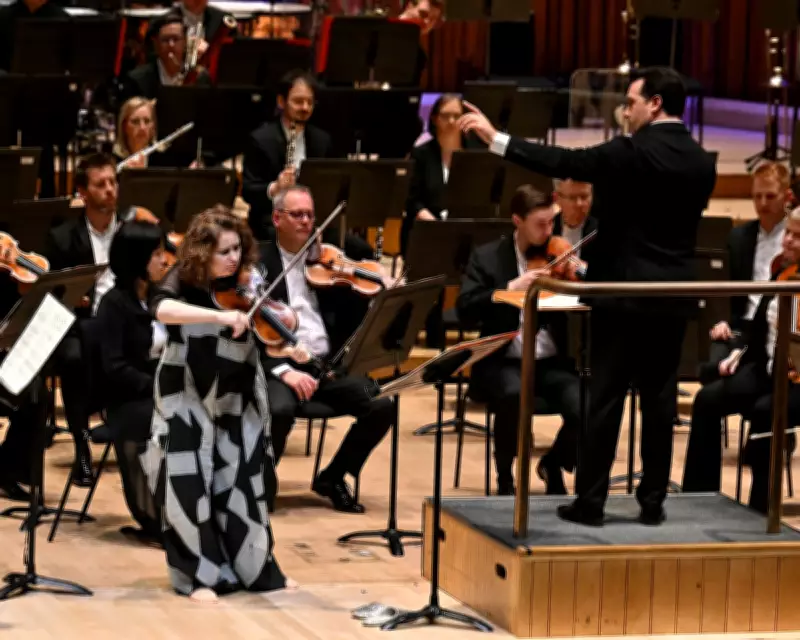
Treviño's conducting style is characterised by a coiled-spring muscularity and authority, rather than flamboyance. His tidy beat and deceptively contained gestures belied a powerful delivery that resonated throughout the evening's repertoire. This approach proved effective across a bizarrely programmed sequence, from mystical Messiaen to cinematic Rachmaninoff.

Mystical and Modern: The Programme's Diverse Offerings
The concert opened with Messiaen's 1932 Hymne, a work lost during the second world war and later reconstructed from memory by the composer. Treviño navigated this mystical, immanent piece with surety, ensuring the structural pillars remained clear amidst the clouds of incense from the LSO strings and the woodwind's distant organ tones. This set the stage for a journey through contrasting musical landscapes.
Next, Márton Illés's 2019 Vont-tér featured maverick soloist Patricia Kopatchinskaja in the second of her three Artist Portrait performances. This piece defies traditional concerto conventions, stripping away virtuosity and lyricism in favour of a haunted textural dance of shudders, creaks, and cracks. Kopatchinskaja was fiercely precise and playful, leading a chamber-sized LSO through this innovative work, though its connection to the other pieces in the programme remained enigmatic.
Cinematic Rachmaninoff: A Galloping Finale
The second half brought Rachmaninoff's Symphony No. 2, a crowd-pleaser that Treviño approached with cinematic flair. By tempering the work's monumentality with pace and vertical translucency, he created a dynamic interpretation where melodies were always in motion, glancing forwards or harking back within an integrated web. This prevented the symphony from becoming top-heavy, instead building towards an eruptive finale that galloped to a close, with the brass section evoking visions of Valhalla.
Overall, the concert demonstrated Treviño's growing authority and the LSO's versatility, making the nearly decade-long wait for his return well worth it. The Barbican Hall audience witnessed a performance that balanced historical depth with contemporary innovation, all delivered with muscular precision.