Italy's Last Cantastorie: Franco Trincale Sings On at 90 in Nursing Home
Italy's Last Cantastorie Sings On at 90 in Nursing Home

Italy's Last Cantastorie: Franco Trincale Sings On at 90 in Nursing Home

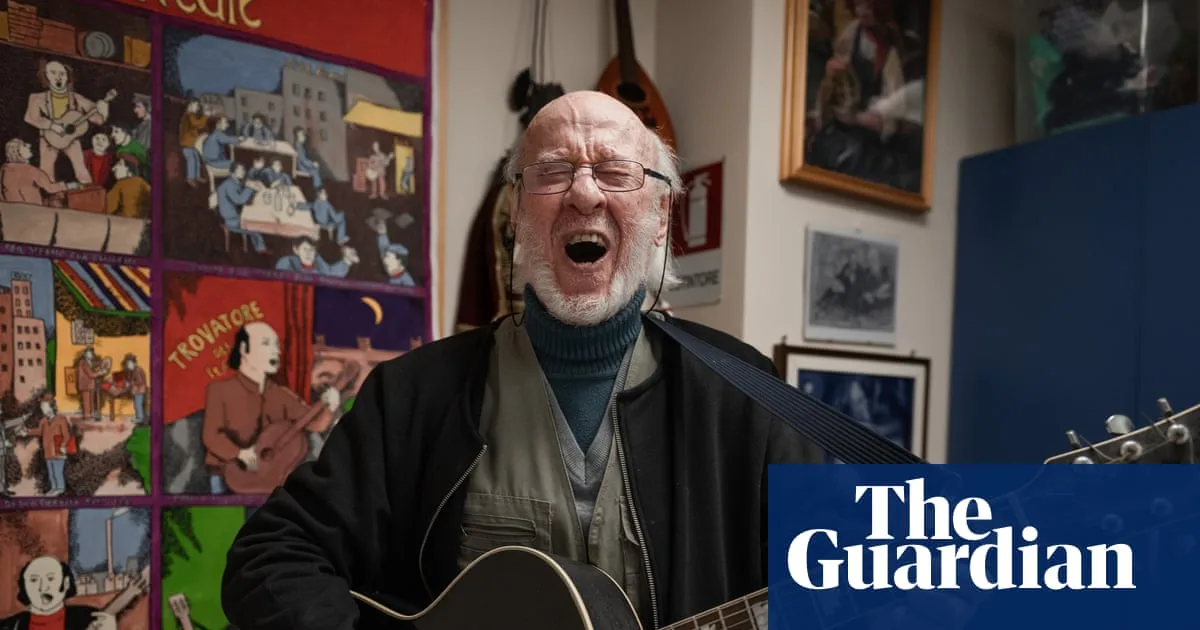
Franco Trincale, Italy's last great cantastorie, continues to perform at age 90 in his assisted living facility, keeping alive a dying tradition of wandering musicians who recount news through song. Famous for transforming true crime and political scandals into musical narratives—and even antagonising former Prime Minister Silvio Berlusconi—Trincale now entertains fellow residents with his unique blend of journalism and melody.

From Barber Boy to Wandering News-Singer

Born in 1939 in Militello in Val di Catania, Sicily, Trincale moved to Milan seventy years ago. As a young barber, he sang Sicilian songs during breaks, never imagining he would become Italy's final significant cantastorie. This tradition, dating back to medieval troubadours, involves musicians entertaining audiences by dramatising current events with guitar or accordion accompaniment and illustrated posters.

For six decades, Trincale walked Milan's streets, singing about historical moments from 1970s terrorism to Berlusconi's election and the Iraq war. He has released over thirty albums and performed internationally from the USSR to the United States. Additionally, he played a crucial role in Italy's labour rights movement, providing a soundtrack for workers' protests.

Evolution of a Musical Journalist

Trincale became a cantastorie out of necessity after marrying his wife Lina and leaving the navy. "I tried selling vegetables, it wasn't working, so I said to myself, 'I'll be a cantastorie,'" he recalls. In 1959, he began performing traditional Neapolitan songs in Milan before developing his signature "journalism in songs" style outside factories employing southern migrants.

Traditional cantate (tales) could last hours, but Trincale adapted to workers' short breaks by creating minutes-long versions. Labour conditions became a central theme as workers suggested topics like contract renewals. "Trincale's ballads can capture and denounce a problem in a few minutes," says Mauro Geraci, an anthropologist at the University of Messina.

True Crime and Political Commentary

Trincale also focused on true crime, most notably with his 1969 work about the kidnapping and murder of 12-year-old Ermanno Lavorini. This series of six recordings followed the investigation in real time, urging kidnappers to come forward—anticipating modern true crime podcasts. He even conducted original reporting, such as interviewing the mother of a baby killed by police teargas during an eviction.

Later, he performed regularly in Piazza Duomo, singing about Tangentopoli (the 1990s corruption scandal), Diego Maradona, the 2001 G8 summit, and mobile phones. In 2002, Berlusconi cited Trincale's mocking performances as creating bias in a corruption trial, requesting its relocation from Milan.

Life in Assisted Living

Now residing at Il Parco delle Cave assisted living facility for the past two years, Trincale's life revolves around his wife Lina, who has Alzheimer's. "Lina and I have known each other since she was 13 and I was 17, and I am happy to spend the last part of my life with her," he says. He moved to the home to stay with her, visiting often and singing songs that make her smile.

Despite his age, Trincale remains active, organising concerts like a recent Valentine's Day event attended by 150 residents and relatives. He performed his composition "Long Live Love," with the audience helping on high notes. His 90th birthday concert in September was even more successful, filling the hall completely.

Preserving Tradition and Legacy

Trincale's room is filled with memorabilia: posters, awards, newspaper clippings, and statuettes depicting him. He maintains a YouTube channel, proudly showing a video with 400,000 views. "I am proud to be able to sing and I will do so for as long as I can," he declares. The nursing home staff, including manager Laura Sartori, support his performances, noting it's wonderful to see a resident still giving concerts.

Historically, cantastorie were vital when many Italians were illiterate, with their arrival in towns being major events. They supported themselves through public donations and selling lyric flyers or records. Between the 1920s and 1970s, famous practitioners like Ciccio Busacca and Rosa Balistreri sang about themes such as migration, mafia, and international news, with Marino Piazza even singing about Nixon and Mao's 1972 meeting.

Geraci explains that cantastorie emerged as public opinion formed in the early 20th century, serving as social commentary. "Salvatore Di Stefano, a Sicilian cantastorie, used to say that when he saw something wrong, it was the time to write a song," he notes.

Future Hopes and Enduring Love

Trincale hopes to start a music workshop for people with Alzheimer's, like his wife, though he acknowledges needing to observe their responses first. His recognition includes a 2008 medal from Milan, a government lifetime pension for artistic achievements, and a 2018 museum in his birthplace.

Before parting, Trincale approaches Lina and sings "Era de Maggio," a Neapolitan classic by Roberto Murolo. Hearing the familiar tune, she opens her eyes and smiles—a testament to music's enduring power in their lifelong bond.