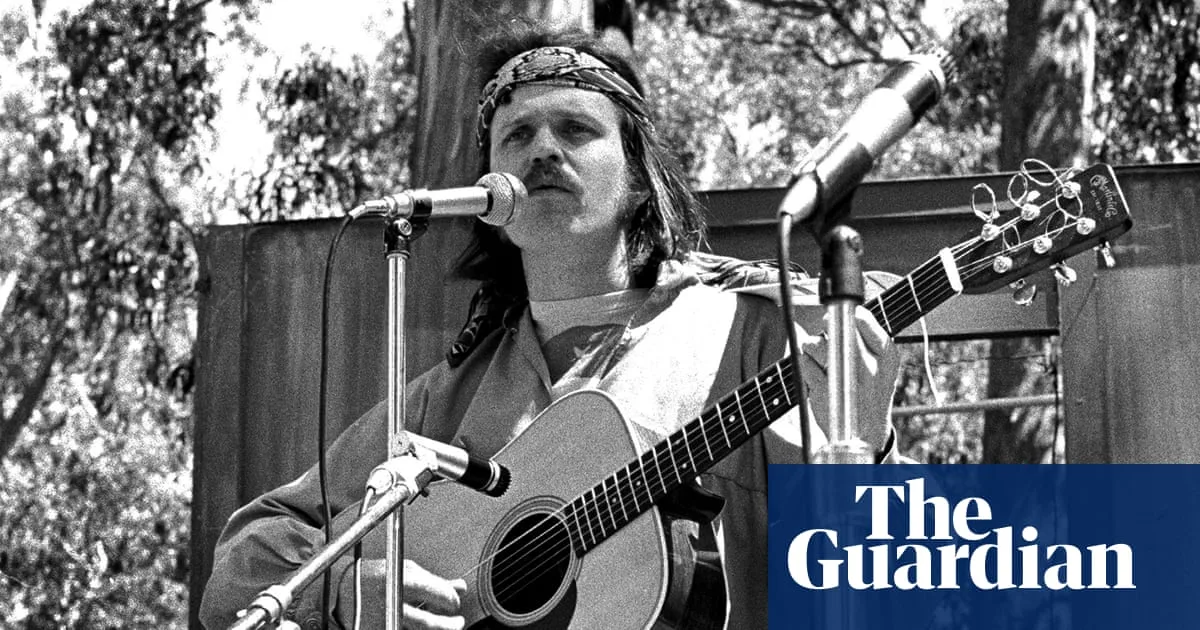
Country Joe McDonald, the American singer-songwriter best known for his Vietnam War protest anthem 'I-Feel-Like-I'm-Fixin'-To-Die Rag' and his iconic performance at the 1969 Woodstock festival, has died at the age of 84. His wife of 43 years, Kathy McDonald, confirmed that he died on Sunday in Berkeley, California, from complications of Parkinson's disease.
Born in Washington DC in 1942 and raised in El Monte, California, McDonald taught himself folk, blues and country guitar as a teenager. He became a fixture of the Bay Area music scene alongside contemporaries such as the Grateful Dead, Jefferson Airplane and Janis Joplin, with whom he had a romantic relationship. He wrote or co-wrote hundreds of songs and released dozens of albums across genres from psychedelic rock to soul-infused tracks.
McDonald's most famous work, 'I-Feel-Like-I'm-Fixin'-To-Die Rag', was written in under an hour in 1965, the year President Lyndon Johnson began deploying ground troops to Vietnam. The song, delivered in a deadpan talking-blues style inspired by Woody Guthrie, was a satirical celebration of war and early death. It became a highlight of Woodstock, where McDonald led the crowd in a now-famous 'F-U-C-K' chant before performing the track.

The song brought both fame and legal trouble. In 1968, Ed Sullivan cancelled a planned TV appearance after learning of the chant. After Woodstock, McDonald was arrested and fined for using the chant at a show in Worcester, Massachusetts, an incident that contributed to the breakup of his band Country Joe and the Fish. He later performed the song in court during the 'Chicago Eight' trial, where he was called as a witness and told by the judge: 'No singing is permitted in the courtroom.'
McDonald continued touring and recording for decades, releasing albums such as 'Country', 'Carry On', 'Time Flies By' and '50'. He remained politically active, writing protest songs including 'Save the Whales' in 1982. Despite his anti-war stance, he had served in the US Navy in Japan in the late 1950s and later helped organise a Vietnam veterans memorial in Berkeley, describing the dedication ceremony as 'one of reconciliation, not confrontation'.
McDonald is survived by his wife Kathy, five children and four grandchildren. He was married four times.