Bowie's Final Act: Producer Reveals Heartbreak Behind 'Blackstar' Album
Bowie's Final Album: Producer Reveals Cancer Heartbreak

The music world was left in shock in January 2016 when David Bowie, the legendary Ziggy Stardust, passed away at the age of 69. His death came just two days after the release of his final, critically acclaimed album, 'Blackstar'.

The Heartbreaking Diagnosis

Bowie's longtime producer and friend, Tony Visconti, has shared poignant memories of the moment he learned of the star's illness. Visconti, who collaborated with Bowie across five decades, described visiting the singer's office. "A girl who worked there opened the door and she had been crying," he recalled. "Her eyes were red."

He was led into a small room where Bowie soon joined him. "David then sits in front of me and he has got a woolly cap on. The first thing I notice is that he has got no eyebrows," Visconti said. "I went, 'I know what that is. It is chemotherapy'. I cried my eyes out." Bowie then embraced him, confirming the liver cancer diagnosis.

Visconti, who worked on 14 Bowie albums including the final one, believes that despite his failing health, Bowie was determined to create the best album of his life.

Secrecy and 'Blackstar'

During the recording of 'Blackstar' in New York, the musicians were sworn to secrecy. Visconti revealed that Bowie addressed them directly at the start. "He pulls his cap off and he stands there bald in front of them... What the f*ck do you say?" The producer finds the track 'I Can't Give Everything Away' particularly emotional, seeing it as Bowie's way of addressing his disease without explicitly telling the world.

Keyboardist Jason Lindner noted Bowie's unwavering professionalism, stating that the star wanted to focus solely on the music, not his illness. "He told us in the beginning 'I don't know what this is going to be. We will just make some great music'," Lindner said.

The Glastonbury Gamble and Career Revival

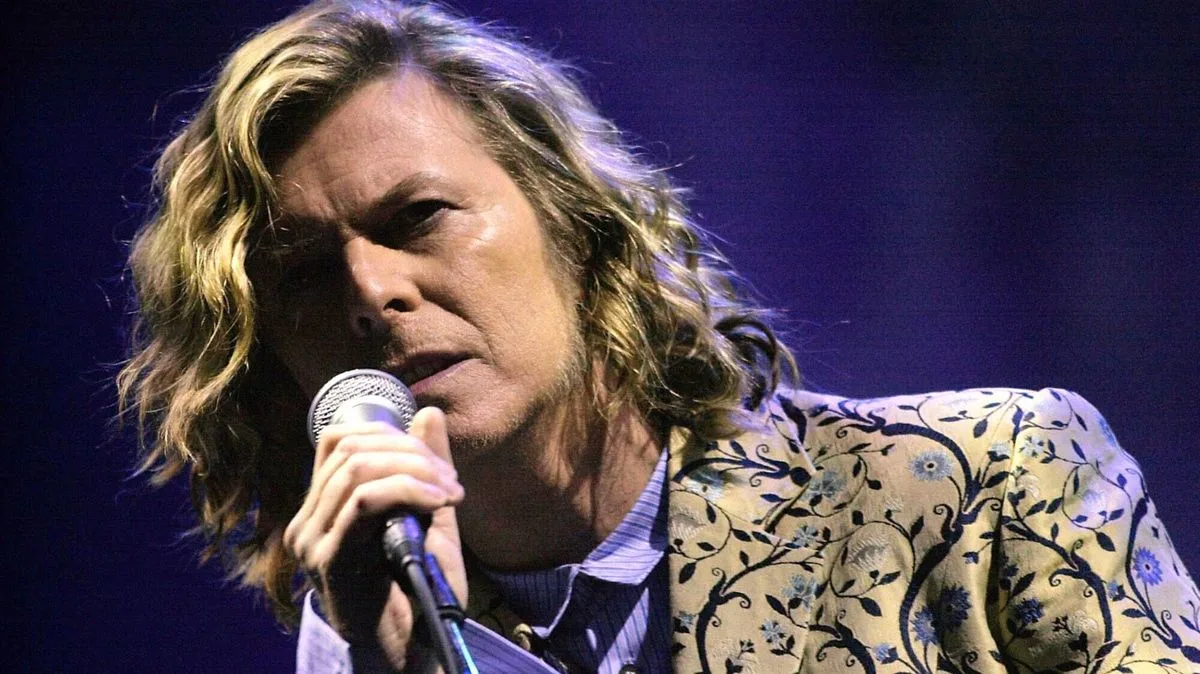
Bowie's illustrious career, explored in the new documentary 'Bowie: The Final Act', had experienced a significant revival after his headline performance at Glastonbury in 2000. This iconic set, witnessed by over 250,000 people, almost didn't happen.

Promoter John Giddings explained that Glastonbury founder Michael Eavis was initially unconvinced after seeing Bowie's experimental drum 'n' bass set in the 90s. Through clever persuasion and media manipulation, an offer was eventually made. Bowie initially refused, but Giddings convinced him by suggesting "someone like Madonna will" take the slot instead. "Eventually, he thought 'f*ck it. David Bowie should play Glastonbury'," Giddings recalled.

The triumphant performance was pivotal, reviving a career that had stagnated in the 90s following criticism for 'selling out' with hits like 'Let's Dance' and the poorly received Tin Machine project.

The Final Curtain and Lasting Legacy

Bowie's final major tour, the A Reality Tour from 2003-2004, comprised 112 shows across the globe. It was cut short after he suffered a heart attack on stage in Germany. His guitarist Earl Slick recalled, "He looked like hell... I thought 'Oh f*ck. They are not telling us everything'."

Slick also revealed that Bowie privately battled severe depression, a struggle he kept from fans. "We both suffered from really bad depression at times. Really bad," Slick said.

Today, Bowie's former bandmates continue to tour, paying tribute to his enduring influence. Reflecting on the song 'Lazarus' from 'Blackstar', pianist Mike Garson said, "He came to grips with death and he was able to express it through his music. He wrote his own requiem. Who does that?"