In an era dominated by screens, algorithms, and instant digital gratification, a quiet but significant counter-movement is gaining ground. Across the UK, people of all ages are deliberately seeking refuge in the tangible, physical experiences of the analog world, finding comfort and connection away from the polarising and distracting digital seas.
The Tangible Turn: From Generations X to Z
The trend spans generations, uniting older individuals who remember life before the internet with younger digital natives who have never known a world without it. This collective shift sees people setting down their smartphones to engage in activities like painting, knitting, and playing board games. Others are carving out time to send handwritten birthday cards, while some drivers actively choose cars with manual transmissions amidst a growing fleet of self-driving vehicles. Notably, the resurgence of vinyl records continues to defy expectations, with sales figures telling a remarkable story of revival.
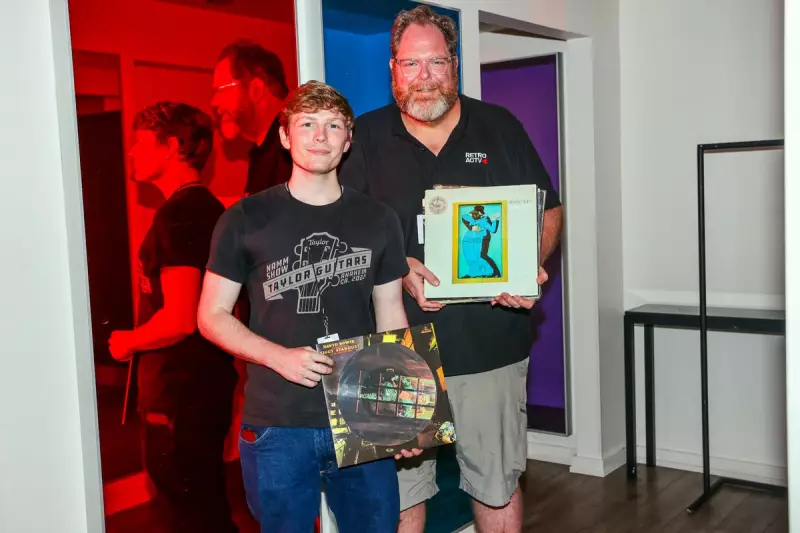
Martin Bispels, a 57-year-old former QVC executive who now runs Retroactv, a company selling rock merchandise from the 1960s and 70s, observes this trend. "The past gives comfort. The past is knowable," Bispels says. "And you can define it because you can remember it the way you want." This nostalgic escape is particularly resonant for those born between 1946 and 1980.

However, the pull of analog is not exclusive to older generations. Pamela Paul, author of ‘100 Things We've Lost To The Internet’, notes that millennials and Generation Z are also yearning for more tactile and deliberate experiences. "Younger generations have an almost longing wistfulness because so little of their life feels tangible," Paul explains. "They are trying to revive these in-person, low-tech environments that older generations took for granted."
Rediscovering Personal Connection: The Card Comeback
The centuries-old ritual of sending cards was once thought to be doomed by the tsunami of texts and social media posts. With the cost of a first-class stamp rising significantly, digital communication is undeniably cheaper and faster. Yet, the tradition persists thanks to dedicated communities.
Megan Evans founded the Facebook group ‘Random Acts of Cardness’ a decade ago at age 21 to foster human connection. "Anybody can send a text message that says ‘Happy Birthday!’ But sending a card is a much more intentional way of telling somebody that you care," says Evans from Wickliff, Ohio. "It's something that the sender has touched with their own hand." Her group now boasts over 15,000 members, including Billy-Jo Dieter, 48, from Ellsworth, Maine, who sends at least 100 cards monthly. "A dying art," she calls it, aiming to make someone smile each day through this personal gesture.
Mastering the Machine: The Stick Shift's Last Stand
On roads increasingly filled with autonomous and semi-autonomous vehicles, the manual transmission car has become a rare sight. In the US, fewer than 1% of new vehicles sold now have a manual gearbox, a stark drop from 35% in 1980. Despite this, a dedicated cohort of drivers clings to the skill and engagement it requires.
Brothers Prabh, 22, and Divjeev Sohi, 19, are examples. They drive manual cars to San Jose State University, navigating Silicon Valley roads crowded with Teslas. Their passion began in childhood through video games and rides with their father and grandfather. Determined to learn, they mastered the clutch on a 1994 Jeep Wrangler, despite initial stalls that frustrated following drivers. "You are more in the moment when you are driving a car with a stick," Divjeev reflects. "You understand the car, and if you don't handle it correctly, that car isn't going to move."
The Unlikely Vinyl Renaissance
The most striking analog comeback is undoubtedly that of the vinyl record. Declared obsolete in the 1980s with the rise of CDs, vinyl sales hit a nadir in 2006 with just 900,000 albums sold in the US. This contrasted sharply with its 1977 peak of 344 million. Yet, the format has staged a spectacular recovery. For the past two years, annual sales have hovered around 43 million albums, creating a growth niche even in the age of ubiquitous streaming.

While baby boomers expanding their collections contribute, younger listeners are key drivers. Carson Bispels, 24, son of Martin, received some of his father's old records, including a well-worn Bob Marley album. "I really love listening to an album on vinyl from start to finish. It feels like I am sitting with the artist," says Carson, who now owns about 100 records. "Vinyl just adds this permanence that makes the music feel more genuine." He values the personal ritual of visiting record shops and chatting with fellow patrons, an experience lost in algorithmic playlists.
For author Pamela Paul, this widespread analog revival signals a deeper cultural shift. So much so, she muses that "A return to humanity could turn out to be another book." As digital immersion deepens, these analog islands offer not just nostalgia, but a vital sense of control, presence, and tangible reality that more and more people are actively choosing to reclaim.