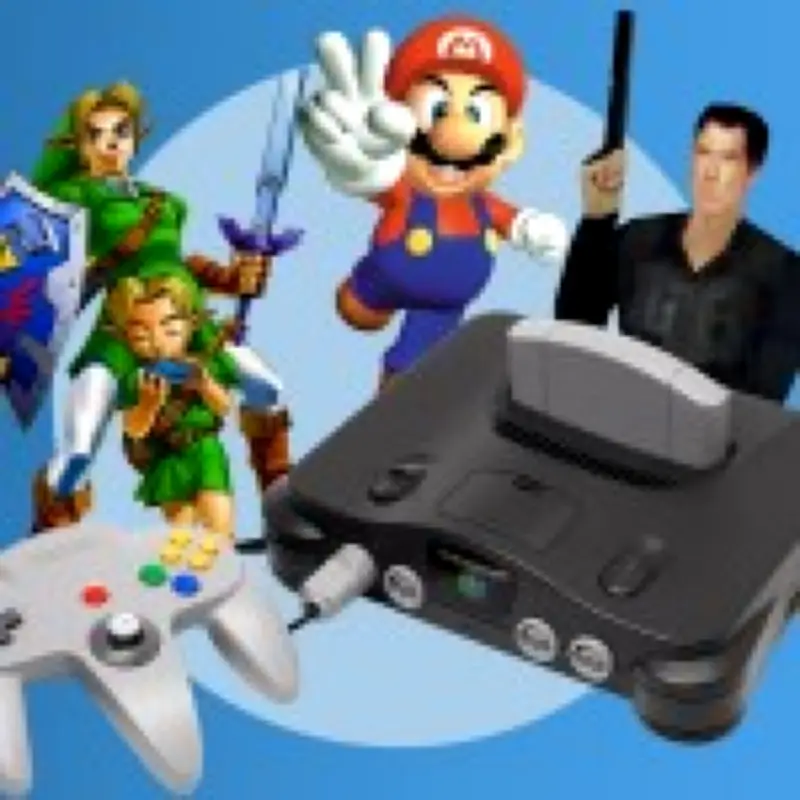
Super Mario 64: The Blueprint for 3D Platformers
Super Mario 64 is the quintessential 3D platformer, setting the template that all subsequent 3D titles would follow. It offered full 360° control and large sandboxes with multiple objectives. Its camera system became the gold standard for the rest of the generation, with other 3D games struggling to keep up well into the PlayStation 2 era. The analogue stick of the N64, popularised by Nintendo, enabled silky smooth movement that contrasted sharply with the rigid grid-based control of Tomb Raider, released later that year.
Nintendo's own work has continued to build upon Super Mario 64's formula, cultivating multiple 3D Mario games considered among the best ever made. Super Mario Odyssey inspired Donkey Kong Bananza, and Nintendo has teased hints of what to expect for Mario's next 3D game. With nearly 10 years since Super Mario Odyssey, expectations are high for the Switch 2's main Mario game, rumoured for 2027.
The Legend of Zelda: Ocarina of Time: A Masterpiece of 3D Adventure
For years, the first 3D Zelda was regarded as the best video game ever made. Its translation of the top-down 2D world into 3D was extremely influential, cited as inspiration for Dark Souls, The Witcher, and even Grand Theft Auto 3. Final Fantasy 15's open world took cues from Hyrule Field, which at the time was a vast expanse. Some games, like Ōkami and Darksiders 2, copied Ocarina of Time's formula, but none matched the original.

Nintendo used the same formula for subsequent 3D Zelda games until Breath of the Wild in 2017, now also regarded as the best game ever. A full remake of Ocarina of Time was recently announced as Nintendo's big Christmas release for 2026, with only a few seconds of footage shown, enough to excite fans.
GoldenEye 007: Pioneering Console First-Person Shooters
Before Halo, GoldenEye 007 popularised the first-person shooter on consoles. Its story campaign influenced modern stealth gameplay, arriving ahead of Thief and Metal Gear Solid. The game's split-screen multiplayer, with various modes and modifiers, was unlike anything else at the time. Spiritual sequel Perfect Dark and TimeSplitters, made by many of the same people, are now dead franchises. GoldenEye's low frame rate and weird controls have not aged well, risking its innovations being forgotten by younger fans.
Pokémon Stadium: Early Data-Sharing and 3D Pokémon
The Pokémon Stadium games were precursors to Pokémon Home, allowing transfer of teams from Game Boy games. They marked the first time Pokémon were depicted in 3D, with fully animated characters. The games also had more voice-acting than many modern Pokémon titles. The formula didn't persist past the N64; subsequent 3D spin-offs went in other directions. A spiritual free-to-play successor, Pokémon Champions, launched this year, similar in concept to the originals.
Super Smash Bros.: The Birth of Platform Fighters
Creator Masahiro Sakurai crafted an approachable fighting game with simple button commands and freer movement. Super Smash Bros. popularised the platform fighter, inspiring copycats like Cartoon Network, Nickelodeon, Sony, and indie devs. No platform fighter generates as much hype over character reveals, especially with third-party inclusions from Sega, Square Enix, Capcom, and Microsoft. After Super Smash Bros. Ultimate, the series' future is unclear, and a Switch 2 Edition has not been announced.
Mario Party: Casual Multiplayer Fun
Mario Party persisted as a casual Mario-themed board game with four-player minigames and randomised chaos. The concept of party video games wasn't common at the time. The latest entry is Super Mario Party Jamboree, but Mario Party Superstars contains remade boards from the N64 games. Like Super Smash Bros., many copies exist, but few are worth playing over Mario Party.
Star Fox 64: Popularising Force Feedback
Star Fox 64 (Lylat Wars) is the best-selling entry in the series, reimagining 2D shooters in 3D. Its Rumble Pak peripheral added force feedback, which became standard for all modern controllers. Sony and Microsoft incorporated rumble features into their controllers after the N64. The original PlayStation controller had neither analogue sticks nor force feedback, hurriedly adding them after the N64's release.

Honourable Mentions
The Legend of Zelda: Majora's Mask is beloved for its darker atmosphere, bizarre characters, and three-day time limit. It inspired creepypasta Ben Drowned and a short film by Ember Lab, creators of Kena: Bridge of Spirits. F-Zero X / Wipeout 64 are neglected, with other studios filling the niche with games like Redout 2 and Fast Fusion. Star Wars Episode I: Racer gets a spiritual follow-up in Star Wars: Galactic Racer this October. Space Station Silicon Valley and Body Harvest are overlooked gems from DMA Design (now Rockstar). Banjo-Kazooie established a framework for collectible platformers, emulated by indie games like Yooka-Laylee. Operation WinBack is an early cover-based third-person shooter, influencing Kill Switch and Gears of War.