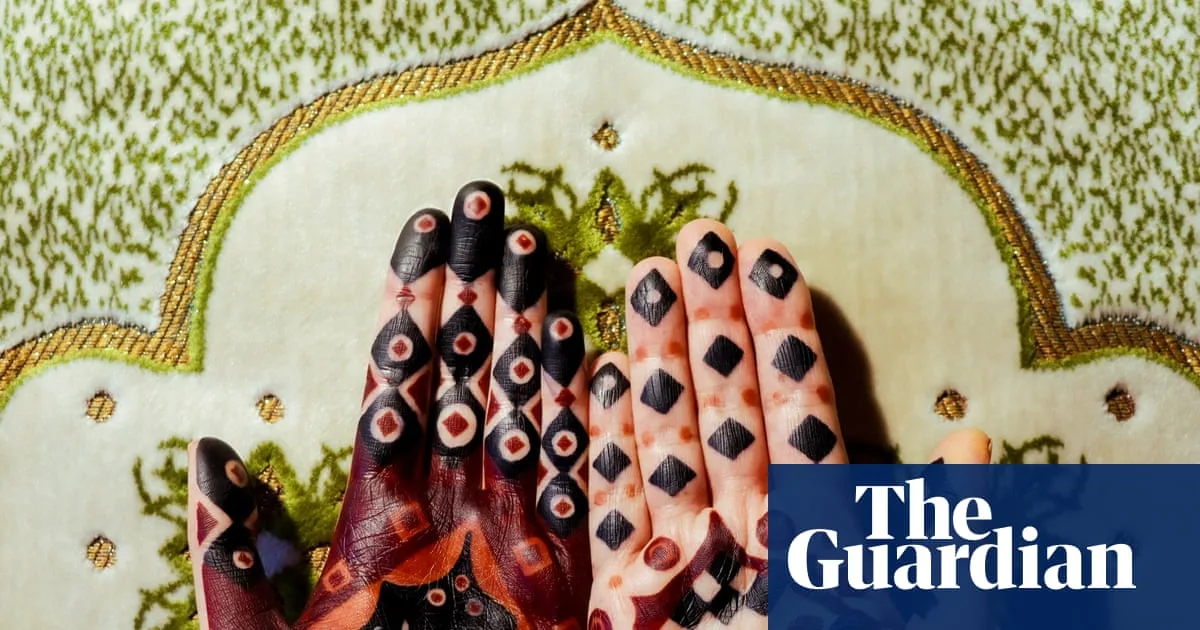
The traditional art of henna – intricate floral designs applied to hands and body with natural inks – is experiencing a vivid revival as a form of social and political expression, led by a wave of young artists. Once confined to weddings and living rooms, the practice has spilled into public spaces, with pop-up stalls on high streets from London to Bradford offering designs for as little as £5.
Henna has also reached the red carpet, with celebrities such as Michaela Coel and Katseye singer Lara Raj showcasing the art. Online interest has surged: UK searches for henna reportedly rose nearly 5,000% last year, and social media is filled with tutorials ranging from faux freckles to five-minute floral patterns. For many young people of colour, wearing henna has shifted from a source of self-consciousness to a point of pride.
London-based artist collective HuqThat, founded in 2018, is at the forefront of this reimagining. The six-member group has worked with singers like Joy Crookes and brands such as Nike and Converse. “There’s been a cultural shift,” says Ruqaiyyah Patel, who joined two years ago. “People are really proud nowadays. They might have dealt with racism, but now they are coming back to it.”
Henna, derived from the Lawsonia inermis shrub, has been used for over 5,000 years across Africa, South Asia and the Middle East. Known by various names – mehndi, ḥinnāʾ, lalle – its uses range from cooling the body to blessing newlyweds. “Henna is for the masses,” says Patel. “It comes from working people, from villagers who grow the plant.” Colleague Nuzhat El Agabani adds: “We want people to understand henna as a legitimate art form, just like calligraphy.”
HuqThat’s work appears at fundraisers for Palestine and Sudan, as well as at Pride events. “We wanted to make it an inclusive space for everyone, especially queer and trans people who might have felt excluded from these traditions,” says El Agabani. “Henna is such an intimate thing – you’re entrusting the artist to look after part of your body.” The collective tailors designs to each client, encouraging personal references such as jewellery, poetry or fabric patterns.
For Aminata Mboup, an industrial designer based in Toronto and Dakar, henna – or fuddën in Wolof – connects her to her Senegalese roots. She uses jagua, a natural dye from the jenipapo fruit, which stains deep blue-black. “The darkened fingertips were something my grandmother always wore,” she says, highlighting how the art form bridges generations and cultures.