The world remembers Brigitte Bardot not just as a cinematic legend, but as a style revolutionary whose influence continues to resonate. The French screen icon, who has died aged 91, forged a look in the 1950s and 60s that was at once effortlessly sensual and boldly liberating, cementing a fashion legacy that remains powerfully relevant today.
The Birth of an Icon: From Gingham to Leopard Print
Bardot's style perfectly captured the spirit of postwar France, where traditional Gallic elegance met a new, Bohemian freedom. She famously embraced gingham, even choosing a pink gingham dress for her 1959 wedding, channelling a nostalgic, feminine charm reminiscent of Dior's New Look. Yet, this sweetness was counterbalanced by a wild, untamed edge.
Her signature leopard print became a personal hallmark, transforming the pattern from mere novelty to a symbol of fierce, feline glamour. She wore it with iconic confidence, notably in a matching leopard print bikini and loincloth in her 1971 film Boulevard du Rhum, and in chic car coats on the streets of Paris.

Defining the Bardot Silhouette
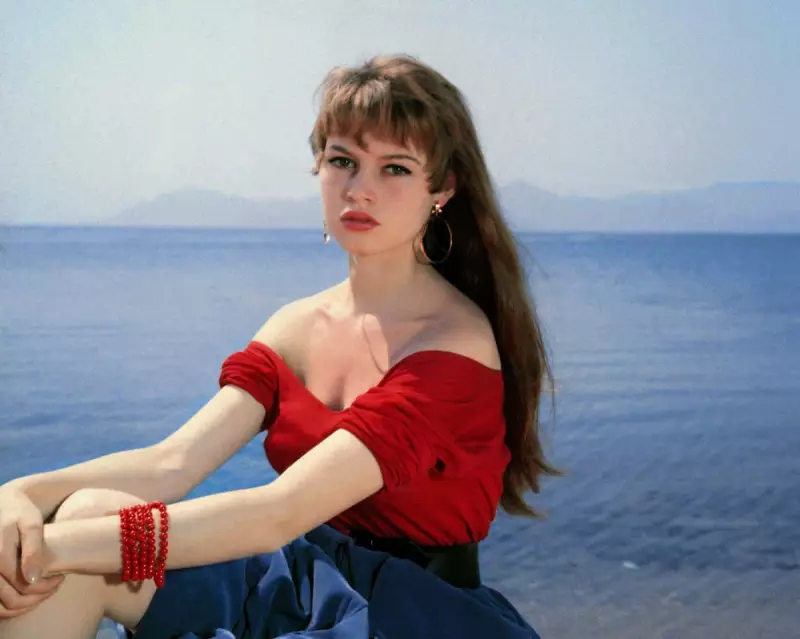
Perhaps her most enduring contribution to fashion is the Bardot top, the off-the-shoulder neckline that bears her name. In the conservative 1950s, this clavicle-baring style was considered daringly provocative. A photograph from the Cannes Film Festival in 1953 shows her in a rakishly loose, blood-red version, accessorised simply with slender gold hoop earrings. It created an illusion of being casually wrapped in a towel or sheet, embodying a new, relaxed form of sex appeal.
Her beauty, often described as feline, was crowned by her legendary blonde hair and the "choucroute" hairstyle – a half-up, half-down 'do she claimed to do better than any professional stylist. It was a looser, more bedroom-inspired take on the structured beehive, achieving sophistication without a hint of effort.
From Ballet Studio to Global Phenomenon
Bardot's early training as a ballerina profoundly shaped her aesthetic. The impeccable posture from the dance studio lent her a goddess-like poise on screen. This influence extended to her wardrobe, where she pioneered the ballet flat for everyday wear. In the 1950s, she commissioned Repetto, the famed ballet shoemaker, to create a street-ready version with a toughened sole. The resulting Cendrillon flat, launched in 1956, remains a bestseller and a staple of French-girl chic.
She also played a pivotal role in popularising the bikini. While designer Louis Réard had introduced the two-piece in 1946, it was Bardot's appearance in one in the 1952 film Manina, the Girl in the Bikini that propelled it to international sensation status, helping to cement the sun-worshipping style of Saint-Tropez.
By retiring from cinema at the age of 39, Bardot forever crystallised her image in its most potent form. Her style legacy is not merely a collection of trends, but a lasting vision of femininity: instinctive, sensual, and unapologetically free.