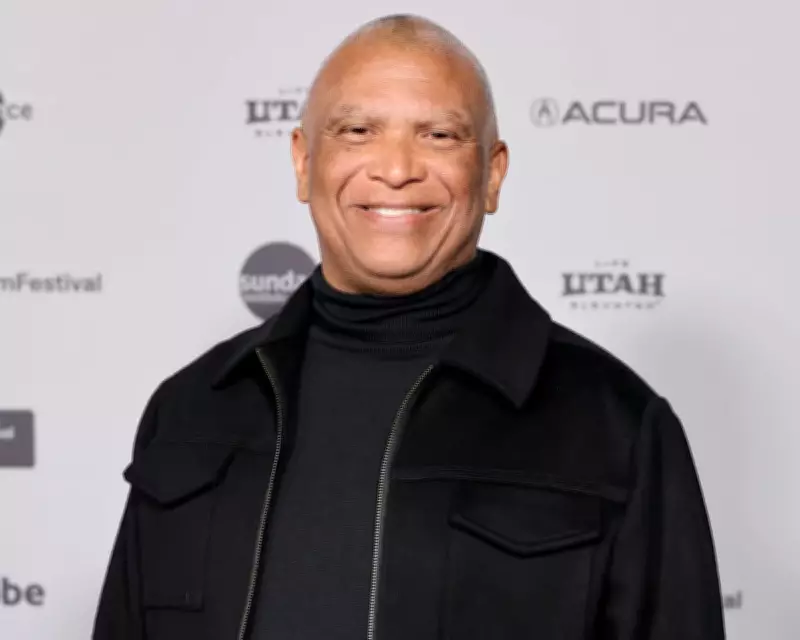
Reginald Hudlin's home office stands as a testament to an extraordinary American narrative – the Black creative who ascended from humble beginnings to become one of Hollywood's most versatile storytellers. Framed memorabilia adorns the walls: a Black Panther comic page he authored shines near a portrait of Jamie Foxx from his Django Unchained production days, alongside a fragment from the Martin Luther King memorial gifted during the filming of Disney's Safety. "I'm pleased with my life," Hudlin remarks with a knowing smile. "Yet it's required considerable ingenuity to persuade people to let me pursue these ambitious projects. The effort has been substantial, but the reward invariably justifies it."
A Multifaceted Hollywood Career
Hudlin's trajectory mirrors a real-life Forrest Gump, given his diverse accomplishments, collaborations, and historical contributions. At Marvel Comics, he reimagined the Black Panther graphic novel as a potent allegory for Black empowerment, establishing groundwork for Ryan Coogler's subsequent blockbuster films. His directorial portfolio includes guiding Eddie Murphy in Boomerang, Samuel L. Jackson in The Great White Hype, and Chadwick Boseman in Marshall.
On television, Hudlin facilitated the launch of The Boondocks on Adult Swim before assuming the presidency of entertainment at BET, steering the network toward award ceremonies and reality programming. "Recognising your studio as a partner rather than an adversary is crucial," he observes, reflecting on lessons prior to Skydance's contentious acquisition of Paramount, BET's parent company. "Numerous changes are imminent, yet I maintain that BET retains significance and has scarcely tapped its potential for global influence."

The Enduring Legacy of House Party
At 64, Hudlin attributes his extensive and varied career to House Party, the seminal 1990 teen comedy that challenged industry preconceptions about Black cinema's viability, evolving into a cultural landmark. During an era when Black cinematic expression often gravitated toward slave narratives or Spike Lee's works, House Party celebrated Black youth, camaraderie, and joy, encapsulating hip-hop's exuberant spirit through the dynamic duo Kid 'n Play, portrayed by Christopher Reid and Christopher Martin.
This week, Hudlin's inaugural film enters the prestigious Criterion Collection, featuring a 4K restoration, director commentary with his brother Warrington (a producer on the film), and a cast reunion. House Party's resonance persists, evident on platforms like TikTok; NFL stars Jalen Hurts and AJ Brown recently revived the iconic Kid 'n Play dance for a touchdown celebration during the Philadelphia Eagles' Super Bowl campaign. Marking the film's 30th anniversary in 2020, future second gentleman Doug Emhoff retweeted a clip from the legendary dance scene, acknowledging Hudlin's wife, Chrisette, for arranging a blind date with Kamala Harris, then a California state attorney. "Doug's a wonderful person, Kamala's an exceptional woman," Hudlin notes, "and now we enjoy social gatherings as couples. I'm profoundly grateful for the entire experience."
Roots and Early Inspiration
Hudlin descends from a lineage of high achievers: his great-great-grandparents served as conductors on the Underground Railroad, and his great-uncle Richard pioneered as a college tennis player, later coaching Althea Gibson and Arthur Ashe. Growing up in East St. Louis, Illinois, Hudlin nurtured cinematic aspirations while his elder brother Warrington studied film at Yale in the early 1970s. Warrington's phone calls home transformed into extensive pitch sessions as Reginald shared ideas. "I possessed abundant concepts," he recalls. "One Christmas, he gifted me a blank book, advising, 'Cease narrating your ideas. Document them.'"
Hudlin carried this notebook to Harvard, recording scenes, overheard dialogues, and other compelling moments that culminated in his senior thesis film, House Party, depicting a Black teen sneaking out to an epic party. Three years later, She's Gotta Have It's theatrical release garnered acclaim, prompting Hollywood's search for the next Spike Lee with fresh perspectives on Black experiences. Seizing this opportunity, Hudlin pitched his short film and a feature-length treatment to major studios, facing rejection until junior executive Helena Echegoyen persuaded New Line Cinema to allocate $2.5 million.

Casting and Cultural Impact
The modest budget precluded attracting established stars, even if Hudlin could intrigue figures like Eddie Murphy, Sidney Poitier, or the emerging Will Smith. "The only Black stars then were monumental," Hudlin explains, "and there weren't numerous Black teen stars either. BET hadn't yet embraced hip-hop." Consequently, he turned to Video Music Box, a New York hip-hop showcase, and was instantly drawn to Reid and Martin's distinctive hair and movements. "An acquaintance informed me they were punctual," Hudlin remembers. "That sufficed."
The ensemble cast blended promising young talents (including future sitcom leads Tisha Campbell and Martin Lawrence), music icons (George Clinton, Bowlegged Lou), and performers on the verge of broader recognition; comedian Robin Harris, who tragically died from cardiac arrhythmia at 36 a week after the film's release, was particularly cherished. "He embodied a Red Foxx/Rodney Dangerfield persona, as if freshly thawed from ice," says Hudlin, who had been developing Bebe's Kids around Harris's biographical standup. "Initially conceived as a live-action film starring him, we opted to animate it posthumously to preserve his legacy."
At 28, Hudlin witnessed his debut gross $26 million at the box office, demonstrating that narratives of Black middle-class aspiration could thrive without focusing on trauma. Audiences delighted in the film's vibrant aesthetics and immersive cinematography, while a soundtrack featuring LL Cool J and Flavor Flav peaked at number four on US R&B charts.
Influence and Lasting Appeal
House Party catalysed a Black comedy film boom defining the early 1990s, fostering dialogues about safe sex. Although films like Bebe's Kids, Meteor Man, and Boomerang rode this wave, Hudlin perceived a cultural shift as New Jack City and Friday, featuring gangsta rap stars, emerged. "House Party celebrated the joyous rap era, focusing on parties and romance," he reflects. "It represented an underappreciated musical period. Ice-T and NWA's success altered that vibe, yet such phases inevitably resurface."
Despite fluctuating trends, House Party's appeal endures. The original spawned four sequels, with the latter two direct-to-video. In 2023, New Line released a reboot co-produced by NBA star LeBron James (who appeared as himself), featuring a Kid 'n Play cameo among numerous nostalgic references. The film's inclusion in the Criterion Collection marks a significant milestone for Hudlin, though he remains forward-focused. "I haven't tackled a superhero film, science fiction, or an unrestrained musical," he states when queried about unmet ambitions. "Several major dramas await. My list remains extensive." House Party is available on 4K Blu-ray in the US and releases in the UK on 2 February.