Oulu 2026: Eccentric Capital of Culture with Screaming Choirs and Air Guitar

The Independent's journalism is supported by our readers. When you purchase through links on our site, we may earn commission. The eccentric Capital of Culture where screaming choirs and air guitar championships reign. Once a centre for startups, Laura Millar discovers that one-of-a-kind Oulu has hefty – and unusual – artistic weight. Thursday 07 May 2026 06:00 BST.

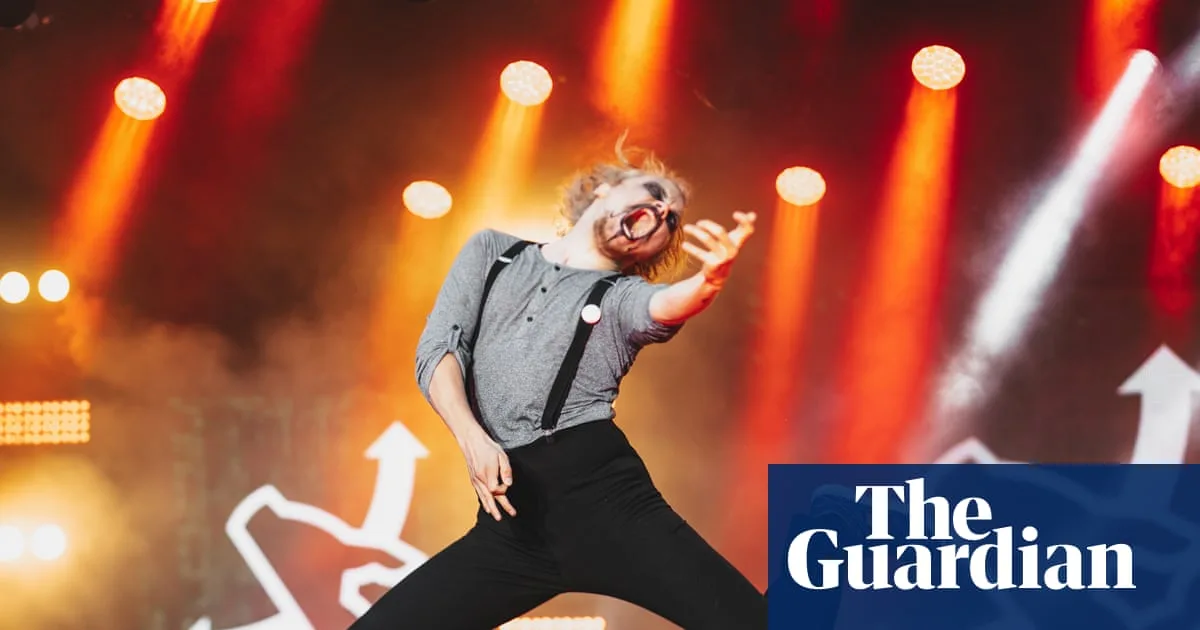
Highlights of the calendar include the Air Guitar World Championships. I’m sitting on a white wooden pew inside the handsome, buttercup-yellow Oulu Cathedral, listening to a series of gentle whooshing noises echoing around its domed interior which have come, somewhat improbably, from space. They form an immersive sound installation called The Logos, by British-German artist and producer Andrew Melchior, who was inspired by the cathedral’s acoustics after attending a service here. Melchior has, effectively, harnessed what scientists term Fast Radio Bursts: brief flashes of radio waves which have travelled through the universe for millions of years before reaching earth. To my untutored ear they sound adorably like the Clangers, the pink space mice from 1970s children’s television, who communicated in similar whistling tones. And on a quiet weekday in March, it’s lovely to just let it all flow meditatively over me; a suitable introduction to a wonderful city, currently enjoying a moment in the spotlight as a European Capital of Culture.

Art installations dot the city. Afterwards, I walk all of three minutes through the centre’s charming cobblestoned streets to Oulu’s City Hall, another grand, Wes Anderson-worthy building, its biscuit-hued neo-Renaissance exterior topped by two small towers. Usually home to what I imagine is po-faced civic business, it’s now hosting contemporary art installations. Layers in the Peace Machine invites me to step into small tents to listen to clips of people discussing what peace means to them, while Earworm presents video works from the Finnish National Gallery in Helsinki, including one featuring an animated toilet riding on top of a car and another starring a Tunisian man giving a vigorous dance lesson dressed in a purple satin suit. Oulu may not, admittedly, seem an obvious choice for capital of culture; its background is much more industrial. The city, now home to around 220,000 people, began as a settlement on the Gulf of Bothnia in the 1600s. Despite being located only halfway up the country, it’s classified as north Finland – above it are Lapland and the Arctic Circle. “We were once the biggest producer of tar in the world,” Samu Forsblum, Oulu 2026’s programme director, tells me somewhat unexpectedly that evening. We’re at Winebar Kurkela, a fine-dining restaurant on Pikisaari, a small island close to the city centre from where the tar industry once flourished. “Then in the 1970s and 80s came another boom, when we became a significant ICT hub.” Oulu played a key role in the evolution of Nokia, hosted the first wireless GSM phone call, and helped pioneer text messaging and 5G technologies. Startups here also developed wearable tech such as Polar and Oura. Now, Forsblum anticipates Oulu’s next boom will be in culture. “We applied for the title to demonstrate how culture can develop a city’s future,” he explains. “Our goal is, essentially, ‘cultural climate change’.”

Wide Pickt banner — collaborative shopping lists app for Telegram, phone mockup with grocery list

Oulu already has form for more unusual creativity. In fact, on the television in my enthusiastically reindeer-themed room at the Lapland Hotel, opposite the cathedral, there’s even a message welcoming me to “Oulu, the quirky northern city by the sea – a home to people who like to choose their own path and do things differently.” This is, after all, the birthplace of the bonkers Air Guitar World Championships, launched in 1996 and still held annually: this year on a floating stage. It’s also home to the gloriously eccentric Screaming Men’s Choir (a bunch of – surprisingly well-dressed – blokes yelling songs) and Frozen People, an electronic dance music festival staged on Baltic Sea ice, essentially the Arctic opposite of Burning Man. It’s also one of the youngest cities in Finland, with an average age between 35 and 40, and home to around 30,000 students.

Pickt after-article banner — collaborative shopping lists app with family illustration

Oulu is home to the gloriously eccentric Screaming Men’s Choir. Read more: How a trip to ‘Moomin island’ made me rethink summers in the Med. Over the next few days, I immerse myself in Oulu’s growing, and diverse, arts scene. Pikisaari, with its old wooden warehouses and factories now converted into galleries or bars, is now something of an arts hub. It’s home to Proto, a design centre currently showing an exhibition about the Oulu School of Architecture, and to a creative co-working space where I head for a painting class with artist and designer Susanna Sivonen. Sivonen spearheaded a project in partnership with the China Academy of Art in Hangzhou, China, recruiting several young artists to help design a special tablecloth. This will be used on a 1km-long dining table running through the city for an event that will celebrate northern Finnish cuisine (think reindeer, pikeperch and berries). As we expertly swirl splashes of colour onto paper, it becomes apparent very swiftly who the genuine artist is. One evening, I head to a performance of experimental theatre held in what was once voted by locals (a bit ungratefully, I think) Oulu’s ugliest building. This turns out to be an extraordinary silo shaped like a church, designed and built by renowned Finnish architect Alvar Aalto in the late 1920s as a storage unit for wood pulp. I also love the moving and inspiring exhibition of Sami art at the Oulu Art Museum and the exhibition featuring images by the likes of Martin Parr and Bruce Davidson in collaboration with Fotografiska located, naturally, in a shopping centre.

Frozen People is essentially the Arctic version of Burning Man. Culture aside, Oulu is, of course, still part of Finland – recently voted Happiest Country in the World for the ninth year running – where outdoor life is central. In winter, cross-country skiing takes place amid the forests of slim silver birch trees in the city’s outskirts, while hiking trails dot the likes of nearby Syöte National Park and cycle lanes are everywhere. “We live really close to nature,” confirms Ulla Pirkola, a representative for Oulu 2026 who’s been showing me around. “There are always berries in my fridge in summer because I go out and forage for them in the woods at weekends.” On my last afternoon, after a quick peek around the imposing Gothic Market Hall, where you can find everything from fresh produce to souvenirs, handicrafts, and bowls of local favourite, salmon soup, we’re heading to experience one of Finland’s best known pastimes: sauna.

Laura braves the sauna in freezing weather. Read more: Swap Spain’s sweltering camino for its cool Swedish counterpart. There are a handful of public saunas around the city – most apartment and office blocks have their own – and we’ve come to a small one at Tuira, a beach by the Oulunjoki River. Despite it being nearly April, there are still large sheets of ice floating on the surface of the water. When it’s properly frozen over, Finns simply break holes in it to go swimming and I fear this will prevent me from going in any further than my ankles. In the end, I just dip my toes. But I’ve had a much deeper immersion into Oulu’s culture, and that feels like part of the fabric of life here now, too.

Laura was a guest of Visit Finland and Visit Oulu. How to do it: Finnair offers return fares from London Heathrow to Oulu via Helsinki, starting at £441. For more information about the events happening this year, head to the Oulu 2026 website. Where to stay: Double rooms at the centrally-located Lapland Hotel Oulu start from £137, including breakfast. The hotel has its own sauna, available to all guests, but you can also book one of its newly-opened Deluxe rooms which feature their own private sauna, from £183 per night.