Iraqi Director's Oscar-Shortlisted Film Reveals Childhood Under Saddam
Oscar-Shortlisted Iraqi Film Reveals Childhood Under Saddam

The President's Cake: A Child's View of Saddam's Iraq

In the 1990s, under the oppressive regime of Saddam Hussein, Iraqi cinemas were shuttered. Yet, a young Hasan Hadi discovered cinema through clandestine means, smuggling banned VHS tapes under his shirt. "I was a kid," recalls the 37-year-old director, "so no one would suspect me." He would secretly watch everything from Bruce Lee to Tarkovsky, keeping the volume low at night to avoid detection.

A Childhood Without Innocence

When asked about the potential punishment for possessing forbidden films, Hadi pauses. "It depends. There were no specific rules. But if it was a political film, it could go to execution." Could they really execute a child? Hadi nods solemnly. "We're talking about a period when childhood lost its innocence." This loss of innocence is poignantly captured in his debut feature, The President's Cake, which has made history as the first Iraqi film to reach the Oscars shortlist for best international feature.

The Story of Lamia and Her Cockerel

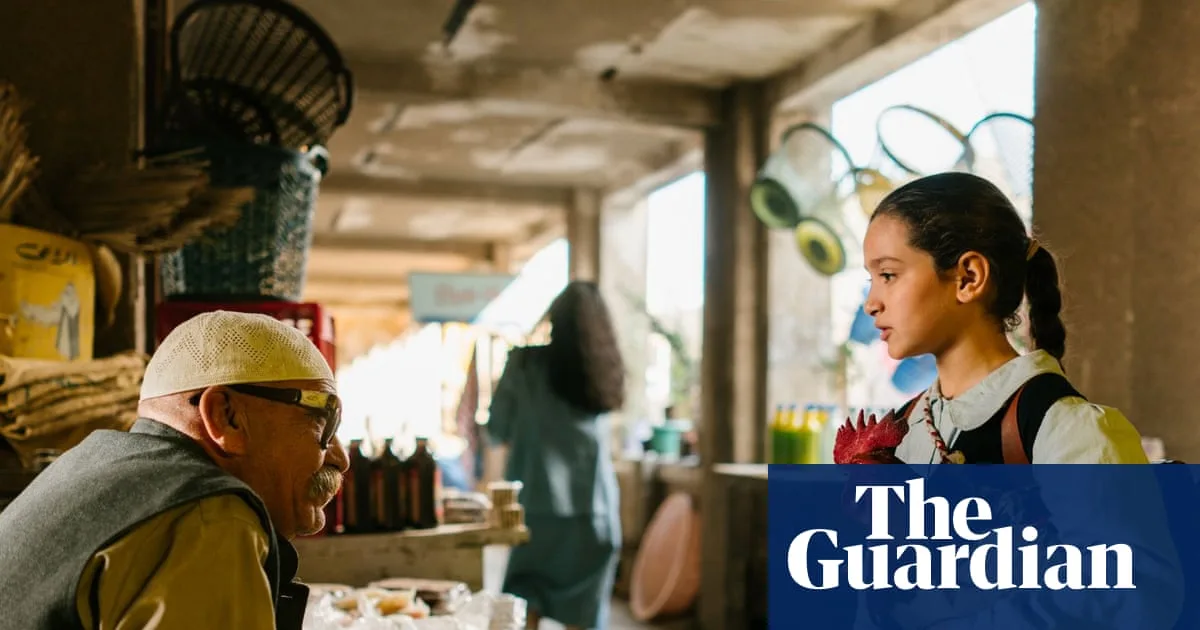
The film, set in early 1990s Iraq, follows nine-year-old Lamia, played by Baneen Ahmed Nayyef, who is dubbed the unluckiest kid in her class. Her name is drawn from a hat, forcing her to bake a cake for Saddam Hussein's birthday—a compulsory national holiday. With her pet cockerel, Hindi, by her side, Lamia embarks on a journey through a landscape of scarcity and exorbitant prices due to sanctions. Her grandmother sacrifices precious possessions, like a radio and an old watch, to help gather ingredients.

Hadi explains that baking cakes for Saddam was an obligatory school activity, but the children rarely tasted them. "The teacher would usually take it home for his family," he says. "I didn't taste cake until I was 13 or 14." He recalls "depressing" cakes made of dates, a far cry from the fancy cream cakes he would gaze at in bakery windows for hours.

The Omnipresent Personality Cult

Throughout the film, Saddam's personality cult is ever-present, with his portrait hanging on every wall. Hadi notes that after Saddam's overthrow in 2003, the number of statues and portraits of him outnumbered the Iraqi population. "He was obsessed," Hadi remarks. "It really did feel like he was watching you everywhere. You couldn't go from home to school without seeing him."

Sanctions: A Silent Violence

Hadi describes sanctions as "more violent than bombs," citing their invisible but deep damage. Teachers' salaries plummeted from $800 to $5 a month, leading to rampant corruption. In one heartbreaking scene, Lamia's teacher steals an apple from her schoolbag—a special treat from her grandmother. Hadi shares a personal tragedy: his cousin went deaf due to a lack of antibiotics during the sanctions era.

Filming with Untrained Actors

After studying film in New York, Hadi returned to Iraq to shoot The President's Cake, promising himself not to make a overtly political film. "I don't want to be political. I want to be loyal to what life was under those conditions," he asserts. The film features untrained actors, including the children playing Lamia and her best friend Saeed, as there are no drama schools in Iraq. Shooting in marshlands full of mosquitoes was "insane," Hadi admits, adding with a laugh, "I have grey hair now."

A Legacy of Fear and Resilience

Raised by strong women in a climate of fear, Hadi remembers soldiers storming his home and his grandmother forgetting her own name in terror. "The powerlessness, the hopelessness—these memories burn into your soul," he reflects. Despite the challenges, Hadi is committed to continuing his filmmaking in Iraq. "I want to make films about Iraq. Yes," he says, eyeing his suitcase before flying back to Baghdad.

The President's Cake is set for release in UK cinemas from 13 February, offering a warm, funny, and heartbreaking glimpse into a childhood overshadowed by dictatorship and hardship.