Jimpa Review: Olivia Colman's Queer Family Drama Lacks Boldness
Jimpa Review: Olivia Colman's Queer Drama Lacks Boldness

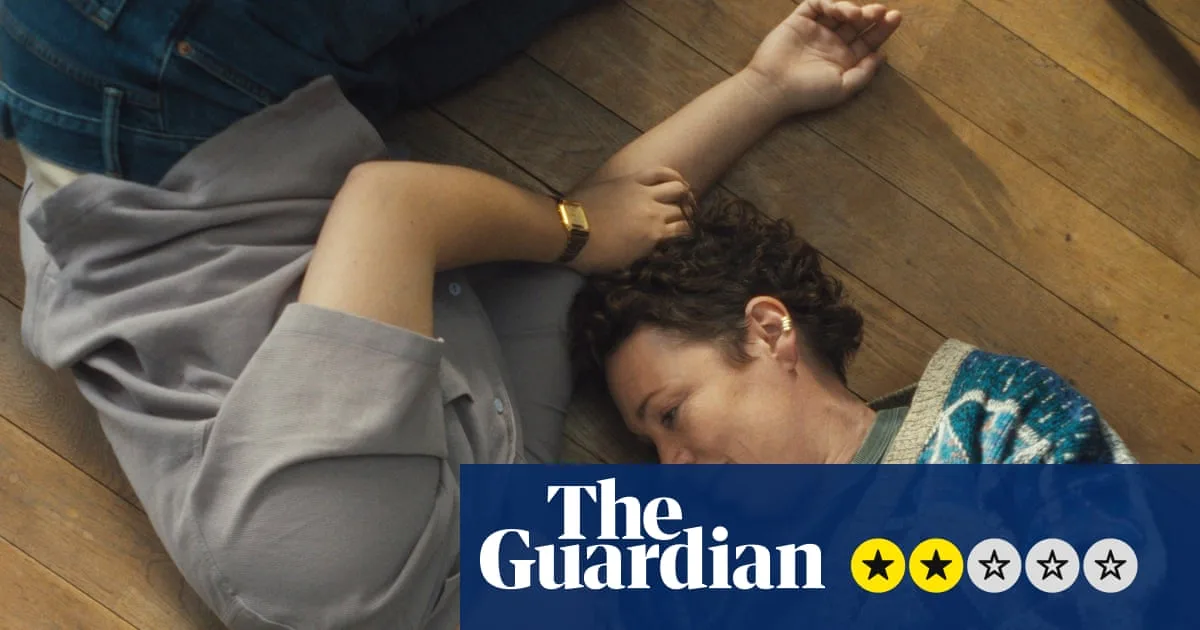
In Sophie Hyde's new film Jimpa, Olivia Colman plays Hannah, an Australian filmmaker determined to craft an autobiographical drama "without conflict." Those around her are, understandably, sceptical. Her father Jim, portrayed by John Lithgow, came out as gay after her birth and chose to remain with the family to co-parent. However, he left Adelaide about a decade later, feeling stifled by the local culture and pursuing a career as an LGBTQ+ politician and AIDS advocate in Amsterdam.

A Premise Ripe with Tension

Hannah aims to create a film celebrating what she views as a necessary act of self-liberation, even as her voice wavers when she adds it is also about a "daughter learning not to need her father so much." This premise is striking, especially as Hannah serves as an autobiographical stand-in for the film's writer-director Sophie Hyde. Hyde has cast her own child, Aud Mason-Hyde, as their on-screen counterpart, Frances, Hannah's child.

Yet Hyde, who previously embraced the nuances of co-dependent friendships and sex work in films like Animals (2019) and Good Luck to You, Leo Grande (2022), may have gotten too close to her on-screen avatar. Jimpa is a film about a director afraid of conflict that is itself too afraid of conflict.

Wide Pickt banner — collaborative shopping lists app for Telegram, phone mockup with grocery list

Frances's Restlessness

Frances, who is openly trans, queer, and non-binary, begins to exhibit some of Jim's restlessness. During the family's latest visit to Amsterdam, they announce their desire to live with Jim, who insists on being called Jimpa (finding "grandpa" too gauche). Meanwhile, Hannah continues to prepare her film, facing pushback at every turn. An actor, Cody Fern playing himself, questions whether a father's choice between ambition and family can truly be without conflict.

Rather than delivering the intergenerational burst of LGBTQ+ joy and affirmation Hyde likely intended, Jimpa invests its energy in smoothing down any potentially ruffled feathers. It relies too heavily on the natural tenderness in Colman's eyes or Lithgow's exuberance, which ricochets around a room like a trapped bat.

Colman's Efforts Undermined

Colman attempts to do more with the role than the film allows. She tries to embody Hannah's discomfort and express what is repeatedly vocalised: that one can be angry or disappointed by their parents while still thinking the world of them. Colman shrinks away under Lithgow's more outsized performance, only to emerge in full emotional force for a final monologue that proves to be the film's most moving moment.

Hannah repeatedly voices fears that Jim will inevitably hurt Frances, and Jim reveals a limited understanding of gender and sexuality beyond his own experience, uttering lines like "if you say you're bi, you're just confused." However, Hyde practically leapfrogs over these moments to return swiftly to rosier territory: discussions among Jim and his friends about their histories, or simplistically dreamy flashbacks to old parties and romances.

Characters Reduced to Mouthpieces

Characters are reduced to mouthpieces for their generation and identity. Frances is forced to explain to their elders—and the audience—what compersion means, a key concept in polyamory describing joy from a partner's other romantic or sexual relationships. There is little room for flaws, even when the film explains why those flaws are not the sum of a person. Jimpa proves that there can be such a thing as being too close to the material.

Director: Sophie Hyde. Starring: Olivia Colman, Aud Mason-Hyde, John Lithgow, Kate Box, Daniel Henshall, Eamon Farren. Cert 15, 113 minutes. Jimpa is available on digital platforms from 11 May.

Pickt after-article banner — collaborative shopping lists app with family illustration