The Haunted Grandeur of Hotel Lutetia
If walls could speak, Jane Rogoyska has been meticulously recording their whispers, capturing what she describes as the 'emotional residue' of history. Our setting is the illustrious Hotel Lutetia in Paris, a grand establishment constructed in 1910, renowned for its opulent chandeliers, intricate mosaics, parquet floors, and gleaming brass fittings. The building boasts an Art Nouveau façade adorned with distinctive shell-shaped canopies.
A Sanctuary Turned Prison
Traditionally a haven for artists, intellectuals, musicians, and politicians, the Lutetia conceals a profoundly dark chapter within its elegant confines. Before the outbreak of the Second World War, the hotel served as a refuge for foreign exiles desperately attempting to alert the world to the perils of German fascism. In the early 1930s, the French government aided their arrival, hosting notable figures such as writer Heinrich Mann, critic Walter Benjamin, and even James Joyce, who was noted for his 'air of perpetual melancholy on his thoughtful face'.
When the Nazis initiated the dismissal of Jews from state employment in April 1933 and intensified crackdowns on 'undesirables', a trickle of refugees swelled into a deluge. Well-intentioned gatherings were convened at the Lutetia to publish pamphlets, raise funds, and organise rallies and protests, but these efforts proved tragically insufficient.

The Nazi Occupation and Its Brutalities
Following the general mobilisation in September 1939, the conflict escalated rapidly. By May and June of 1940, 90,000 French soldiers had perished in combat. German and foreign refugees were abruptly reclassified as enemy aliens, subjected to internment, and subsequently surrendered to the Nazis. In June 1940, bombs rained down upon Paris, and 40,000 Nazi military personnel, 'clad in leather overcoats', marched into the city.
The Lutetia was commandeered by the Abwehr, the German intelligence service. Secretaries, radio operators, clerks, and officers occupied its rooms, with one admiral reserving a separate chamber for his dachshunds. The hotel staff retained their positions, compelled to prepare gourmet meals for the occupiers. The sole act of defiance occurred when the manager bricked up a cellar corner containing the finest vintages.
While the occupiers indulged, the French populace endured severe rationing of food and fuel. The majority of France's agricultural and industrial output was diverted to Germany, art was systematically looted, and young Frenchmen were conscripted as forced labour in Reich mines. Rogoyska poignantly observes, 'The world of books and conversation was replaced by incomprehensible brutality.'
Collaboration and the Path to Liberation
The Vichy regime and its collaborators, including segments of the Roman Catholic clergy, enforced the Nazis' repressive racial policies. By July 1944, over 75,000 individuals, including 11,400 children, had been rounded up, detained in Parisian sports stadiums, and transported to Auschwitz.
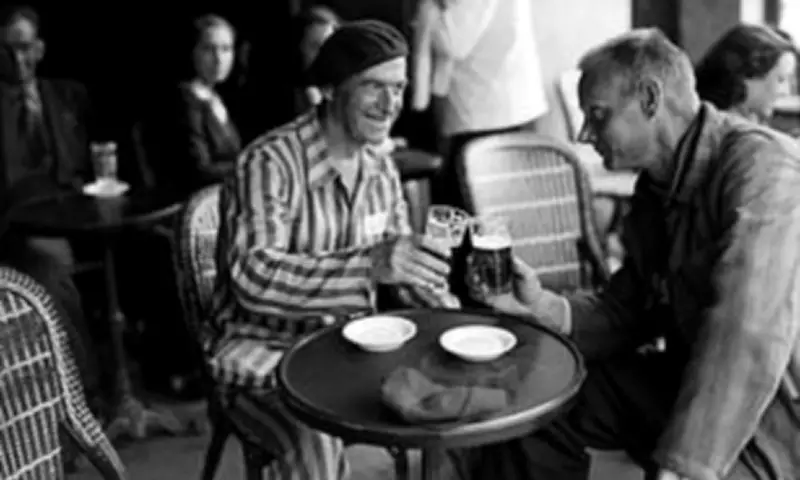
With the D-Day invasion of Normandy, the Germans were compelled to retreat from Paris. Hitler issued orders—thankfully disregarded—to reduce the city to rubble. In a remarkable transformation, the Lutetia, assisted by 600 volunteers, became a repatriation centre for returning deportees.
A Legacy of Shame and Unsettling Encounters
Rogoyska's work, Hotel Exile, powerfully narrates 'the shame of collaboration, the lack of solidarity, the betrayal of foreigners, the betrayal of Jews, the poverty, the hunger, the suffering'. Perhaps the most disconcerting episode in her meticulous study occurred decades after the war, when a former Abwehr officer casually strolled through the hotel's revolving doors, visiting Paris as a tourist.
The manager, with a bow, greeted him: 'How delightful to see you again and welcome, Colonel! Unfortunately, your favourite table is currently busy. But if you don't mind waiting a few minutes, it will be free!' This chilling moment underscores the complex, lingering echoes of a traumatic past within the hotel's storied walls.