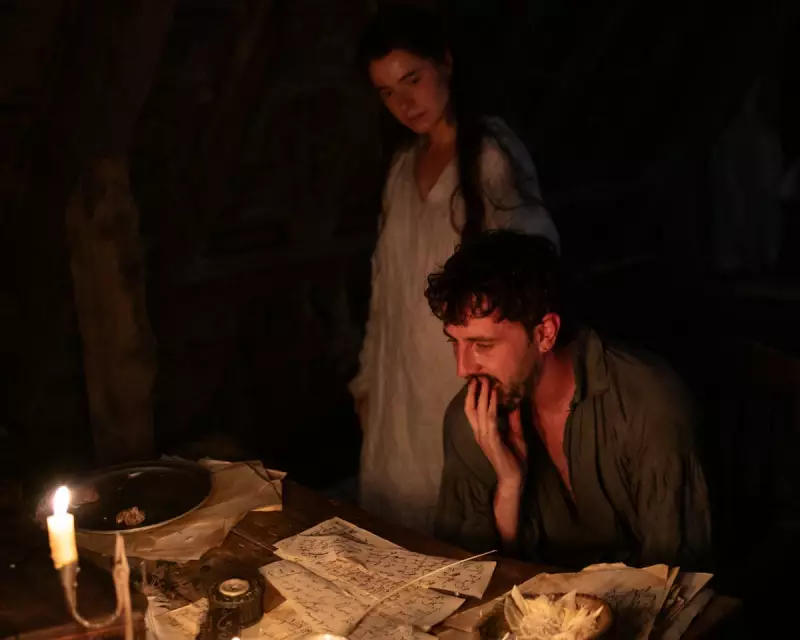
Acclaimed director Chloé Zhao ventures into period drama with Hamnet, a deeply romantic and speculative film that imagines the personal tragedy behind William Shakespeare's greatest play. Starring Paul Mescal and Jessie Buckley in beguiling lead roles, this adaptation of Maggie O'Farrell's bestselling novel offers a poignant, if audacious, origin story for Hamlet.
A Grief Transformed Into Art
The film posits a compelling connection between the Bard's life and his work. It suggests that the death of his 11-year-old son, Hamnet, in 1596, became the unspoken wellspring for the themes of loss, madness, and existential agony in Hamlet, written a few years later. Zhao, who co-wrote the screenplay with O'Farrell, alongside drawing from scholar Stephen Greenblatt's essay, crafts a narrative where Shakespeare's private anguish is sublimated into his public art.
While historians might debate the direct link—the similarity between 'Hamnet' and 'Hamlet' could be coincidental—the film's power lies in its emotional conviction, not forensic proof. It dares to treat the iconic playwright as a vulnerable human being, shattered by a loss that defined his family.

Beguiling Performances Anchor the Drama
The film's heart is the magnetic performance by Jessie Buckley as Agnes (Anne) Hathaway. Portrayed as a woman deeply connected to nature and viewed with suspicion in Stratford-upon-Avon, Buckley's Agnes is a vision of intuitive strength and profound sorrow. Her chemistry with Paul Mescal's William Shakespeare is electric; Mescal captures the poet's ambition and restless genius, alongside his guilt and detachment as he pursues fame in London while his family faces crisis at home.
The supporting cast, including Emily Watson as William's disapproving mother Mary, adds further texture to the Elizabethan world. When pandemic illness strikes the household in Will's absence, the stage is set for the central, devastating loss.
A Visually Stunning Act of Speculation
Zhao's direction, coupled with Łukasz Żal's luminous cinematography and Max Richter's evocative score, creates a folk-horror-tinged atmosphere that feels both earthy and dreamlike. The early sequences of Agnes wandering the forest establish a world where emotion and nature are inextricably linked.
The film argues that Shakespeare, like his fictional creation Hamlet, became a kind of ghost after his son's death—condemned to walk the earth while processing an unspeakable grief. This speculative 'creation myth' is presented with such tenderness and visual grandeur that it becomes a compelling piece of storytelling in its own right, regardless of its historical accuracy.
Hamnet is a film that lives and dies by its performances and its bold central thesis. It may not provide answers, but in the tradition of works like Tom Stoppard's Rosencrantz and Guildenstern Are Dead, it offers a thrilling, new, and deeply moving doorway into a classic. The film is out now in the US, releases in UK cinemas on 9 January, and arrives in Australia on 15 January.