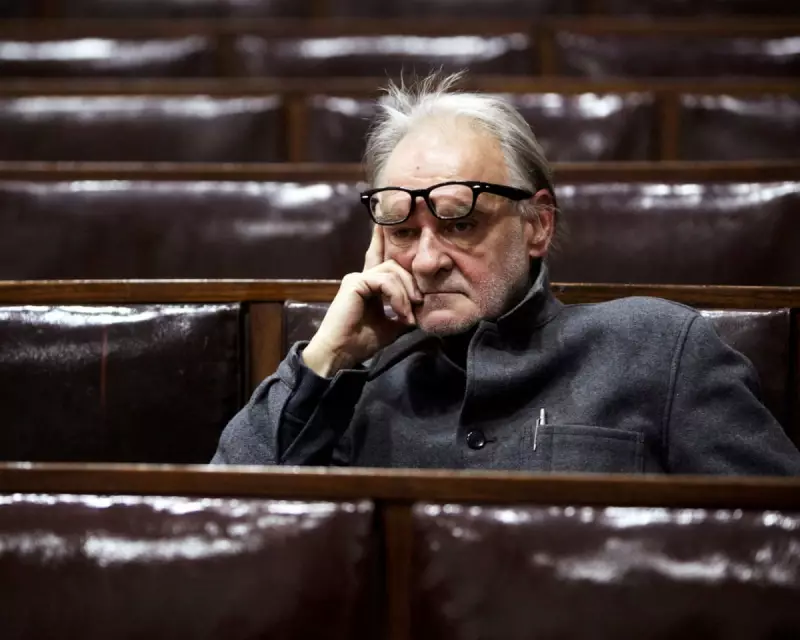
The world of cinema has lost one of its most singular and uncompromising voices. Béla Tarr, the Hungarian director renowned for his epic, poetic, and painstakingly slow black-and-white films, has died at the age of 70.
A Legacy of Epic, Poetic Cinema
Tarr earned a revered, if niche, status among cinephiles for a formidable but small body of work. His films, including Damnation (1987), the seven-hour-plus masterpiece Sátántangó (1994), Werckmeister Harmonies (2000), and his final feature The Turin Horse (2011), are celebrated for their austere beauty and profound depth. He transformed simple narratives set in remote Hungarian communities into complex studies of desolation, loss, and foreboding, with critic Susan Sontag famously declaring she would gladly watch Sátántangó every year.
His signature style was defined by extraordinarily long, unbroken takes. The opening shot of Sátántangó lingers on cows trudging through mud for eight minutes, while The Turin Horse contains only 30 shots across its 146-minute runtime. Tarr saw this approach as following "the logic of life," embracing repetition and frustration to create a powerful, often oppressive atmosphere. He lamented the technical limitation of film reels, calling the 11-minute cap "the worst form of censorship."

From Social Realism to Stylistic Mastery
Born in Pécs in 1955 and raised in Budapest by parents who worked in theatre, Tarr's early career focused on socially attuned documentaries and gritty realism. His debut feature, Family Nest (1979), made when he was just 22, used non-professional actors to deliver a blunt critique of communist housing policy. It was with Damnation that the elements of his mature style crystallised: stark black-and-white cinematography, collaboration with Nobel laureate writer László Krasznahorkai, extended takes, and relentlessly inclement weather.
Despite his formidable arthouse reputation, Tarr never achieved mainstream crossover success. His films, often burdened by an off-putting reputation for excessive length and spotty distribution, remained the province of dedicated film lovers. He was a fierce critic of Hungary's Prime Minister Viktor Orbán, labelling the regime "the shame of our country" and accusing it of waging war on intellectuals. He acknowledged that warnings about populism and the spell of sinister figures were ingrained in films like Sátántangó and Werckmeister Harmonies.
Retirement and Enduring Influence
After declaring The Turin Horse his final film, Tarr retired from directing features but remained active in the film world. He produced projects like the Icelandic folk horror Lamb (2021), made shorts, and ran the film.factory school he founded in Sarajevo in 2013. In a 2024 interview, he described filmmaking as a "drug" but was unsentimental about his retirement, stating simply: "The work is done, and you can take it or leave it."
A new generation appears to be choosing to take it. In an age of scrolling and instant gratification, Tarr's demanding, immersive cinema is finding fresh audiences. Sátántangó was ranked No. 78 in Sight & Sound's 2022 poll of the greatest films of all time. His marriage to his longtime editor and collaborator Ágnes Hranitzky ended in divorce. He is survived by his second wife, art curator Amila Ramovic. Béla Tarr's unique, cosmic vision of life, rendered in breathtaking cinematic paragraphs, leaves an indelible mark on the art form.