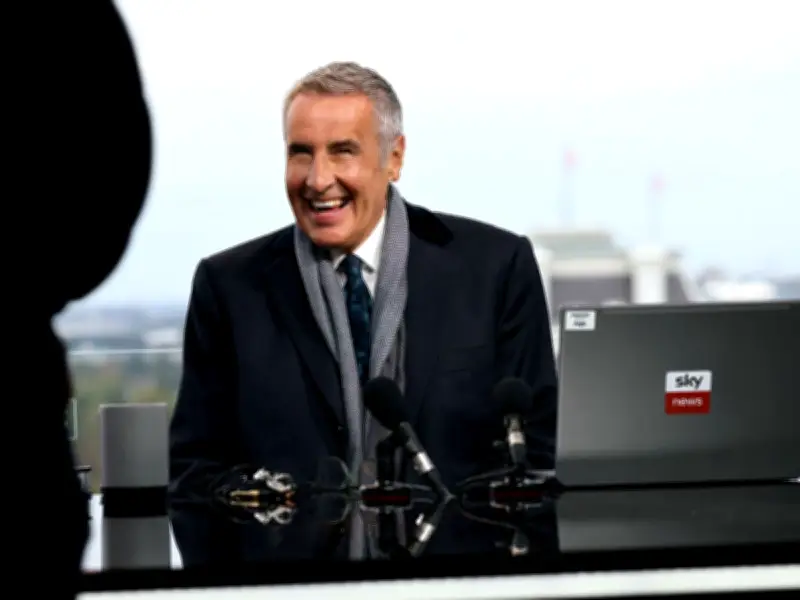
Dermot Murnaghan, the veteran broadcaster known for his work at Sky News, BBC, ITV, and Channel 4, died at his North London home on July 11, 2026, at the age of 68, his family confirmed. He had been battling stage four prostate cancer since his diagnosis last year.
Family Statement and Medical Thanks
In a statement, Murnaghan's wife, Maria Keegan, and their children Kitty, Molly, Alice, and Jack expressed gratitude to the medical teams who cared for him. They noted that he died peacefully with family at his side. The family requested that those wishing to remember him consider supporting Prostate Cancer UK, Prostate Cancer Research, and North London Hospice.
Political Tributes Highlight Impact of Openness
Former Prime Minister David Cameron praised Murnaghan's decision to go public with his diagnosis, stating: "I think it's really important that Dermot came out in the way that he did - as in his broadcasting life, he did it with incredible clarity and just simplicity. And as someone who was so well known to people through his broadcasting career over 40 years, it will have had a huge impact." Cameron added that Murnaghan's advocacy likely encouraged men to seek PSA tests, potentially saving lives.
Liberal Democrat leader Sir Ed Davey called Murnaghan a "broadcasting legend who we have lost far too soon" and noted his "tireless advocacy, encouraging more men to get tested for prostate cancer, will no doubt have saved lives."
MP Andy Burnham, expected to succeed Keir Starmer as prime minister, expressed sadness, calling Murnaghan "an exceptional broadcaster and a truly decent person."
Colleagues Remember a Consummate Professional
Broadcaster Piers Morgan described Murnaghan as "a terrific journalist, and a lovely man." Jonathan Munro, interim CEO of BBC News, said he "was a consummate professional and someone who really had a natural ability to connect with audiences."
John Riley, former head of Sky News, recalled: "He didn't say very much, but when he did chat, what he said was golden, insightful, and clear, and on the money. And what I really liked about him - which is why he was a good journalist - is he didn't like authority and he wasn't shy of showing it."
Sky News Colleagues Share Memories
Sky News executive editor Jonathan Levy described Murnaghan as a "wonderful colleague" who "had the perfect energy" for presenting and "means something to all of the broadcast newsrooms in the UK." Sky News presenter Mark Austin, who worked with him at ITN, praised his "composure" and ability to stay "very calm in those big moments" when "big stories break."
Sky News political editor Beth Rigby posted on X: "Am deeply saddened to hear Dermot has died. He was peerless in the presenter chair, as sharp as a tack, and hugely charismatic - always with a ready smile and a twinkly eye. I loved being on set, or in Downing Street, with Dermot because he was always in absolute command but so cool too." She added that anchoring the 2019 Brexit election overnight show with him was a career highlight.
Sky CEO Praises Career and Impact
Sky's chief executive, Dana Strong, said Murnaghan "was one of the great British news anchors and journalists of his generation" and noted that "audiences tuned in to see him at Breakfast, Lunchtime and on the Evening News, across Channel 4, ITV, the BBC and at Sky News." She highlighted his reporting on the deaths of Queen Elizabeth II and Princess Diana, as well as election results and Brexit votes.
Murnaghan's Own Words on Diagnosis
After announcing his diagnosis last summer, Murnaghan said: "For years I thought 'that will do me'. I'm getting tested basically once a year or every couple of years. It never occurred to me that they weren't testing for prostate-specific antigen (PSA) testing and I never went to my GP because I was getting other tests privately through the production company. So that's how I fell through the gaps and that's how I had a massive wake-up call and want to share the message." He urged men over 50 or in high-risk groups to get tested, emphasizing that early detection is crucial.