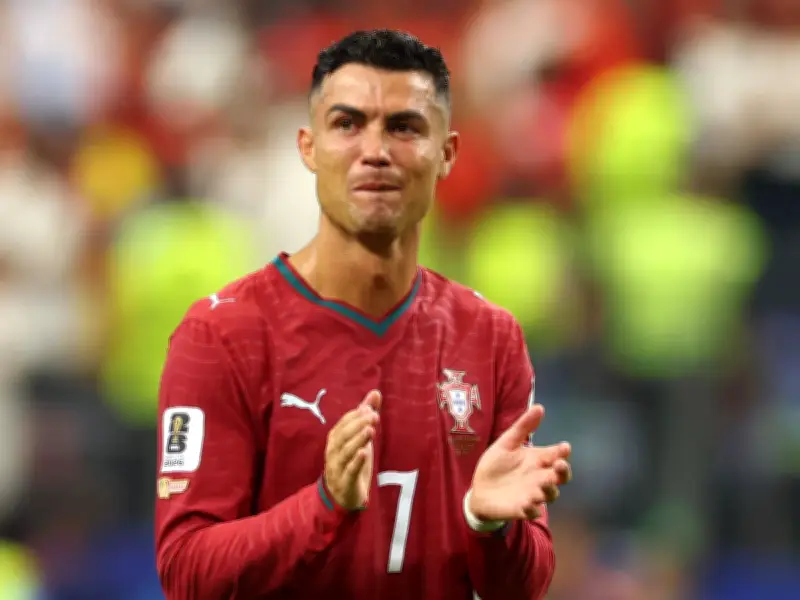
Cristiano Ronaldo's international career ended not with glory but with a self-absorbed whimper, shattering the illusion of the Messi-Ronaldo debate. Portugal's 2026 World Cup campaign finished in a last-16 loss to Spain, with Ronaldo, aged 41, treating the team as his personal twilight cruise. He will retire without a World Cup title, a narrative justice given his performance.
Ronaldo's Performance and Impact
Ronaldo played at a sluggish standard throughout the tournament, as he did in 2022 and Euro 2024. Despite being untouchable within the Portuguese camp, he scored only a penalty against Croatia—his first World Cup knockout goal—and acted as a structural handbrake, suffocating teammates by turning matches into personal glory hunts. The last days confirmed he is not near Messi in genius or greatness.
The Manufactured Debate
For nearly two decades, the Messi vs. Ronaldo debate was a corporate-engineered binary. Messi is a luminous creator with soft-edged magnificence, while Ronaldo is a hyper-optimized appliance for statistical output. Messi was sharper in passing, dribbling, and spatial geometry, and possessed cinematic glory and human warmth that Ronaldo lacked. Ronaldo competed only on paper, in sterile spreadsheets, not on the grass.
Ronaldo's Tragic Evolution
Ronaldo built a prison from his lust for numerical supremacy. Once a joyful forward at Manchester United, he morphed into a cynical penalty-box poacher obsessed with out-stating Messi. He became the greatest penalty-box predator but contributed almost nothing outside the box, refusing to press and isolating himself. The team existed to serve him.
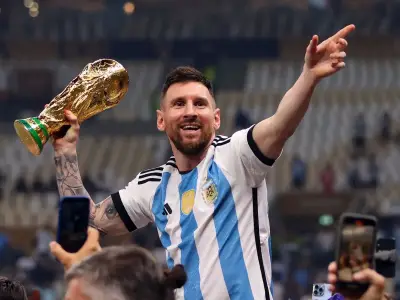
In contrast, Messi evolved gracefully, retreating into midfield playmaking and selflessness. His reward: Argentina became world champions and two-time Copa America winners. In a comeback against Egypt, Messi dropped deep, engineered a goal with a cross, and scored the equalizer himself, showing leadership without vanity.
Ronaldo's Narcissism After Defeat
After Portugal's loss to Spain, Ronaldo showed no consolation for teammates. Instead, he boasted about winning Euro 2016 and claimed the nation won nothing before him—a narcissistic display while his country mourned. He has constantly shifted the narrative of his greatness, downplaying the World Cup after Messi won it, and dismissing the Ballon d'Or when Messi surpassed him.
The Final Truth
This was a tale of hero versus villain, light versus dark: Ronaldo as cold branding architecture, Messi as warm instinctive magic. Ronaldo became a slave to his algorithm, dragging teams down with his ego. Messi remained human, letting the ball speak. The generation-defining debate was never a debate—it was a manufactured lie. Ronaldo was never close; he conquered metrics, but Messi conquered the soul of football.