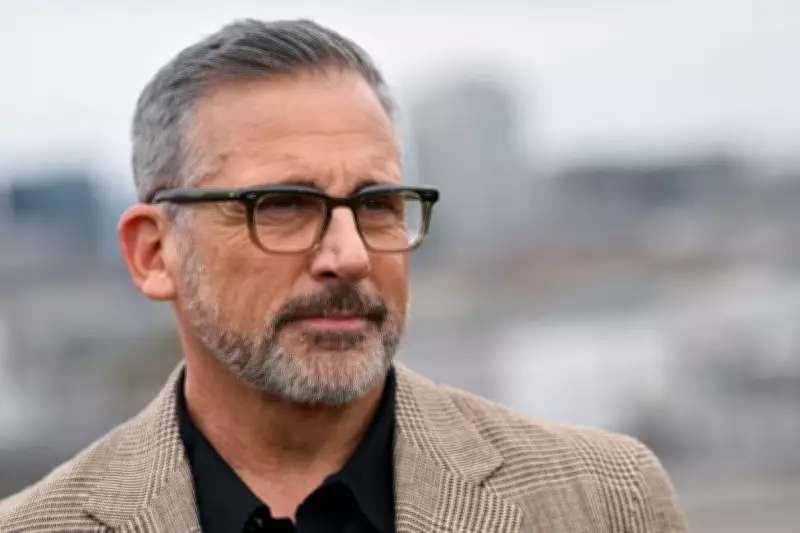
In a sensational revelation, Steve Carell has disclosed that his close friend and fellow actor Paul Rudd strongly urged him not to audition for what would become his most iconic role: Michael Scott on the American version of The Office. This surprising advice came at a time when the US adaptation of Ricky Gervais' acclaimed BBC workplace comedy was widely viewed in Hollywood as a potentially doomed venture that should be avoided at all costs.
The Fateful Warning from a Friend
Carell shared this anecdote with a laugh during an appearance on the Golden Globe-winning podcast Good Hang with Amy Poehler. He recalled the moment vividly, stating: "And I remember Rudd pulled me aside and said: 'Don't do it man. Don't audition. Don't audition. It is like - there is no way.'" At that point in 2005, Carell was an established supporting player in films like Anchorman: The Legend of Ron Burgundy and had appeared on series such as The Dana Carvey Show.
A Skeptical Hollywood Landscape
Amy Poehler, who was already a star on Saturday Night Live in 2005, corroborated the widespread skepticism, remembering: "Yeah, everyone was like: 'Don't even touch this.'" She confessed to harboring her own misgivings about the project when she first heard about it, sharing her concerns with TV writer Michael Schur, who would later become a writer and star on The Office.

Poehler elaborated on the prevailing sentiment: "And we were watching the British Office like everyone else and loving it, and I remember they were gonna make the American version. And everyone was like: 'This is a terrible idea. This is a terrible idea! No one can be as good as Ricky Gervais. No one can do that show.'"
The Turning Point of Casting
However, Poehler noted that perceptions shifted when Carell's involvement was announced: "And then we heard it was you. And we were like: 'Oh...oh, whoever's making this show wants it to be funny.'" This casting decision proved pivotal, as The Office, headlined by Carell, went on to become one of the most beloved American sitcoms of all time, cementing Carell's status as an icon of the genre.
Initial Struggles and Ultimate Triumph
Rudd's apprehensions about The Office appeared to have some foundation initially. Carell revealed that the pilot episode "was the lowest-testing pilot in the history, I think, of NBC." Despite this rocky start, the show premiered in 2005 and immediately propelled Carell to television stardom. That same year, he also achieved big-screen leading man status with Judd Apatow's directorial debut The 40-Year-Old Virgin, which coincidentally also featured Paul Rudd in a supporting role.
By 2005, Paul Rudd had yet to achieve the A-list movie star status he enjoys today, though he was already internationally recognized to Friends fans as Mike Hannigan, the love interest and eventual husband of Lisa Kudrow's Phoebe Buffay. Despite his initial warnings, Rudd and Carell have maintained a strong professional relationship, collaborating on numerous films including the Anchorman series and the 2010 comedy Dinner for Schmucks.
Parallels with Parks and Recreation
The conversation on the podcast also touched upon the similar challenges faced by Amy Poehler's own workplace mockumentary, Parks and Recreation. Developed by Greg Daniels (who also developed the US version of The Office) in collaboration with Michael Schur, Parks and Recreation initially struggled to find its footing.
Poehler recalled: "Parks and Rec had the worst launch ever. Everyone was like: 'This is not The Office. We don't like this.'" She added that she was frequently told she was "not Steve," and was regarded as a "poor man's version" of Carell during the show's early days. Like The Office, Parks and Recreation eventually overcame its initial criticisms to become a critically acclaimed success in its own right.
This revelation about Rudd's cautionary advice highlights the unpredictable nature of television success and serves as a reminder that even the most skeptical predictions can be proven wrong by exceptional talent and execution. The Office not only defied expectations but redefined American television comedy, with Steve Carell's portrayal of Michael Scott remaining one of the most memorable characters in sitcom history.