The 68th annual Grammy Awards, broadcast live from Los Angeles on CBS and Paramount+, delivered a night of historic wins, poignant speeches, and notable political statements. Hosted for the sixth and final consecutive time by comedian Trevor Noah, the ceremony celebrated music's brightest stars while intertwining themes of artistry and activism.
Major Award Highlights and Record Breakers
British singer-songwriter Olivia Dean secured the coveted best new artist award, dedicating her win to her immigrant heritage. "I'm a product of bravery, and I think those people deserve to be celebrated," Dean expressed in her acceptance speech, highlighting her grandmother's journey.
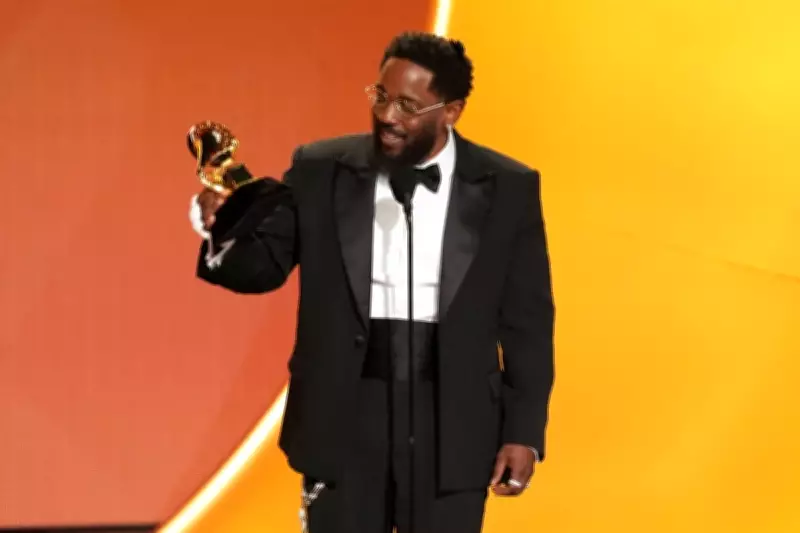
In a landmark achievement for hip-hop, Kendrick Lamar ascended to become the most-awarded rapper in Grammy history. His album 'GNX' earned him the best rap album prize, bringing his career total to 26 Grammys and surpassing Jay-Z's previous record of 25. Lamar also triumphed in categories including best rap song and rap performance.

Political Undertones and 'ICE Out' Movement
Puerto Rican superstar Bad Bunny accepted the best música urbana album award for 'Debí Tirar Más Fotos' with a powerful message. "Before I say thanks to God, I'm gonna say: ICE out," he declared, receiving a thunderous standing ovation. He emphasised, "We're not savage, we're not animals, we're not aliens, we are humans and we are Americans."
This sentiment resonated across the event, with numerous artists sporting 'ICE OUT' pins to protest U.S. Immigration and Customs Enforcement actions. Billie Eilish, Finneas, and unexpectedly Justin and Hailey Bieber were among those wearing the pins, while Kehlani concluded her best R&B performance acceptance speech with "F--- ICE." Joni Mitchell also wore a pin when accepting best historical album.
Other Notable Winners and Performances
Lady Gaga claimed best pop vocal album for 'Mayhem', reflecting on her lifelong musical journey. Jelly Roll won best contemporary country album for 'Beautifully Broken', delivering a heartfelt speech about faith and redemption. Lola Young earned best pop solo performance for 'Messy', humorously admitting she had no prepared remarks.
The ceremony featured 19 performances, including sets from Bruno Mars and Rosé, who opened the show with 'APT.', and Sabrina Carpenter, who performed an airport-themed rendition of 'Manchild'. Trevor Noah's hosting was punctuated by witty observations, including nods to Ms. Lauryn Hill's first performance since 1999 and playful jabs at former President Donald Trump.
Special Recognitions and Emotional Moments
Steven Spielberg entered the EGOT club, winning a Grammy for best music film for 'Music by John Williams'. Lifetime Achievement Awards were presented to Chaka Khan, Cher, Carlos Santana, Paul Simon, Fela Kuti, and Whitney Houston, with Khan accepting in person.
The Osbourne family attended their first Grammys since Ozzy Osbourne's passing, with a tribute planned during the in memoriam segment. "It's going to be very emotional for me," Kelly Osbourne shared on the red carpet.
Additional winners included Shaboozey, who spoke tearfully about his family's immigrant sacrifices, and eight-year-old Aura V, who became one of the youngest Grammy winners ever for best children's album. The Dalai Lama also won for best audiobook narration, beating Supreme Court Justice Ketanji Brown Jackson.
Category Evolutions and Snubs
This year introduced a best traditional country album category, while the existing one was renamed best contemporary country album. Despite big years for artists like Ella Langley and Megan Moroney, no rap or country acts were nominated for best new artist.
Notable snubs included Lorde, whose album 'Virgin' was shut out, and The Weeknd, whose 'Hurry Up Tomorrow' received no nominations despite multiple submissions. Sabrina Carpenter's 'Man's Best Friend', released just before the eligibility cutoff, garnered six nominations.
Eligibility for the awards required recordings commercially released in the U.S. between August 31, 2024, and August 30, 2025. The Premiere Ceremony handed out 86 of the 95 total Grammys, with the remaining nine presented during the main telecast.