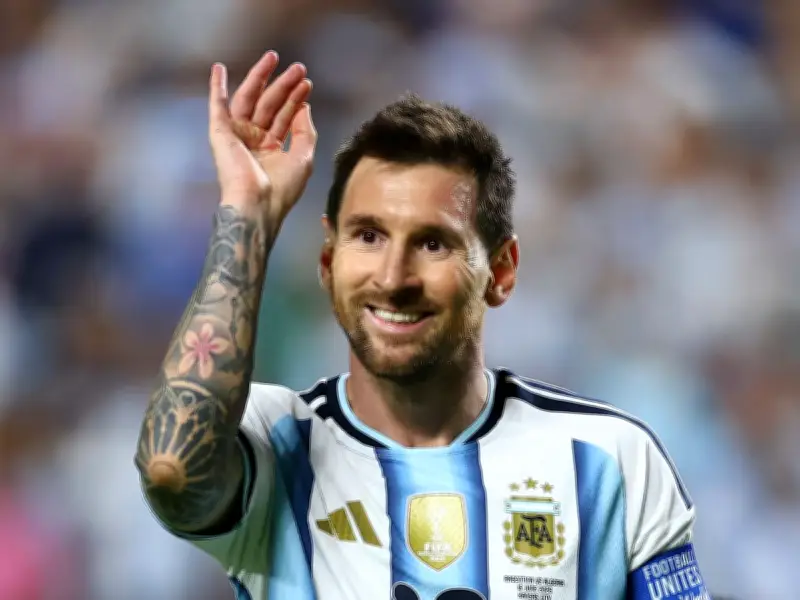
Lionel Messi and Harry Kane have already done World Cup organisers a massive favour by shining early in the tournament. The marquee names have been the first to arrive at the World Cup party, and FIFA and the tournament organisers will be hugely thankful for that.
Hydration Breaks No Longer a Nuisance
Here's how good this World Cup has been so far: the hydration breaks have stopped winding me up. They probably should not have wound everyone up so much in the first place. We all knew what they were going to be when their introduction was announced last December: commercial breaks. Any outrage should have occurred then. In what should be a continuous sport, they are a mild aberration, but you get used to them.
In fact, mates of mine watching in the pub quite like a hydration break. Don't forget, always drink responsibly and all that, but if you are a thirsty character on a warm evening and don't have work in the morning, the three-minute break midway through a half is an ideal refuelling window.
Football stopped being a truly continuous sport when they phased in regulations that allow teams to use umpteen substitutes. Oh, and when they allowed time-wasting to escalate unchecked. Oh, and when they introduced VAR. At least we know that, unlike most new gimmicks in football, the hydration break will not be adopted by the wider game. This is tournament-specific, made for American television.
It is really not ideal, but we can live with it because the football has been compelling. To be fair to FIFA, which is never easy to do, they seem to be conscious of the need to keep things flowing now that they have made it a game of four quarters. Throw-ins have been reversed because a player has taken too much time, and DR Congo gifted Portugal a corner by spending too long over a goal-kick. As always seems to be the case, the VAR system at this tournament works a whole lot smoother and far more quickly than it does in the Premier League.
But the hydration breaks have become bearable because what has happened between them has been so entertaining. Some of the goalkeeping has been questionable, but that has only added to the gaiety. Unless you are Algerian, for example, it would have been far less fun if Luca Zidane had not helped Lionel Messi with a couple of his record-equalling goals.
Marquee Players Shine Early
Messi's performance was emblematic of the tournament's marquee players making early statements. Cristiano Ronaldo was unable to perform to anywhere near the same level as his old Ballon D'Or rival or make the sort of impact that Harry Kane, Kylian Mbappe, and Erling Haaland did. But there is time for him to prove people wrong.
The expanded format of this tournament has also come in for a lot of criticism. But knowing that one win has a half-decent chance of putting you through to the knockout stages, there has been a greater sense of adventure in the early stages. Even the most vehement objectors to a 48-team tournament must have softened a little when Cape Verde's 40-year-old keeper, Vozinha, broke down in tears after keeping a clean sheet against the Spanish. Curacao were thumped 7-1 by Germany, but not before their equaliser was one of the moments of the first round of fixtures.
Positive Early Signs
It has been a clean tournament so far: three sent off in fixture one and none in the following 23. That is one positive effect of VAR. Of course, things can change. Niggle might creep in, teams might get more cautious, keepers might start saving shots, the hydration breaks might start to bug you again.
There is absolutely no scenario in which the scandal of ticket prices, hotel and travel costs, and the banning of supporters, not to mention officials, from certain countries should be forgotten. But FIFA and the tournament's organisers, particularly in the United States, badly needed the football to come to their rescue. And so far, it has done just that.