FIFA has faced criticism after confirming that the half-time interval for the upcoming World Cup final will be extended to 30 minutes, double the standard 15-minute break stipulated in football's laws. The decision has drawn sharp reactions, with some observers citing potential risks to player welfare.
Events Boss Defends FIFA's Decision
Michael Gietzen, chief executive officer of Identity, has defended the governing body, arguing that critics are “missing the point.” He stated: “Football has its own rhythm and its own rules and of course that matters. But a World Cup final isn’t ‘most of the time.’ It happens once every four years, in front of the biggest audience any single sporting event can pull. Treating it like a normal weekend fixture is the mistake, not the half-time show.”
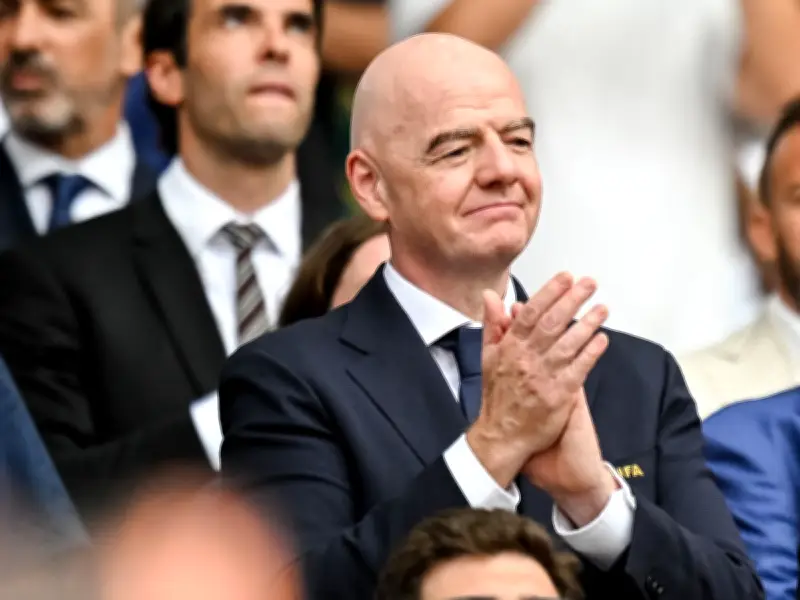
FIFA president Gianni Infantino has described the display as a “groundbreaking spectacle” that will “celebrate football, music and our shared values, ensuring a legacy that transcends the final whistle.” The show will feature artists such as Madonna, Shakira and Justin Bieber, curated by Coldplay's Chris Martin.
Precedent and IFAB Concerns
This is not an isolated incident. Last summer’s Club World Cup final between Chelsea and Paris Saint-Germain also saw an extended half-time of 25 minutes. FIFA had repeatedly declined to clarify the duration of the break for this year's final, with this announcement providing an explanation.
The International FA Board (IFAB), football's law-making body, previously turned down a request from CONMEBOL to extend the half-time break to 25 minutes, citing a “negative impact on player welfare and safety resulting from a longer period of inactivity.” Despite this, FIFA has pressed ahead with a 30-minute interval.
Cultural Event vs. Player Welfare
Gietzen dismissed welfare concerns, saying: “A good half-time show isn’t a distraction from the football. It’s part of the reason people remember exactly where they were when they watched it. A few extra minutes to get that right isn’t a compromise, it’s FIFA recognising that the final is a cultural event as much as a sporting one.” He added: “Purists may call that a dilution. I’d call it FIFA catching up to what a decent proportion of audiences have wanted for years. A final like this comes round once every four years. Play it safe and you waste the moment.”
Critics, however, argue that extending the break undermines player welfare and the integrity of the sport. The controversy highlights the tension between FIFA's commercial ambitions and the traditional rules of football.