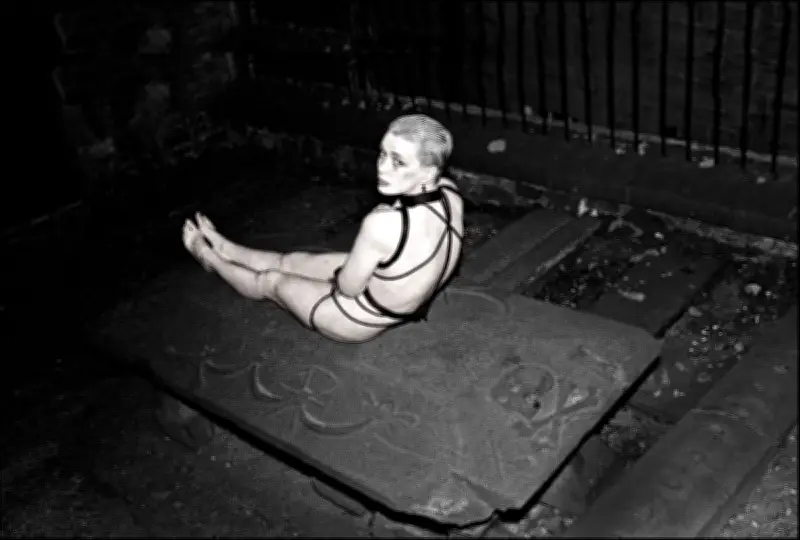
Del LaGrace Volcano, the US photographer known for subversive images of LGBTQ+ communities, drag kings, and sexual desire, now lives in the peaceful Swedish city of Örebro. They moved there two decades ago with their ex-partner, Matilda Wurm, an associate professor at the city's university. Today, their days are filled with walks in a nearby forest and trips to the local outdoor swimming pool with their two children. This is a far cry from their previous life in London, where they lived in squats, attended S&M fetish parties, and documented lesbian cruising culture.
From London's Underground to Swedish Serenity
“I do miss it. I think London will always be my city,” Volcano says, picking me up from my hotel in Örebro's virtually empty city centre. The former trading hub, known for its medieval castle, is “not a queer city,” the photographer admits. Most of their neighbours do not even know they are queer. Volcano, 68, is intersex and calls themself a “hermaphrodyke,” but these days they “pass as apparently a little old man,” they say with a grimace.
Formerly known as Della Grace, Volcano was raised as a girl, but at puberty, their breasts and menstrual cycle were atypical. On a doctor's recommendation, they received an unwanted breast implant and were sent off to live as a woman. It was not until the 1990s that their then-girlfriend encouraged them to stop plucking their facial hairs. They then began to embrace their intersex identity, taking the 1995 photo Self Portrait with Blue Beard, which became one of their most recognisable works.
Defying Conformity and Facing Criticism
Much of the press Volcano received was sneering. “I feel like the world wasn't ready for me,” they say. In a 1995 interview published in The Guardian, a journalist described “gawping” at the “woman with a beard” who stood before her. In a 1997 column in Time Out’s gay section titled “Falling from Grace,” the author detailed how Volcano made them feel “extremely uncomfortable.” Thirty years on, the artist is fed up with their identity being debated and ridiculed, often overshadowing their bold, striking, technically brilliant photographs.
Despite this, Volcano has achieved fame. Their series Queer Dyke Cruising and Love Bites, depicting lesbian subcultures, were hugely influential, though controversial. Love Bites was briefly banned by the US Customs Service for its explicit lesbian content. Yet Volcano feels their work has not received the financial validation it deserves. “I had a really big crisis when I was 65, because that's an age people are retiring,” they say. “I looked at myself through a very heteronormative capitalist lens and I felt like a failure.”
Personal Struggles and a New Lease on Life
Their marriage to Wurm ended, and they had a feeling they would die at 67, the age their mother died. Having made it past that age, they have found a new lease of life. A major show is coming this summer across two UK sites: one at Auto Italia in London and the other at the Edinburgh Art Festival.
Volcano wants their subjects to feel noticed and cared for, a corrective response to not having felt seen as a child. Their parents split when they were a toddler, and they spent their childhood between their mother's hippie household in Santa Maria, California, and their father's strict Mormon home in Tulsa, Oklahoma. Though they discovered in their teens that both their mother and stepfather were having same-sex affairs, their mother was unsupportive when they came out as bisexual. Volcano describes their mother as a “pathological liar,” who told them their father had held her at gunpoint on the day they were born – a story their father later debunked. Even so, since she died, they “miss her a lot.”
Artistic Legacy and Future Ambitions
Volcano drives us to their flat a couple of miles from the city centre, insisting on a “jaunt around the castle.” As they prepare quiches and salad, I rifle through books and magazines featuring their work. One portrait of novelist Leslie Feinberg catches my eye. Feinberg is centred, looking straight into the camera, in a way that could be aggressive but somehow isn't. “I think it's the best photo of Leslie ever made,” Volcano says – and I suspect they are right.
They are exasperated by how little critics focus on the technical quality of their work and constantly quiz me on my knowledge of 80s artists and queer figures. “I want to give your generation a history class,” they sigh when I admit I haven't heard of sexologist Annie Sprinkle. Without the forest, which they walk or cycle through daily, it would be “much harder to live here.” At an outdoor gym, Volcano attempts a backflip but gives up to avoid injury. “I wish I could have shown off for you today, I'm a little embarrassed that I didn't,” they admit. A few days later, they WhatsApp me a video of them doing tricks with their child, “just so you can see.”
Love, Loss, and the Queer Archive of Resistance
Back at the flat, they pull prints from drawers labelled “trans portraits,” “femmes of power,” and “precious.” They share stories of encounters with famous queer people, from selling a print to The Matrix co-creator Lilly Wachowski to rejecting Judith Butler's request for a free portrait. They also recount a brief Romeo & Juliet-esque love affair with a well-known journalist and activist, which was disapproved of by both friendship groups due to Volcano's involvement in the S&M scene.
Despite having had a “very, very, very active sex life,” Volcano is not dating at the moment. “I would like to have some kind of romance in my life again,” they say. “But nobody measures up to Matt, that's the problem.” They were with Wurm for 14 years, and though it was Volcano's third wedding, it was the only time they married “for love.” Their first two marriages, in 1982 and 1995, were to cis gay men; the second gave them the surname Volcano.
For now, anything more than an “out-of-country fling” would interfere with Volcano's ambition. They want to write a memoir, but before it can be published, “some people need to die, some people need to grow up, and some statutes of limitations need to have expired.” They are focused on building their Queer Archive of Resistance, with the ultimate dream of owning a compound where “at least 10 people can come and stay, to research, study” and explore their back catalogue. “I will have old and young, queer and non-queer alike coming to visit me in Sweden,” they describe. “I will be telling my stories and showing my pictures and cooking for people, having interesting conversations. That's the best case scenario.”
Del LaGrace Volcano is at Auto Italia, London, 17 July to 25 October. Del LaGrace Volcano: Love Bites Back is at Edinburgh Art Festival, 19-30 August.