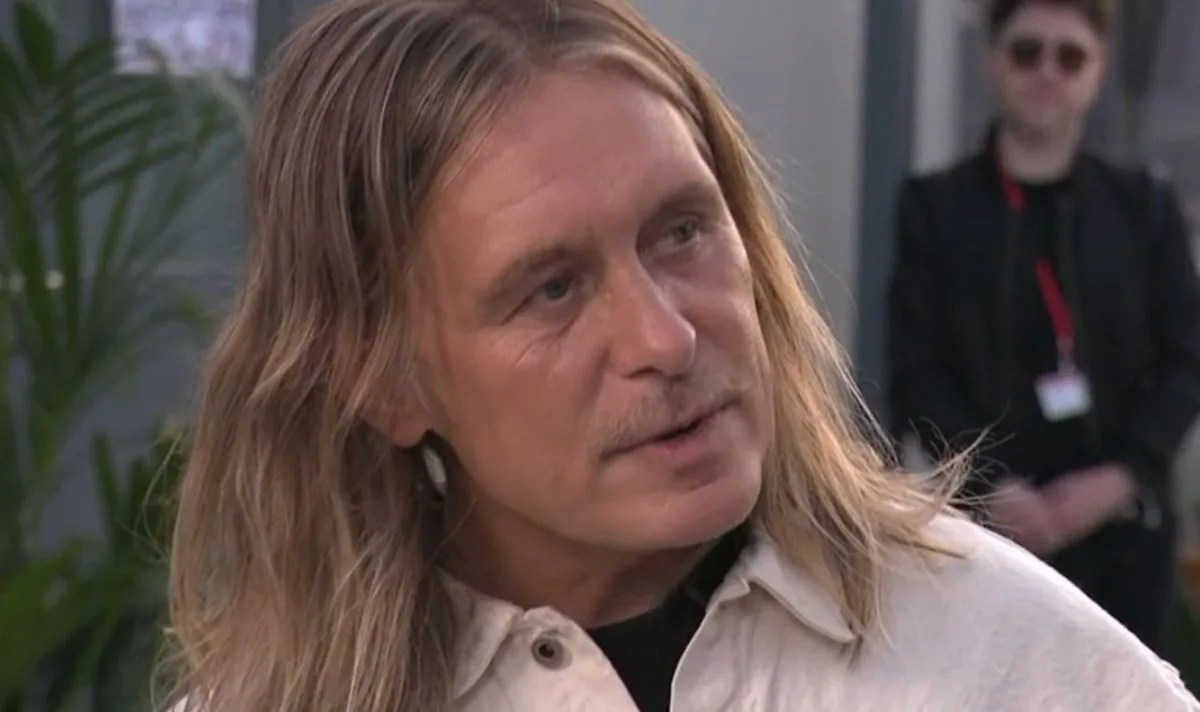
Australian comedy veteran Mark Mitchell has left fans astonished with his radically changed appearance, appearing almost unrecognisable from his iconic 1980s character that made him a household name. The 71-year-old performer, best remembered for his portrayal of Con the Fruiterer on the hit Channel Ten series The Comedy Company, now sports a dramatically different look that has sparked widespread discussion among his loyal following.
A Complete Visual Transformation
Gone are the distinctive features that defined his beloved character for generations of Australian viewers. The jet-black hair, carefully groomed pencil moustache, and signature black apron that became synonymous with Con the Fruiterer have been replaced by a striking new aesthetic. Mitchell recently appeared in a YouTube interview with popular Australian comedy trio Sooshi Mango, revealing his transformed appearance to the public.
The comedian now presents with long, flowing white hair that cascades around his shoulders, complemented by a full, bushy beard that gives him a distinguished, sage-like appearance. His wardrobe choice for the interview reflected this more refined image, opting for a smart blue dress shirt paired with matching jeans rather than the working-class fruit seller attire that made him famous.
Preserving the Comic Spirit
Despite this dramatic physical transformation, Mitchell's essential comic spirit remains unmistakably present. During his appearance, he flashed the same trademark cheeky grin that endeared him to audiences throughout his decades-long career. This subtle reminder of his comedic essence provided a comforting bridge between his past and present personas for long-time admirers.
Defending Comedy Legacy
Mitchell's career extends far beyond his most famous role, with significant appearances in beloved Australian productions including Round the Twist, Inspector Gadget 2, and the iconic soap opera Neighbours. In recent years, the comedian has become an outspoken defender of classic comedy against contemporary criticism.
In a 2020 interview with The Herald Sun, Mitchell addressed what he perceives as problematic "cancel culture" attitudes toward older television series that don't align with modern sensibilities. He specifically defended comedy shows like Little Britain and Summer Heights High, arguing they should be understood as "products of their time" rather than being retroactively condemned through today's political correctness lens.
Con's Cultural Significance
Mitchell portrayed the Greek-Australian grocer Con and his wife Marika on The Comedy Company from 1988 to 1990, creating one of Australian television's most memorable characters. While acknowledging that some elements haven't aged well, Mitchell maintains that Con represented an important cultural figure for migrant Australians during that era.
"Let those who wish to condemn Con, now, go for it," Mitchell told the publication. "They will never erase the countless happy moments I experienced with the audience and with migrant Australians. For whom Con was a, dare I say, hero in his own suburban, even mundane way."
The comedian elaborated that his character represented "an archetype of the new Australian who did well, made a successful life for himself and made suburban Australia better for his personality and family and joie de vivre." He cited contemporary polling from Greek newspapers that showed Con received "enormously high approval" ratings among Greek Australians at the time.
Contextual Understanding
Mitchell, who later played real estate agent Harold Gribble on the cherished children's series Round the Twist, emphasises the importance of historical context when evaluating comedy from previous decades. He argues that understanding the social and cultural environment in which these shows were created is essential for fair assessment, rather than applying contemporary standards anachronistically.
This perspective adds depth to the conversation about comedy's evolution and preservation, positioning Mitchell not just as a transformed visual presence but as a thoughtful commentator on entertainment history and cultural change. His dramatic new appearance thus represents more than just a personal style evolution—it symbolizes his transition into a elder statesman role within Australian comedy, reflecting on both his own legacy and the broader industry's development.