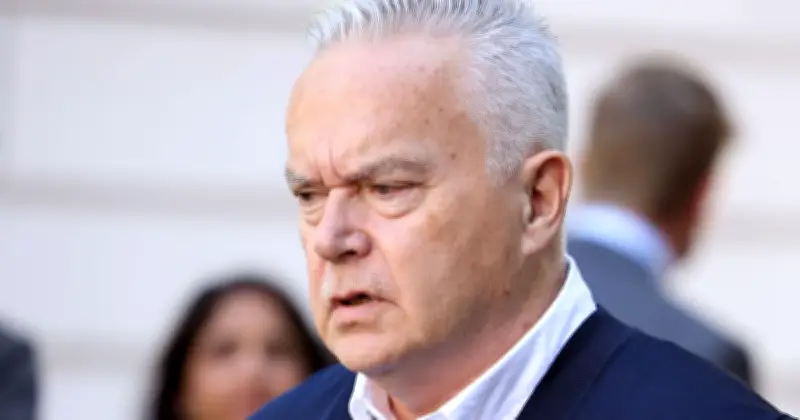
BBC chairman Dr Samir Shah has lashed out at Huw Edwards for refusing to pay back his £200,000 salary, stating that the money belongs to license fee payers and the corporation has not abandoned hope of recovering it.
Dr Shah's Testimony Before Select Committee
Speaking before the Culture, Media and Sport Select Committee, Dr Shah said: "I’ve already said that I think Huw Edwards ought to return the money, he hasn’t done so. I read that he’s seeking some kind of redemption. I think one very good step in that if he has an ounce of moral rectitude, he would return the money. He hasn’t done so, I think he should."
Dr Shah emphasised that "the serious amount of money belongs to the licence payer," adding: "He really should give it back, and we will keep pushing him to do so. I would think the licence payer would want us to do that."
Background of the Case
The BBC had previously urged Edwards to return the salary he was paid between his arrest in November 2023 and his resignation six months later. Edwards, 64, was once one of the BBC's highest-paid newsreaders. He received a six-month prison sentence, suspended for two years, in September 2024 after admitting to making indecent images of children.
Edwards resigned from the BBC in April 2024 and was charged in June 2024 following a Metropolitan Police investigation. He pleaded guilty to possessing 41 indecent images of children sent to him via WhatsApp, including seven Category A images, the most extreme and serious classification.
Substack Launch Draws Criticism
Last month, the former newsreader was criticised for joining the subscription platform Substack in an attempt to rebuild "some kind of worthwhile life." Edwards said his articles would "offer thoughts on matters of national and local interest" and "address mental health," adding: "I am also ready to be unflinchingly honest about the reality of long-term mental illness." Although the majority of creators on the platform charge for access to their work, he claimed to have "no plans for paid subscriptions."
The move drew widespread criticism, with some arguing it demonstrated a "staggering lack of awareness," while child sexual abuse campaigners condemned it as disrespectful.