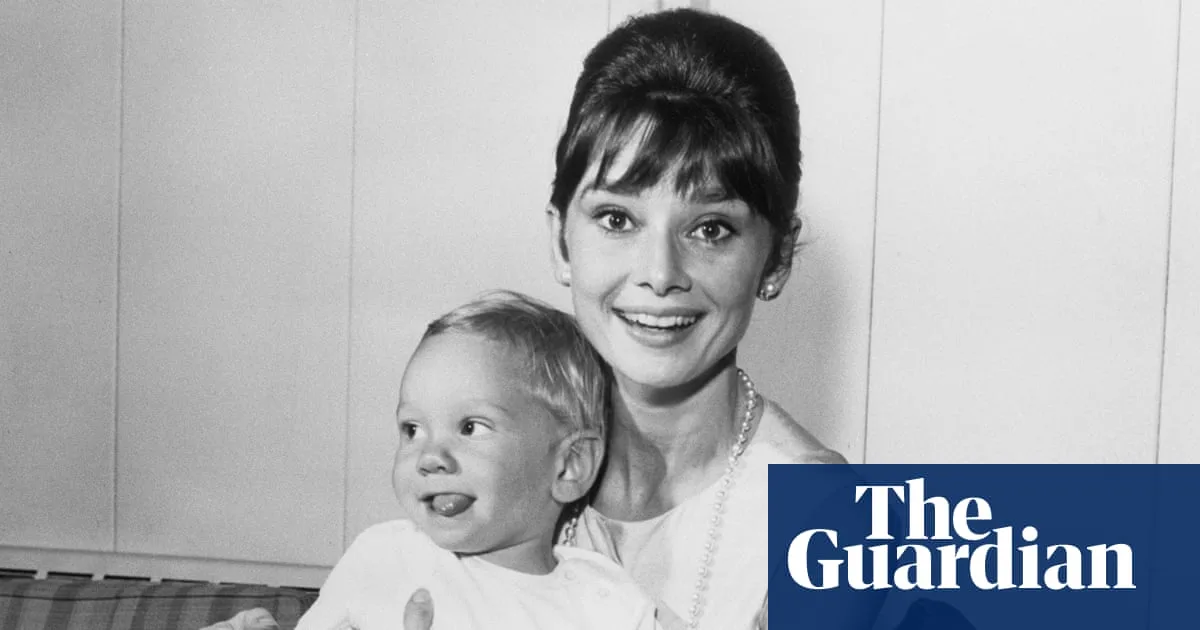
Audrey Hepburn's Son Reveals How Mother's Criticism Shaped Her Iconic Style
Audrey Hepburn's Son Reveals Mother's Criticism Shaped Her Style

The Formative Influence of a Critical Mother

In a revealing new biography, Audrey Hepburn's son, Sean Hepburn Ferrer, shares intimate details about the legendary actress's life, focusing particularly on the profound impact of her mother's harsh criticism. Baroness Ella van Heemstra, who had once been an admirer of Hitler, is described as a "one-woman Panzer division" who constantly undermined her daughter's confidence.

A Legacy of Self-Doubt

Despite becoming one of the most photographed women of her generation, second only to the late Queen, Audrey Hepburn never saw herself as particularly beautiful or talented. "She was grateful and surprised whenever people paid her a compliment," Ferrer writes. Even at the height of her fame, her mother maintained that Audrey had "done surprisingly well for herself, considering she had 'no talent' and wasn't interesting."

The actress often made fun of her own appearance, describing herself as flat-chested and lanky with "feet too big, face too wide, nose bumpy and one tooth crooked." She once confessed: "You could even say that I hated myself at certain periods. I was too fat or maybe too tall or just plain too ugly."

Wide Pickt banner — collaborative shopping lists app for Telegram, phone mockup with grocery list

Wartime Origins of Style

Emerging from occupied Holland after years of malnutrition, Audrey was emaciated and in poor health. All family money and valuables had been lost or stolen by the Nazis, forcing her and her mother to survive on United Nations relief aid. Her first proper meal in years - sugary porridge with condensed milk - made her "deadly ill" as her system couldn't handle rich food.

It was during this postwar period that her mother offered what would become foundational style advice: "In the right clothes, you can be anything you want to be. And never underestimate the power of quality fabric or a simple line." This was typically followed by the cutting remark: "For an ugly duckling who's as thin as a reed, you could almost pass for attractive."

The Birth of an Iconic Look

Even before turning twenty, Audrey had discovered that clothing provided a much-needed confidence boost - what she considered "a kind of armour." With limited resources, she developed a distinctive personal style that defied contemporary fashion trends.

She cut her hair short for simplicity and owned only a skirt, a few blouses, and one good dress - all handmade. Her outfits were accessorized with a beret and silk scarves collected since the war. When finances allowed, she purchased a turtleneck sweater and slacks, the opposite of what fashionable girls wore, adding subtle embellishments like a waist-cinching belt.

On her size eight-and-a-half feet, she wore ballet flats for comfort and to minimize her height. With her dancer's posture and European sophistication, she carried off this unique look effortlessly.

Early Career Breakthroughs

After moving to London at eighteen to pursue ballet, Audrey worked as a chorus girl in cabaret shows. Comedian Bob Monkhouse recalled that other dancers were jealous of the attention she received despite being "the worst dancer" in the line. One complained: "They can't take their eyes off that face! Those eyes! That bloody smile!"

Monkhouse theorized about her appeal: "She had an air of defencelessness, of helplessness." This quality caught directors' attention, leading to her first film appearance in The Lavender Hill Mob (1951), where she shared a brief scene with Alec Guinness.

Guinness later noted: "She only had half a line to say, and I don't think she even said it in any particular or interesting way. But her fawn-like beauty and presence were remarkable."

Hollywood Transformation

Audrey's big break came when director William Wyler selected her for Roman Holiday (1953) after seeing a screen test where director Thorold Dickinson captured her natural charm by casually interviewing her about wartime experiences. Wyler wrote to Dickinson: "The test you made is a fine piece of work... You gave us a good look at the girl's personality and charm, as well as her talent."

Pickt after-article banner — collaborative shopping lists app with family illustration

Despite this success, Audrey remained insecure about her appearance. Staring into mirrors, she'd say: "I just don't see what all the fuss is about." She didn't appreciate that she could wear almost anything and look good - a talent recognized by Paramount's Oscar-winning costume designer Edith Head.

The Costume Designer's Assessment

Head was brutally honest during their first meeting, telling Audrey that her face was too square, breasts too small, and collarbones created ugly hollows. Her redeeming feature was her waist - measuring just 19-and-a-half inches. Head told the press: "You could get a dog collar around it."

Despite this criticism, Audrey became Head's most diligent student, eager to learn what worked for her. She discovered that bright colors washed her out while paler tones brought out her eyes and made her hair seem darker. For makeup, she remained loyal to Alberto de Rossi, who used a light touch that made her skin look natural.

De Rossi created her famous eye makeup by painstakingly drawing eyeliner to follow their natural shape, then applying mascara before separating each individual eyelash with a safety pin - a technique Audrey adopted for life.

The Givenchy Partnership

One of cinema's most iconic dresses - the black gown with costume pearls from Breakfast at Tiffany's (1961) - sold at auction in 2006 for over a million dollars, the highest price ever paid for a movie dress. Its designer, Hubert de Givenchy, became world-famous through his association with Audrey, though their first meeting nearly didn't happen.

In 1953, expecting to meet Katharine Hepburn, Givenchy was surprised when "a young woman - very slim, tall, with doe eyes and short hair" walked into his atelier. He initially dismissed her as an unknown waif but became captivated as she "gave life" to his clothes.

For Sabrina (1954), Audrey had insisted on wearing authentic Parisian haute couture, edging out Edith Head - an astonishing concession for a young starlet. Givenchy created what became known as the "Sabrina neckline" - a boat-neck design to hide gaps between her collarbones.

Their partnership lasted forty years, with Audrey frequently simplifying Givenchy's designs by removing bows, ornaments, and belts. "And in the end, she was right," Givenchy acknowledged.

A Lasting Legacy

Ferrer explains his motivation for writing the biography: "If Audrey Hepburn - a symbol of beauty, inner elegance, grace, frailty and someone the world over wanted to protect - could suffer such pain, I wanted every woman to know that no one is safe from the brutalities of society."

Despite her mother's constant criticism and her own self-doubt, Audrey Hepburn developed a timeless style that continues to inspire generations. Her son concludes that she ultimately learned to "stand your ground" - a lesson forged through both wartime adversity and personal struggle.