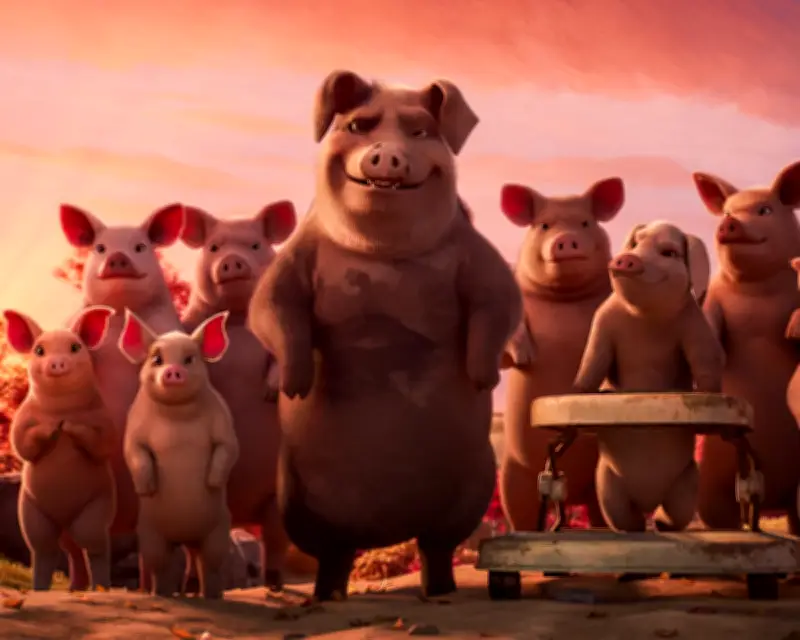
George Orwell's Animal Farm is not a sacred text, but director Andy Serkis and screenwriter Nicholas Stoller have produced an unforgivably sugary animation that betrays the original. The film, which has a cheapo digital look, blandifies and defangs the classic allegory of Stalinism with a dumb happy ending in the Disney style.
Key Changes and Plot Deviations
The pivotal moment when pigs and humans look the same occurs around the one-hour mark of this 94-minute film, signalling a new third act. The evil pig Napoleon (voiced by Seth Rogen) eliminates rival Snowball (Laverne Cox), corrupts human money from a new agribusiness character Pilkington (Glenn Close), and addresses followers with a Big Brother-style giant screen. Napoleon gets a riotous panto-baddie comeuppance from young animal rebels, the farm burns, and insurgents gathered on a riverbank ponder their mistakes, vowing not to trust Napoleon or even Snowball.
Loss of Satirical Edge
The adaptation subtracts rage, satire, passion, and meaning. According to the reviewer, there is no hint of Trotskyism, and Snowball's role is muddled. The film is described as 'the bland leading the bland', with a happy ending that betrays Orwell's original message.
Animal Farm is in UK and Irish cinemas from 17 July, and in Australian cinemas from 16 July.