Wilkie Collins' 1850 Cornish Walking Adventure: A Victorian Travelogue Reissued
In the summer of 1850, the sight of two young male friends trekking across Cornwall with knapsacks strapped to their backs caused widespread consternation among local residents. Wilkie Collins, one of the walkers, later recalled in his sparkling travelogue how villagers exclaimed, 'Poor fellows! Obliged to carry all your baggage on your own backs!' Children ran indoors to fetch siblings, and everyone stared in disbelief. The pair were accused of being 'mappers' or 'trodgers'—a ruder term for 'trudgers'—as locals puzzled over why two gentlemen would choose to carry their own luggage instead of employing a servant.
A Defence of the Knapsack and Walking Philosophy
Collins, however, passionately defends the knapsack in his work, now reissued in a charming hardback edition with an enthusiastic foreword by celebrity chef Rick Stein. He and his companion, the artist Henry Brandling—whose evocative sketches illustrate the book—actively wanted to carry their own belongings. Collins extols, 'Walk to be merry! Walk and be healthy! Walk and be your own master!' He even offers practical advice to fellow walkers: 'Sponge your feet with cold vinegar and water, change your socks every ten miles, and show me blisters after that, if you can!'
This holiday occurred very early in Collins' career, a full nine years before he would produce his fiction masterpiece, The Woman in White. Here, readers witness the budding writer in a light, curious, and frivolous mood, delighting in keen observation. For instance, describing a washed-out day in Looe, he notes ladies 'running hither and thither for shelter, in lank wet muslin and under dripping parasols, displaying, in the lamentable urgency of the moment, all sorts of interior contrivances for expanding around them the exterior magnificence of their gowns.' Anyone who has endured a rain-drenched beach holiday in Cornwall will readily identify with these sodden figures.

Glimpses of Cornish Life and Industry in 1850
Collins provides fascinating insights into Cornish society and economy. He is relieved to report that 'in the Government Tables of Mortality for Cornwall there are no returns of death from starvation.' This remark highlights the low bar for public health in 1850, as other counties were reporting such deaths. Thanks to robust mining and pilchard industries, coupled with low rents, the Cornish population appeared to be faring relatively well.
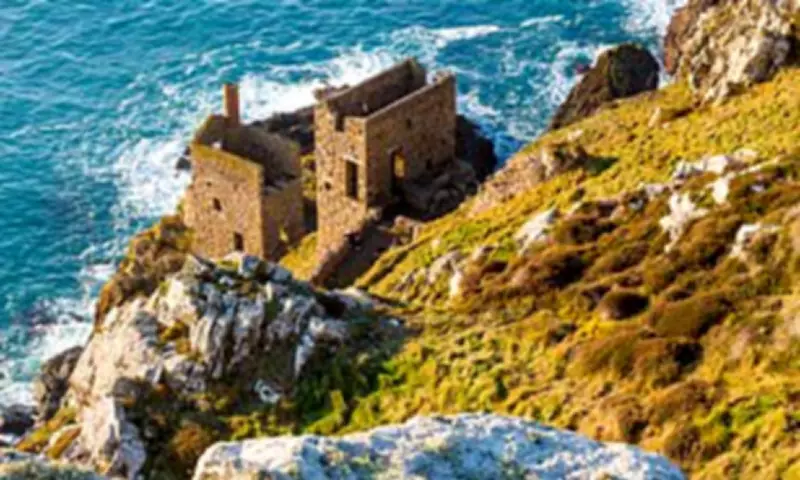
He vividly describes the pilchard industry in full swing: a man standing on a cliff waves a bush to signal a vast shoal to fishermen below. Women and girls labor in salting houses for threepence an hour, receiving a glass of brandy and a piece of bread and cheese every sixth hour. Collins also ventures down a copper mine at Botallack near Land's End, wearing borrowed miner's trousers far too large for him and a candle stuck to his hat with clay. A memorable image involves his swarthy guide picking him up by the loose material to carry him across a tricky gap at the bottom of a 450-foot perpendicular ladder. He acknowledges not going as deep or as far under the sea as the miners, who break ore all day with pickaxes.
Victorian Energy and Enduring Charm
Remarkably, that same afternoon, Collins and Brandling walk another 15 miles, showcasing the boundless energy of Victorians. Celebrating freedom, nature, ancient standing stones, and the unique charm of the Cornish people, this book is an ideal companion for any weather-dependent holiday in Cornwall. Wilkie Collins on Cornwall is available now, offering a timeless glimpse into a bygone era of adventure and discovery.