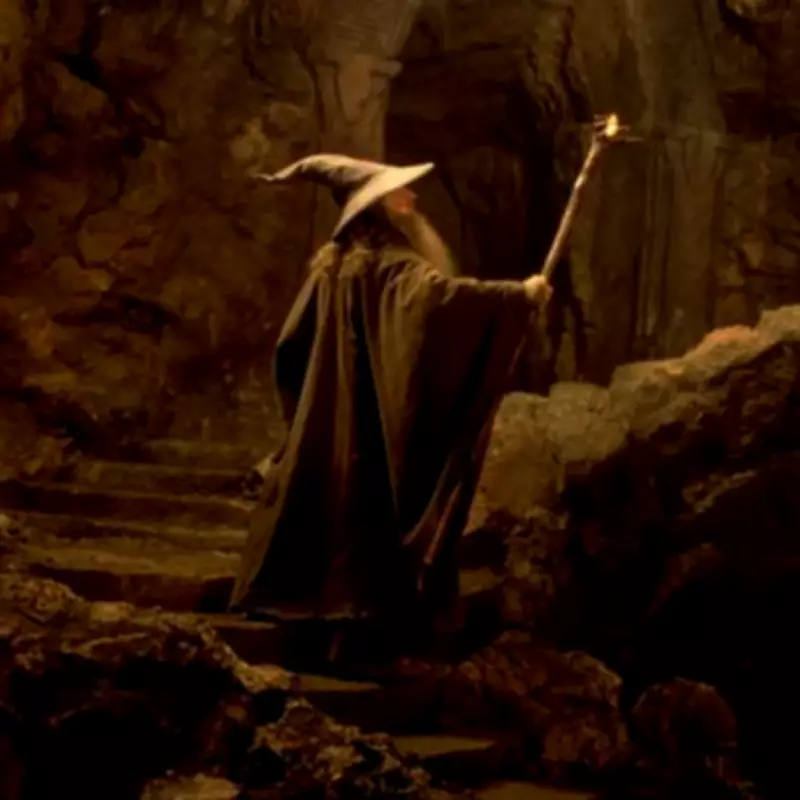
For countless readers, delving into JRR Tolkien's The Lord of the Rings marks a significant literary milestone. My own journey began in childhood, when my father first read The Hobbit to my brother and me. Even then, I sensed that Bilbo Baggins' whimsical adventure merely hinted at a far grander, more mature world awaiting discovery.
A World With Deep Historical Roots
When I finally opened The Fellowship of the Ring as a teenager, shortly before Peter Jackson's acclaimed film adaptations premiered, the experience proved utterly captivating. The trilogy's brilliance lies in its immersion within a fully-realised universe, brimming with a rich history that Tolkien masterfully suggests rather than fully reveals.
The forsaken dwarven halls of Moria, the last remaining Ents lurking within Fangorn Forest, and the fading glory of mankind at Minas Tirith—each element whispers of centuries of complex history shaping the epic quest to destroy the One Ring. While most authors might consider such world-building sufficient, Tolkien was no ordinary writer.

The Legendary Challenge of The Silmarillion
The Hobbit and The Lord of the Rings represent merely fragments of an immense mythological tapestry that Tolkien devoted his life to weaving. Following his death in 1973, his son Christopher undertook the monumental task of compiling and publishing his father's extensive unpublished works.
In 1977, The Silmarillion was released, swiftly earning a formidable reputation as a notoriously challenging read. To this day, online forums are filled with readers confessing they abandoned the text, while others proudly wear their completion of it as a badge of honour.
For years, I harboured a vague intention to attempt it. That resolve finally crystallised during a visit to the esteemed Bath bookshop, Topping & Company, where I discovered a beautiful hardcover edition. Approximately twenty-five years after first reading The Lord of the Rings, the moment had arrived.
An Unexpectedly Compelling Narrative
To my considerable surprise, I found the book deeply engaging and progressed through it at a relatively brisk pace. It is undeniably dense, lacking the straightforward adventure narrative of The Lord of the Rings. In scope, it more closely resembles ancient world epics or foundational religious texts.
Nevertheless, the relentless stream of fascinating details and lore compelled me to continue reading, always eager to return and learn more. Personal highlights included the profoundly romantic and tragic saga of Beren and Lúthien—a mortal man and an Elven princess—and the pervasive, sinister threat of Melkor, Tolkien's primary antagonist and a figure analogous to the Devil.
A Demanding But Rewarding Read
The Silmarillion unquestionably demands the reader's undivided attention. This is not a book to skim with television distractions in the background. Tracking the intricate genealogies, especially among the immortal Elves, presents a genuine challenge. Monumental battles that could fill entire chapters in a conventional novel are often summarised in a mere line or two, while figures worthy of their own epic tales receive only fleeting mentions.
Yet, experiencing the full breadth of Tolkien's vision profoundly enriches the world of The Lord of the Rings. The giant spider Shelob becomes infinitely more terrifying when you learn she is the offspring of the demonic Ungoliant, making Samwise Gamgee's defence against her all the more heroic.
Understanding the connection between Gandalf and Durin's Bane—the Balrog he confronts in Moria—imbues that iconic struggle with far greater significance. Similarly, appreciating the tumultuous history of mankind renders Aragorn's ascension to the throne of Gondor a vastly more triumphant moment.
Familiar Faces and Enduring Mysteries
A handful of familiar characters do appear. Elrond and Galadriel feature in the narrative, while Sauron, Gandalf, and Saruman make very late appearances. However, readers should not expect to encounter many favourites from the later trilogy. Frodo is mentioned just once in passing on one of the final pages, and Bilbo Baggins is not even named.

For those concerned that The Silmarillion might demystify Tolkien's legendarium, rest assured that ample enigmas remain. Of the five wizards who walked Middle-earth, two are never named. Furthermore, if you seek definitive answers regarding the nature of the enigmatic Tom Bombadil, you will find none here.
The Final Verdict for Fellow Fans
The essential conclusion is this: do not allow the book's daunting reputation to deter you. If your appetite for Middle-earth remains unsated, The Silmarillion is an indispensable read. For those who prefer auditory immersion, an acclaimed audiobook version narrated by Andy Serkis—the actor who memorably portrayed Gollum in the film trilogy—has garnered excellent reviews online.
Ultimately, confronting Tolkien's foundational work offers a deeper, more textured understanding of the world he created, transforming familiar stories and making the monumental achievements within them resonate with even greater power.