Stolen John Keats Love Letters Recovered and Returned After Decades
Eight original handwritten letters from the renowned Romantic poet John Keats to his beloved muse Fanny Brawne have been successfully returned to the family of John Hay "Jock" Whitney, the former United States ambassador to the United Kingdom. This significant recovery comes after the letters were stolen from Whitney's Long Island estate during the 1980s, marking the end of a decades-long mystery.
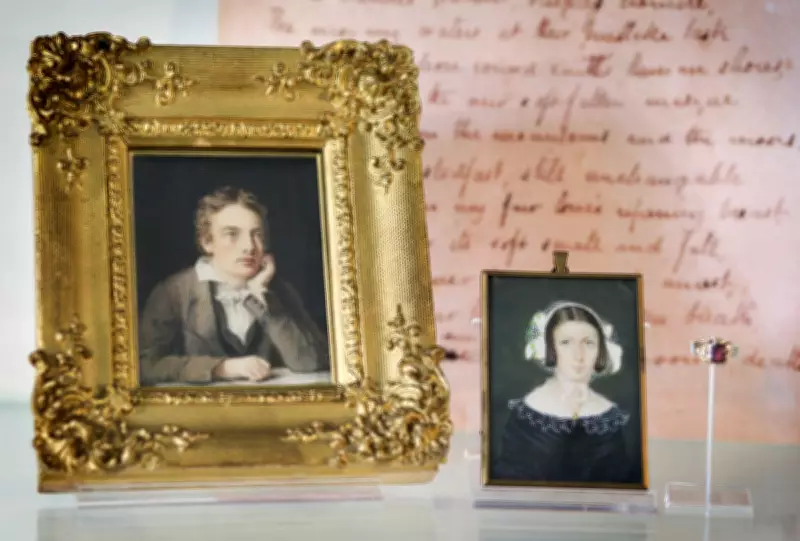
The letters, which are dated between 1819 and 1820, include the very first correspondence Keats ever sent to Brawne. They are held within a gilt morocco-bound portfolio and are valued at approximately $2 million. Fanny Brawne, who lived as Keats's neighbor in Hampstead, London, became the object of his intense infatuation, with the poet elevating her to the status of a muse and goddess in his writings.
Historical Significance and Literary Impact
John Keats is celebrated for his iconic 1819 odes, such as Ode to a Nightingale, Ode on a Grecian Urn, and To Autumn, which are considered cornerstones of Romantic poetry. However, his letters to Fanny Brawne hold a unique place in literary history, where his profound romantic longing is intertwined with a deep sense of melancholy, making them among his most memorable works.

Brawne and Keats were engaged, but their romance was tragically cut short when Keats succumbed to tuberculosis in February 1821 at the young age of 25. Upon her death in 1865, Brawne bequeathed the letters to her children, who later sold them at auction in 1885. This sale famously inspired Oscar Wilde to compose a sonnet titled On the Sale By Auction of Keats' Love Letters.
Discovery and Recovery Process
The portfolio containing Keats's letters was discovered among a collection of 17 rare books that resurfaced in Manhattan in January 2025. An unnamed individual, who claimed to have inherited the books from his grandfather, attempted to sell them to two separate rare book dealers: B & B Rare Books and Adam Weinberger Rare Books. The dealers, upon realizing the books were listed on the Art Loss Register as stolen, promptly reported the attempted sale to Alvin Bragg, the Manhattan District Attorney.
In a statement, Bragg emphasized the importance of maintaining integrity in the art market, stating, "Manhattan is the cultural capital of the world, home to museums, galleries, and dealers displaying incredible artworks and antiquities. Yet the integrity of this marketplace is undermined when stolen items are on display. We will not allow our borough to be a center for trafficked art and antiquities."
Following this report, the books were seized pursuant to search warrants, and earlier this year, a New York Supreme Court judge authorized their return to the heirs of John Hay Whitney and his wife, Betsey Whitney. The collection of rare books, valued collectively at nearly $3 million, includes notable items such as a 1939 copy of James Joyce's Finnegans Wake, four letters by Oscar Wilde not included in De Profundis, letters Wilde wrote to his lover Lord Alfred Douglas from Reading Gaol, and a copy of White Stains by occultist Aleister Crowley from 1898.
Background of the Theft and Recovery Efforts
Little detailed information is available about the original theft, but it is known that between 1982 and 1989, at least 28 books were stolen from Whitney's Long Island estate, prompting a police investigation. John Hay Whitney, who served as US ambassador from 1957 to 1961 and was the publisher of the New York Herald Tribune, was an avid art collector and had inherited hundreds of rare books from his mother.
The discovery and return of these valuable items were managed by Manhattan's Antiquities Trafficking Unit (ATU), led by Matthew Bogdanos, a former Marine colonel who has headed the office for over a decade. Under Bogdanos's leadership, the ATU has recovered more than 6,200 cultural treasures, including rare books, artworks, and antiquities, with a total value exceeding $485 million. More than 5,900 of these items have been returned to their rightful owners or countries of origin.

In a 2022 interview with the Guardian, Bogdanos highlighted the shifting attitudes towards illicit antiquities, noting, "They'd say, 'Oh it's a little dodgy, but who cares. Nobody's looking.' But people are looking, and they're saying it's not worth it." He added that trafficking in stolen antiquities "used to be a gentlemen's sport done by gentlemen for gentlemen. Now these gentlemen and gentlewomen of the trade are getting handcuffed."
The heirs of John Hay Whitney have announced that the recovered books will be sold, with the proceeds donated to charitable causes, ensuring that this remarkable recovery benefits the wider community.