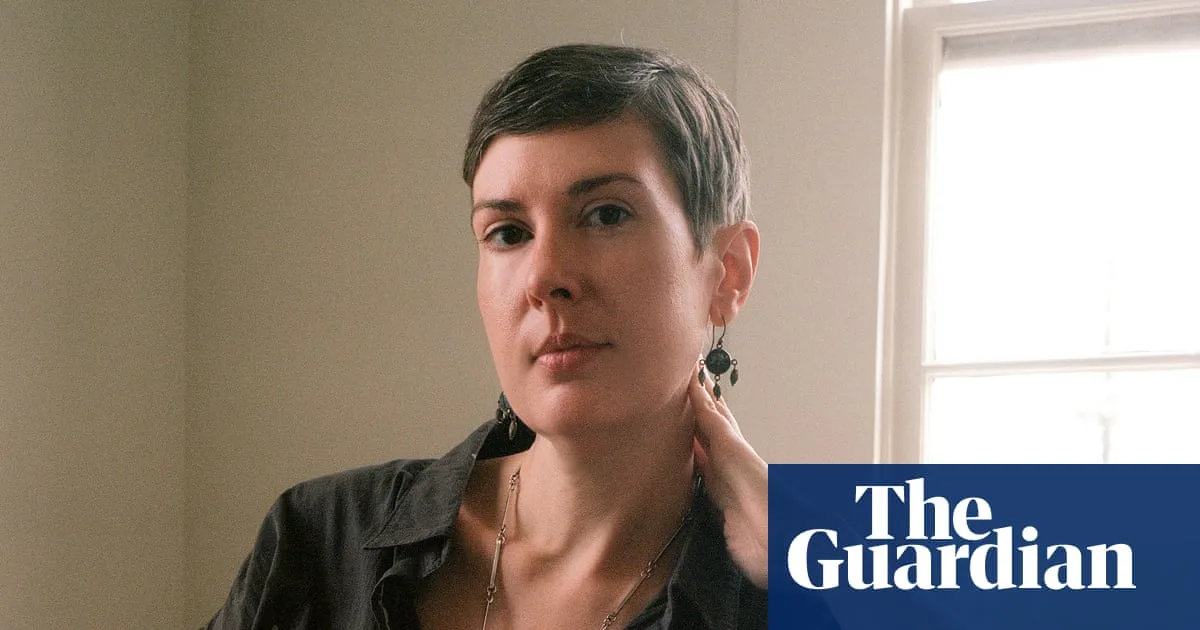
Patricia Lockwood's new autofiction, Will There Ever Be Another You, chronicles her harrowing experience with long Covid. The cult author, known for her viral wit and gothic strangeness, contracted the virus early in the pandemic and has since suffered aphasia, hallucinations, migraines, amnesia, paranoia, and relentless self-obliteration. The novel, which she described as 'written insane and edited sane,' is a fragmented narrative that mirrors the cognitive estrangement of the illness.
Lockwood, the literary offspring of Dorothy Parker and Flannery O'Connor, gained fame with her 2017 memoir Priestdaddy, which introduced her father, a Catholic priest who spent her college fund on a vintage guitar. Her previous novel, No One Is Talking About This, explored the absurdities of the digital age. Now, she tackles the dissolution of self caused by long Covid, a disease that defies narrative.
The story follows a fictional Patricia and her family traveling through Scotland after the loss of a child. A precious item is lost, then returned, but her mind is not. Lockwood writes, 'It stole people from themselves. You might look the same to others, but you had been replaced.' The novel weaves from Roland Barthes to Cabbage Patch Kids, from Anna Karenina to the 'butthole cut of Cats,' all while obsessing over doppelgangers, changelings, and clones—the modus operandi of a virus.
Lockwood joins a tradition of 'sicklit' writers like Virginia Woolf and Susan Sontag, who struggled to capture illness in words. Woolf made illness mystical; Sontag made it ordinary. Lockwood's contribution is a 'cortical shrapnel' that rattles with anguish and a longing for coherence. The title, lacking a question mark, serves as prayer, punchline, eulogy, manifesto, and nightmare all at once.
The novel is a testament to the growing literary exploration of the body as a site of invention. Works like Katherine Brabon's Body Friend, Sanya Rushdi's Hospital, and Kris Kneen's An Uncertain Grace are part of a broader movement to give form to chronic pain, psychosis, and transformation. Lockwood's masterpiece adds a vital voice to this conversation, proving that even in fragmentation, there is art.