George Saunders on America's 'Sickening' State and His New Novel 'Vigil'
George Saunders on America's State and New Novel 'Vigil'

George Saunders Reflects on America's Political Climate and His New Novel 'Vigil'

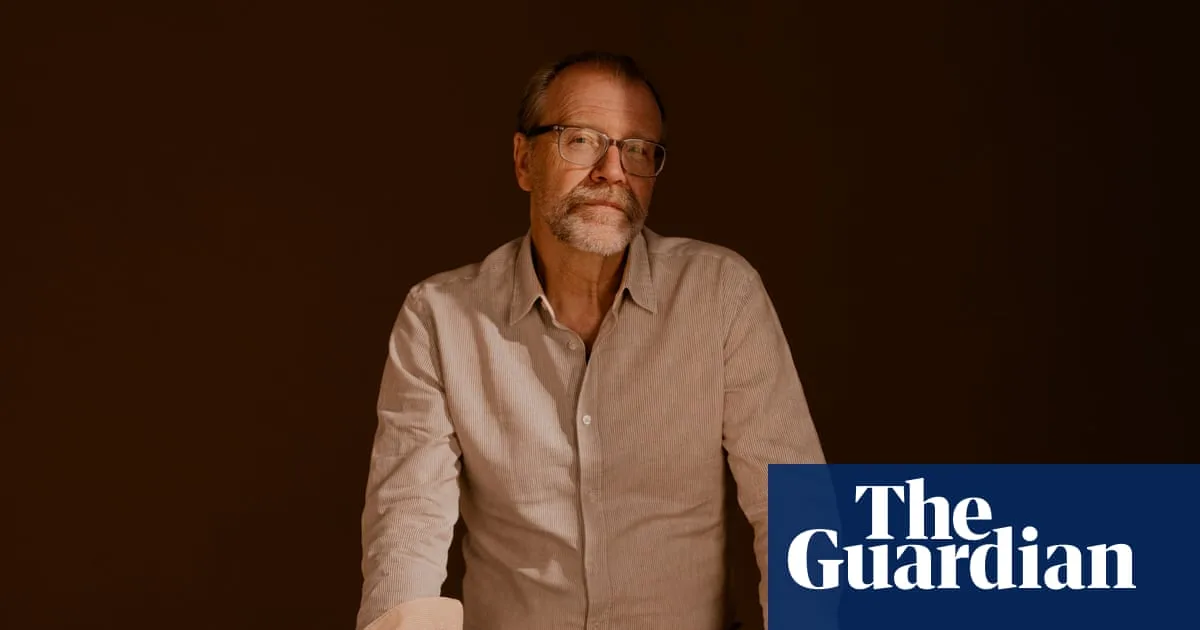
In a world increasingly defined by political turbulence and societal fractures, one of America's most celebrated literary voices offers both critique and creative response. George Saunders, the Booker Prize-winning author known for his incisive prose, has returned with his first novel since 2017's Lincoln in the Bardo. Titled Vigil, this new work emerges against what Saunders describes as a "sickening" backdrop in his homeland.

A Nation in Distress: Saunders' Political Concerns

Speaking from his home in Santa Monica, the 67-year-old writer expresses profound concern about recent developments in American politics. "What's happening in my country is sickening, disgusting, and it's all happening so quickly," Saunders reveals. "I'm so confused about it all that I don't even know where to start. It's unimaginable to me that this group of clowns is going to bring the whole experiment of America down."

Saunders references specific recent events that have caused national distress, including political interventions abroad and domestic security operations resulting in citizen fatalities. "It's all incredibly distressing," he states, acknowledging the temptation to address these matters through non-fiction journalism. The author contemplates interviewing key political figures, noting his ability to "speak their language" due to shared class backgrounds, but questions whether such access would be granted or whether fiction might better serve his talents.

'Vigil': Exploring Mortality and Accountability

Saunders' new novel Vigil represents his literary response to contemporary anxieties. The book follows KJ Boone, an 87-year-old billionaire oil baron on his deathbed, accompanied by a ghost tasked with guiding souls to the afterlife. Unlike her previous 343 successful transitions, Boone proves a challenging case—not because he's unprepared for death, but because he resists atonement for his life's actions.

"When this book announced itself to me, it came with a very consistent through-line, a catchphrase, almost: schmuck dies," Saunders explains of the novel's genesis. Spanning just five hours of narrative time yet extending to 172 pages, the work represents what Saunders calls a "laborious process" of careful construction, taking two years to complete despite its relatively concise length.

The author acknowledges drawing inspiration from classic narratives examining life review and redemption, including A Christmas Carol, It's a Wonderful Life, and works by Tolstoy. "I liked the idea of meeting someone at the end of their life, and seeing whether they're prepared to account for their actions," he notes. When questioned whether Boone's character reflects contemporary figures of wealth and power, Saunders offers only a "wry, secretive smile" and careful denial.

From Late Bloomer to Literary Laureate

Saunders' path to literary acclaim followed an unconventional trajectory. Born in 1958 to a working-class Texas family, he worked various jobs including roofing in Chicago and oil industry work in Sumatra before discovering his writing vocation. "I've always felt drawn to writing," he recalls. "Even as a young kid, I had really strong reactions to text. I knew that language makes us who we are, and that if we improve our language, we might become different people."

His formal writing education began in the late 1980s at Syracuse University's prestigious creative writing program, where he studied under novelist Tobias Wolff. Saunders later returned as a teacher in 1996, a role that became "an intrinsic part of my own writing process" and inspired his 2021 non-fiction work A Swim in a Pond in the Rain, which analyzes Russian short stories.

The author's experimental, fantastical style—which he admits can be "dense" and demanding—has earned him both critical acclaim and a devoted readership. His Story Club Substack now reaches 300,000 followers with writing advice and prompts.

Booker Success and Creative Resilience

Saunders achieved his breakthrough with Lincoln in the Bardo, published when he was 59 and already established in family life with writer Paula Redick and their two daughters. The novel's Booker Prize victory surprised even its author, who "wasn't even really sure that it qualified as a novel."

"Winning was the most amazing thing; I enjoyed every aspect of it," Saunders remembers. "If, as a writer, you're always trying to raise your ceiling, then to have that kind of endorsement helps a lot. It's like: I won the Booker! I should try something hard next!"

Despite this achievement's potential to intimidate, Saunders maintains creative equilibrium through deliberate mental exercises. "Any neurotic, self-flagellating impulse that does arise about not being able to top my Booker win is quickly banished," he states. "I'm too old for that."

Navigating Anxiety with Hope

Confronting what he describes as an "extremist government" and systemic political problems, Saunders observes a disturbing normalisation of concerning developments. "Every day Trump is in office, it becomes normalised, and that is very sad to see," he remarks. "We've really s*** on our nest, haven't we?"

Yet the author notes the paradoxical calm of daily American life despite political turmoil. "When I walk down the street here in Santa Monica, you wouldn't know anything was amiss," he observes, finding this apparent normalcy "scarier" than overt conflict given ongoing crises.

Saunders finds resilience in optimism, recalling a Tibetan Buddhist teacher's wisdom that "the most negative emotion is despair, even more than anger." He concludes: "If the people who remember the former vision of America can stay solid, and funny, and energetic – and not despair – then I think we'll ride this thing out. That, at least, is my hope."

Vigil by George Saunders is published by Bloomsbury, offering both literary exploration of mortality and implicit commentary on contemporary America's soul-searching moment.