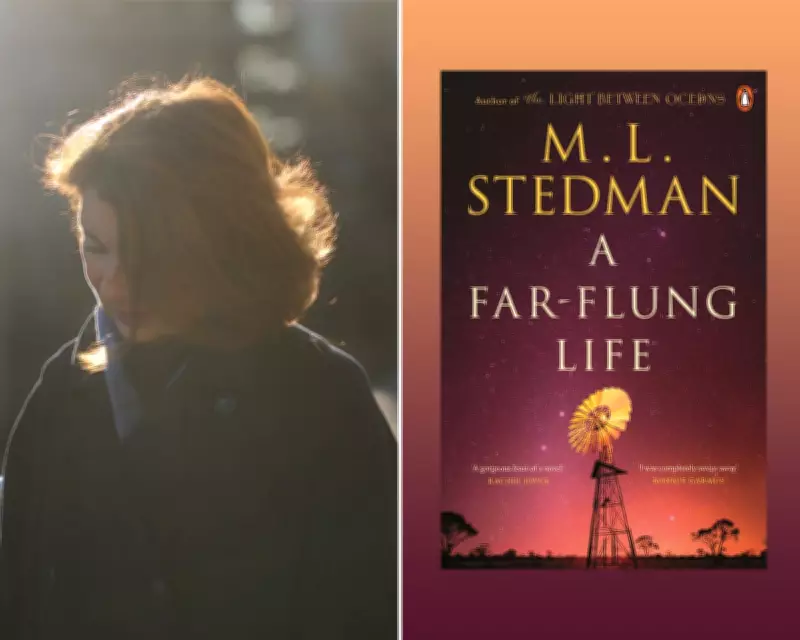
ML Stedman's A Far-flung Life: A Masterful Exploration of Loss and Identity
In her highly anticipated follow-up to the bestselling The Light Between Oceans, Western Australian author ML Stedman delivers A Far-flung Life, a novel that delves deep into the complexities of moral ambiguity, family bonds, and personal identity. Set against the vast, unforgiving landscape of Western Australia, this story spans generations of the MacBride family as they navigate profound loss and transformation.
A Family Shaped by Tragedy
The narrative begins in 1958 on the million-acre sheep ranch, Meredith Downs, where a seemingly minor decision sets off a chain of devastating events. Patriarch Phil MacBride swerves to avoid a kangaroo while driving home, resulting in the deaths of himself and his eldest son, Warren. Only the youngest son, Matt, survives, albeit with a head injury that erases his memories and forces him to rebuild his sense of self.
Suddenly widowed, Lorna MacBride takes charge of the ranch, becoming the sole parent to Matt and her fiery daughter, Rosie. As the years unfold, the family's orbit expands to include characters like Pete Peachey, a taciturn former prisoner of war, and Miles Beaumont, a noble Englishman learning the ropes of station life. Each carries hidden secrets that influence the MacBrides' journey.

Themes of Memory and Time
Stedman introduces the concept of a "forgetment"—a coined term for something one forgets—which recurs throughout the novel, highlighting how our narratives are shaped by both conscious knowledge and unconscious omissions. The author skillfully examines how time distorts loss, with moments stretching and contracting in the face of grief. For Matt, trapped in a cataclysmic event, time seems to stand still, blurring the lines between past and present.
The indifferent passage of time on the land contrasts with the human experience, marked by subtle changes like the curl of a ram's horns or the shifting light. Stedman's portrayal of these temporal dynamics adds depth to the characters' struggles, emphasizing that weathering change is an integral part of life, not an interruption.
Moral Ambiguity and Forgiveness
At its core, A Far-flung Life grapples with moral questions about what should be buried in the past and the role of forgetting in forgiveness. Stedman explores whether some truths are better left unspoken, not out of ignorance, but as a means to heal and move forward. This inquiry into self-forgiveness and reconciliation is handled with nuanced care, reflecting the author's preoccupation with ethical dilemmas.
Critical Acclaim and Narrative Craft
Despite its many calamities, the novel avoids sentimentality, with every loss feeling earned and authentic. Stedman's extensive research shines through in vivid descriptions of the Western Australian landscape and the daily intricacies of station life. Her masterful control of perspective, shifting between characters and across time, culminates in a poignant and remarkable tale.
Published by Penguin, A Far-flung Life stands as a testament to Stedman's growth as a writer, offering a palpable examination of loss, memory, and identity that resonates long after the final page.