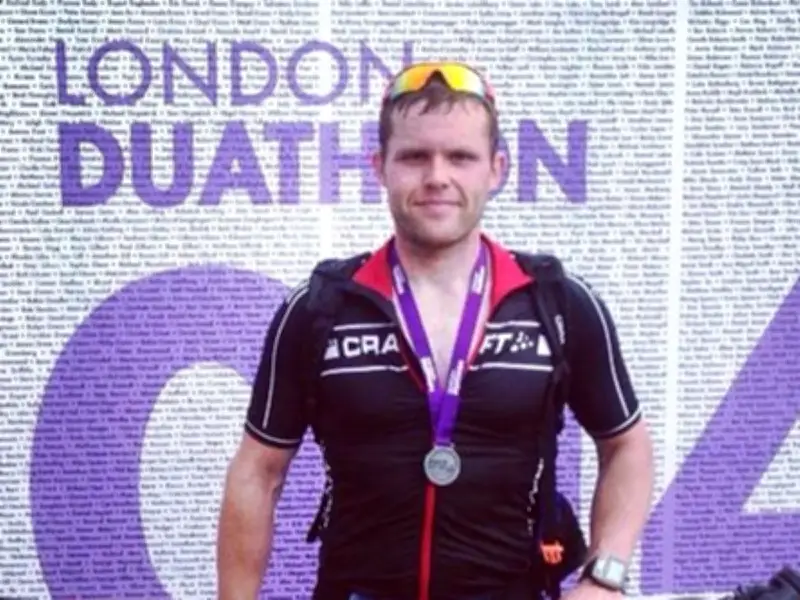
John McAvoy, a Nike-sponsored Ironman triathlete, was serving two life sentences for armed robbery when he became a world-record-breaking indoor rower. His story of redemption is one of 15 featured in the new book Behind the Brilliance, which explores the extreme personal adversity faced by some of the UK's greatest sports stars.
Other Sports Stars in the Book
The book includes six-time gold medal-winning Paralympic athlete David Weir, former footballers Katie Chapman and Andy Sinton, ex-boxers Michael Watson and Jane Couch, and boxing manager and promoter Frank Warren. Also featured are ex-rugby league player Jason Robinson, ultra-marathon winner Jasmin Paris, former track and field athlete Sebastian Coe (four Olympic medals), and the Mexican president of the World Boxing Council, Mauricio Sulaiman—the only non-UK inclusion.
John McAvoy's Criminal Past and Transformation
Author Paul Zanon says: “McAvoy was raised by a notorious south London crime family. His stepfather was one of Britain’s most prolific armed robbers. He bought his first gun aged 16. In 2005, aged 22, he was arrested by armed police during a foiled heist and given two life sentences.”

In 2009, three years into his sentence at HMP Belmarsh, his friend’s death fleeing a robbery in the Netherlands changed everything. McAvoy recalls: “Everyone I’d looked up to as a kid were either rotting away in prison or dead. I knew that night I’d never commit a crime again.”
He started working out, using the prison gym’s indoor rowing machine. Paul says: “Within 18 months, McAvoy broke three indoor rowing world records and eight British records, including the longest continuous row of 45 hours. His profound psychological transformation and dedication to sport led to his parole and release from prison in 2012.”
Working as a professional endurance athlete, McAvoy became the world's only Nike-sponsored Ironman triathlete and now uses his platform for prison reform and youth outreach.
Dame Denise Lewis: Mother's Windrush Work Ethic
A gold medal winner for heptathlon at the 2000 Sydney Olympics, Dame Denise Lewis’ mother, Joan, came to the UK from Jamaica aged 10, giving birth to Denise at 17. Initially living in a hostel, she worked multiple jobs to make ends meet, and Denise recalls hearing her quietly crying at night from stress.
Paul says: “She has frequently credited her mother's Windrush generation work ethic as the foundation of the intense drive that helped her reach the top of the podium. When Lewis discovered athletics, aged eight, her mother heavily backed her ambition, allowing her to travel extensively between Wolverhampton and Birmingham for elite training.”
Denise, who became World Champion, two-time Commonwealth Games champion, and European champion, says: “Those early values helped me a lot when I found my sport. The work ethic of someone migrating from a different country who worked hard and did everything to make sure we never went short.”
Fatima Whitbread: From Care System to World Record Holder
Javelin thrower Fatima Whitbread blossomed into an international sports star after a traumatic start. Abandoned as a baby, she spent her first 14 years in care—but sport became her lifeline. Paul says: “While in school, her athletic talents were recognised, leading her to join the Thurrock Harriers athletics club. There, she met national javelin coach Margaret Whitbread.”
Margaret invited Fatima to join her family holidays, eventually welcoming her into her home as part of the family and formally adopting her. Given love and stability, Fatima became one of the most successful javelin throwers in British track-and-field history. She won two Olympic medals, plus gold at the 1987 World Championships and 1986 European Championships, with a world record throw of 77.44m.
Fatima says: “Sport could take me into the future, taking me beyond that place of fear of being imprisoned in the care system.” Paul adds: “She’s paid it forward, now serving as the saviour to thousands of youngsters throughout the UK in the care system, as she fights tirelessly for reform.”

Colin Jackson: Battling Bulimia and Anorexia
Track and field star Colin Jackson is a two-time World Champion, Olympic silver medallist, and former 110m hurdles world record holder. But while at the top of his game, he struggled with bulimia and anorexia. Driven by a strict focus on athletic performance and the belief that being lighter meant running faster, he severely restricted his diet.
Paul says: “Colin Jackson’s silverware cabinet to host his accolades could only be supported by scaffolding. He’s known for being one of the world's best ever 110m and 60m world hurdlers...but did you know he also held a 60m world sprint record which stood for five years? “And he has mentored countless people to achieve way beyond their potential, despite battling his own demons. Comparing himself to other athletes triggered severe body image issues. He noted that he was ‘blinded by the norm’ in an environment where many competitors were underweight. On leaving pro sport he became an advocate for men’s mental health.”
Colin says: “Obsession has its levels and I was just over the other side of obsession. Although I was never going to take drugs, I was controlling how much food I had.” In 2017, Colin publicly announced that he was gay and has since been a role model for other budding sports stars wishing to do the same. Colin says: “I say to young people, ‘you need to be true to yourself. Who cares what they’re thinking? Just be you and you’ll always bring out the best of you.’”
Daley Thompson: From Poverty to Olympic Greatness
Daley Thompson, one of the greatest decathletes in history, boasts 12 consecutive wins and held all four major titles (Olympic, World, European, and Commonwealth) simultaneously. Experiencing childhood poverty and racial prejudice in west London’s Notting Hill, his father was murdered when he was 12. But he channeled immense hardship into an unprecedented decade of athletic dominance—crediting his early coach, Bob Mortimer, an informal father figure, with facilitating his success.
Daley says: “Like most of the things that happened to me in life, it was pure luck. The coach is supposed to help the person they are coaching to grow. Bob took that to heart and all the people he coached, he made them part of his family. It was great for me and without a doubt, he was the one that set me on the path.”
Paul says: “Seb Coe once said, ‘Daley Thompson is the best Olympian we’ve ever had in the UK, by a country mile.’ That’s a hefty statement, but when you start speaking with the back-to-back Olympic Gold medalist, you soon start to understand that the mindset that matched his incredible engine, would see him victorious in any era. His behind the brilliance mantra is one of my favourites – ‘Everyone has a win and a loss column. I have a win and a learn column. Never a loss. Always a learn.’”
Behind The Brilliance by Connie Henry MBE and Paul Zanon (published by Mirror Books, £10.99) is on sale now. Proceeds go to Behind the Brilliance Giving CIC, which supports sports-based community-led programmes, creating opportunities for people from disadvantaged backgrounds.