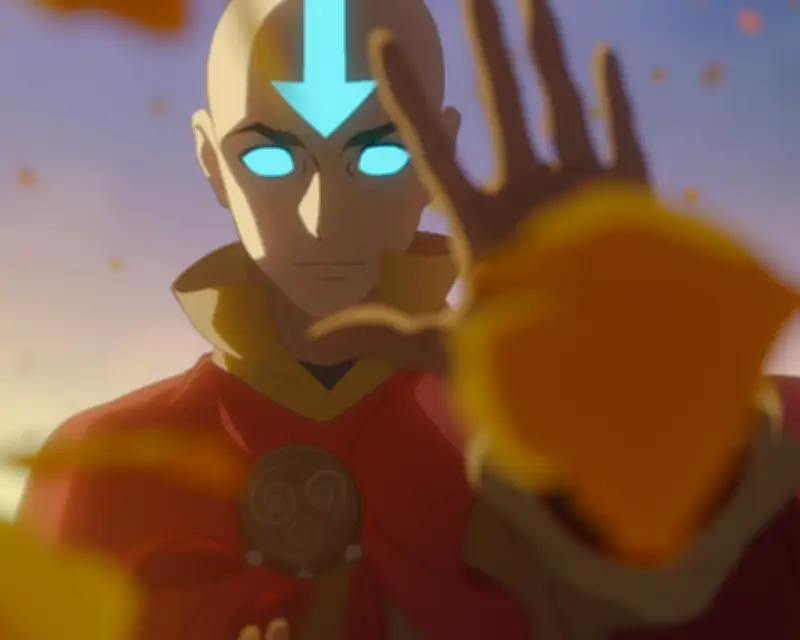
Avatar just can’t catch a break at the movies. Not the blue-cat-people franchise that makes at least a billion dollars each time, mind you – though that mega-successful series is part of what vexes big-screen versions of Avatar: The Last Airbender, a Nickelodeon animated series that predates the release of the similar-named, different-premised James Cameron film. Following the the anime-inspired, fan-beloved show’s three-season run on cable, the material was adapted into a live-action feature, The Last Airbender, by no less than M Night Shyamalan, released six months after Cameron’s megahit. The Last Airbender was a decent-sized hit, but loathed by fans and critics alike – even today’s crop of Shyamalan boosters can’t find much positive to say about it – and failed to kickstart the hoped-for live-action film series. (Netflix has since made an unrelated live-action adaptation as a TV show.)
From Theatrical to Streaming
More recently, Paramount announced that an animated sequel film, Avatar Aang: The Last Airbender, following the characters years after the events of the series, would arrive in movie theaters – only to delay the release and eventually backtrack its theatrical status, turning it into a direct-to-streaming movie. The film was then leaked online, well ahead of its debut. Now it’s getting a token two-city theatrical release, simultaneously with its debut on Paramount+, to make sure it qualifies for this year’s Oscars. Given the franchise’s cinematic luck so far, the film-makers may not need to clear up shelf space quite yet.
But that’s nothing to do with the quality of the movie itself, which very much deserves a wider theatrical berth than it’s getting, and will likely look more impressive than at least a couple of this year’s eventual best animated feature nominees. Avatar: The Last Airbender was always a good-looking show, its Japanese-influenced animation bound only by TV budgets, but Avatar Aang takes its action-fantasy design further, with old-fashioned hand-drawn characters augmented by gorgeous computer-animated environments and backgrounds. Its colorful, kinetic style is so naturally appealing that animation fans may want to check it out even if they don’t know much about the source material.

Plot and Characters
Should that audience dip into Avatar Aang, they shouldn’t be too lost. As with a lot of TV-to-movie adaptations, the movie seems more or less comprehensible to newbies, quickly explaining that the young adult Aang (Eric Nam) belongs to a near-extinct lineage of “airbenders” in a world where other super-powered tribes can control water, fire, and earth. Aang, as established in the series and reiterated here, is also the legendary chosen “avatar” able to command all four elements. Since halting a century-long war at the end of the series, Aang has stayed with his childhood sweetheart Katara (Jessica Matten) as they attempt to rebuild the world in greater harmony. The movie reunites the now-grown Aang and Katara with their longtime pals Toph (Dionne Quan), an earthbender; Zuko (Steven Yeun), a firebender; and Katara’s goofy, non-bending brother Sokka (Román Zaragoza) to find an ancient artifact before the less peace-minded group known as The Denied can claim it as their own. Along the way, they unexpectedly encounter Tagah (Dave Bautista), another airbender who was frozen for years, as Aang was at the start of the series.
None of this is as hard to follow as it might sound. Whether it will fully resonate with non-fans on an emotional level is another question – and maybe beside the point, given that this is a direct sequel to a three-season TV series (and, for that matter, the characters are all pretty immediately likable). The more pressing matter is whether the movie’s relative accessibility as a re-introduction will render it less satisfying to those who know and love these characters.

Familiar Tropes and Action
Here, too, Avatar Aang deals with pretty typical TV-to-movie translation: all of the major beloved characters are present and accounted for (as are a handful of much smaller but equally delightful bit players), but don’t always feel as if they’re getting their due from a movie that has to focus on the relationship between Aang and his new possible ally Tagah. Worse, Tagah’s character arc will be painfully familiar not to just Avatar viewers, but anyone who has watched a movie where a mysterious new character is introduced and appears to serve as the lead’s mentor. Where could this possibly be leading?
Well, mainly to plenty of well-staged action sequences, which may be a secondary concern for anyone who has followed these characters through 61 previous episodes. But there’s an inherent and refreshing novelty to simply revisiting this friend group having aged up another decade or so, and the theater-worthy animation provides any additional glow-up missing from the good-enough story. Though TV seems like a natural fit to continue following Aang and the rest, the prospect of a Star Trek-like film series, where more ambitious Avatar-related stories can be told on a larger canvas, remains a tantalizing one. If Avatar Aang is meant to serve as a proof of concept that this world can work on the big screen, consider that mission finally accomplished.
Avatar Aang: The Last Airbender is out in select cinemas on 24 July and on Paramount+ on 25 July